The Ultimate Travel Guide to Exploring Ketchikan
Rain gear is not optional in Ketchikan — the town averages more than 140 inches of precipitation a year, making it one of the wettest cities in North America. That single fact shapes almost everything about visiting: what you pack, how you plan your days, and why locals shrug off a downpour that would cancel outdoor plans anywhere else. Perched on the southern tip of the Inside Passage in Alaska, Ketchikan rewards travelers who show up prepared and curious rather than expecting a postcard-perfect sunny visit.
Getting to Know Ketchikan Before You Arrive
Ketchikan sits on Revillagigedo Island and has no road connection to the rest of Alaska or Canada, so you’ll arrive by air or water. Most visitors come through cruise ships, which dock right downtown along the Tongass Narrows, or by flying into Ketchikan International Airport, which requires a short ferry ride across the channel to reach town.
The city itself is compact, with a year-round population of about 8,000 that swells considerably during peak cruise season from May through September. Understanding this seasonal rhythm matters: July brings the biggest crowds and highest prices, while late May or September offers a quieter experience with similar wildlife-viewing opportunities.
Walking Creek Street and Downtown
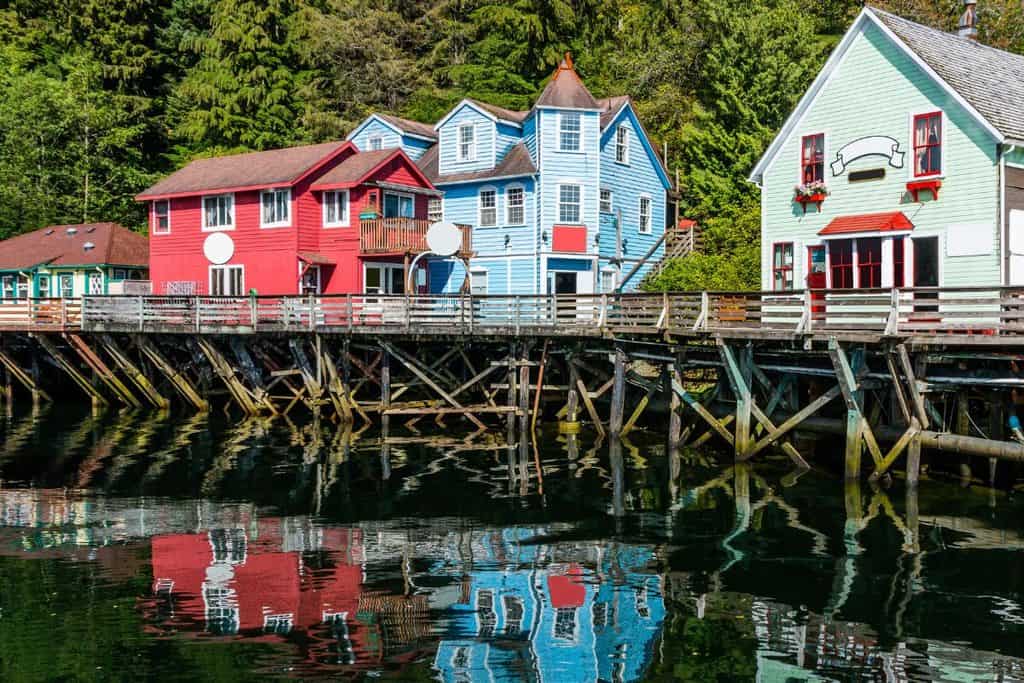
Creek Street is Ketchikan’s most photographed stretch — a boardwalk built on pilings above Ketchikan Creek that once housed the town’s red-light district. Today the wooden buildings hold galleries, shops, and cafes, and salmon still swim upstream beneath the walkway during spawning season in late summer. Dolly’s House, a preserved former brothel turned museum, gives a candid look at the town’s frontier-era history for a few dollars’ admission.
From Creek Street, it’s an easy walk to the Southeast Alaska Discovery Center, where exhibits explain the region’s rainforest ecosystem, Native cultures, and commercial fishing heritage. Budget at least an hour here, especially if rain is falling and you need an indoor option.
Totem Poles and Native Heritage
Ketchikan holds one of the largest collections of standing totem poles in the world, a fact that surprises many first-time visitors. Totem Bight State Historical Park, about 10 miles north of downtown, features 14 totems and a reconstructed clan house set in old-growth forest along the shoreline. Entry costs a few dollars and the walk through the park takes roughly 30 to 45 minutes.
Saxman Native Village, located just south of town, offers a more immersive experience with carving demonstrations and guided tours led by Tlingit community members. Purchasing tickets in advance is worthwhile during peak season, since group tours from cruise excursions can fill available slots quickly.
Getting Out on the Water
Ketchikan’s identity is tied to the sea, and skipping a boat excursion means missing much of what makes the region distinct. Misty Fjords National Monument, a 2.3-million-acre wilderness area east of town, features sheer granite cliffs rising 3,000 feet straight from the water, waterfalls, and frequent sightings of harbor seals and bald eagles. Floatplane tours cover the fjords in about two hours, while boat tours run longer but get closer to the water’s surface.
For travelers who prefer a more flexible, personalized pace, Ketchikan private tours are a smart way to combine wildlife viewing, totem pole visits, and coastal scenery without being tied to a large group’s schedule. These smaller outings often allow for spontaneous stops, whether that means lingering at a particularly good eagle-spotting point or adjusting the route based on weather.
Fishing and Wildlife Viewing
Ketchikan bills itself as the salmon capital of the world, and the claim holds up during peak runs from June through September. Charter operators run half-day and full-day trips targeting king, coho, and sockeye salmon, with many including gear, licenses, and fish processing in the price.
Beyond fishing, Ketchikan offers reliable wildlife viewing without much effort. Bald eagles are so common they’re often seen perched on light poles downtown, and black bears frequently appear at Neets Bay and other salmon-viewing platforms during summer spawning runs. Whale watching tours, typically running three to four hours, regularly spot humpback whales feeding in the surrounding waters between May and September.
Practical Tips for Visiting
Pack layers and genuinely waterproof outer gear, not just water-resistant jackets, since steady rain is the norm rather than the exception. Waterproof footwear makes a bigger difference than any other single item, especially for forest walks and totem pole viewing.
Cash still matters at some smaller vendors and food trucks downtown, even though most shops and tour operators accept cards. If visiting during cruise ship season, plan major attractions either early in the morning or later in the afternoon to avoid the midday crowds pouring off multiple ships at once.
Ketchikan isn’t a destination that demands perfect weather to deliver a memorable visit. The totem poles, the salmon runs, the eagles overhead, and the fjords carved by glaciers are all there regardless of what the sky is doing. Plan around the rain instead of against it, and the town’s rougher, wilder character becomes part of the appeal rather than an obstacle to it.