Horses and Mental Health: Why Spending Time With Horses Can Feel So Good
There is something about spending time around animals that can make the rest of the world feel slightly less noisy, and horses seem to have a particular ability to demand your attention.
You can’t really be thinking about twelve different things while you’re handling a horse. You need to notice where the horse is, what it’s doing and what’s happening around you, particularly when you’re dealing with an animal considerably larger and heavier than you are!
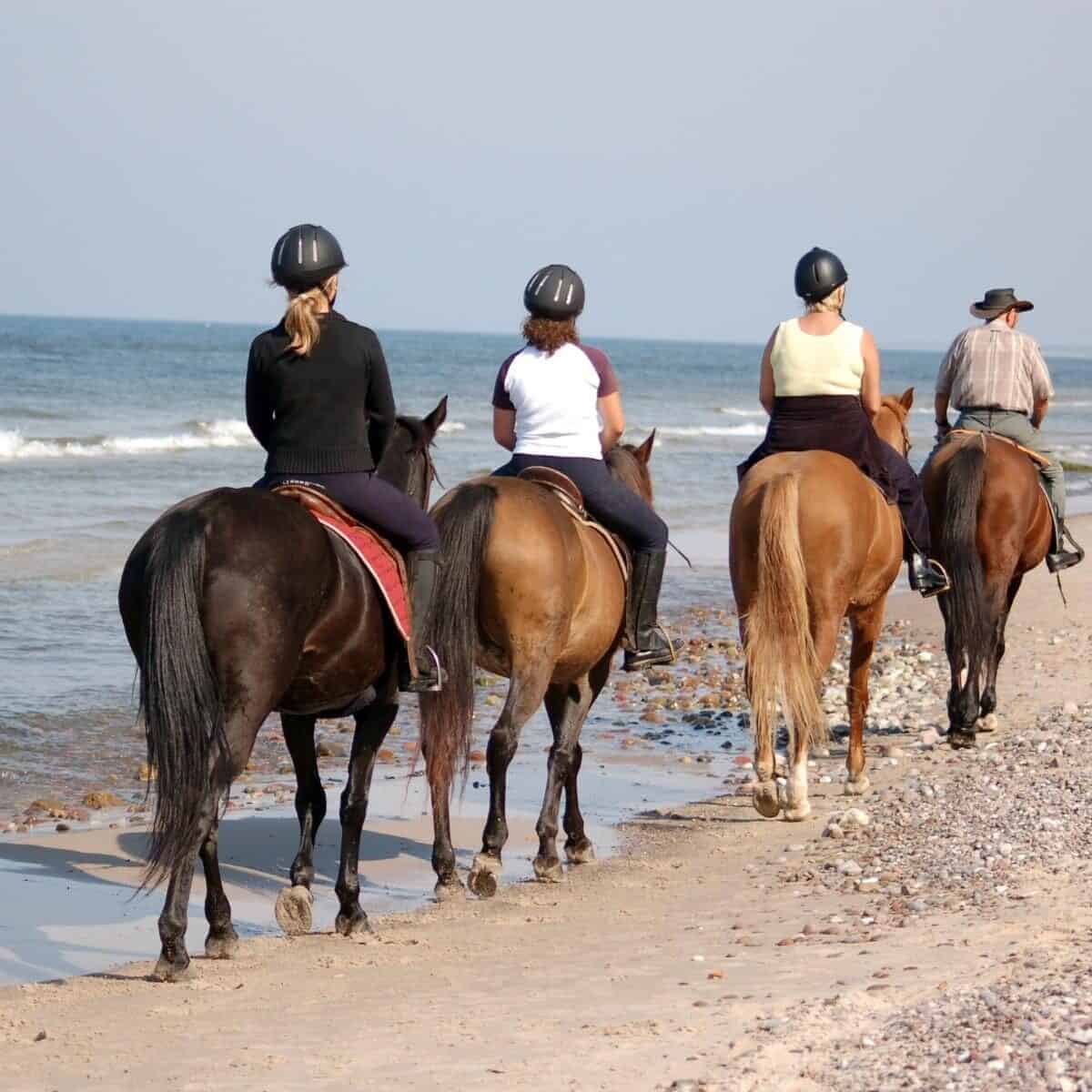
That need to concentrate on what’s happening in front of you may be part of the reason some people find spending time with horses so calming. Add being outdoors, physical activity, caring for another living creature and perhaps spending time with other people who share the same interest, and it isn’t difficult to understand why riding or simply being around horses can become such an important part of someone’s life.
Horses are also increasingly involved in organised programmes designed to support wellbeing and mental health. You may have heard these described as equine-assisted therapy, equine-assisted learning or equine-assisted services, although these terms don’t necessarily describe exactly the same thing.
There’s some interesting research in this area, but I think it’s important to separate two slightly different conversations. One is whether spending time with horses can make us feel good, give us purpose and help us switch off from everyday stresses. The other is whether a particular horse-based programme can actually treat a diagnosed mental health condition. Those aren’t quite the same claim.

Why do people find being around horses calming?
HorseBack UK is a Scottish charity that uses horsemanship, equine-assisted learning, rural skills and outdoor activities within its programmes. Their approach includes working with the horse you have in front of you that day rather than expecting exactly the same behaviour every time. There is something quite relatable about that.
We don’t wake up exactly the same every morning either. Sometimes we’re full of energy and ready to get on with things, while on other days everything feels more difficult for no particularly obvious reason. Yet we’re often considerably more accepting of that variation in an animal than we are in ourselves.
If a horse is unsettled or reluctant one day, a good horseperson doesn’t necessarily decide that the horse is lazy, useless and has completely failed at being a horse. They look at what’s happening and adjust accordingly. Humans aren’t always so generous with themselves.
If I’m struggling with something I managed perfectly well last week, it’s very easy to start wondering why I can’t simply get on with it. Mental health doesn’t necessarily work according to a neat timetable, though, and perhaps there’s something useful in accepting the person we are that day rather than constantly comparing ourselves with the version of ourselves we think should have turned up.
Horses rather force you into the present moment
Mindfulness is talked about so much now that it can sometimes sound like another task we’re supposed to squeeze into an already busy day. Being around an animal can make that sense of being present feel much less forced.
When you’re grooming a horse, leading one or riding, your attention naturally comes back to what is happening in that moment. You’re noticing movement, sounds, the feel of what you’re doing and the animal’s responses rather than sitting down and trying desperately to empty your mind.
You don’t have to call that mindfulness if the word makes you roll your eyes! It’s simply a period when your attention has something immediate to focus on. A time when you think of something other than work and the burnout from being busy all the time.
For somebody whose mind tends to race ahead to tomorrow or replay things that happened yesterday, activities that pull attention back towards what’s actually happening now can feel like a welcome interruption.
That doesn’t mean a morning at the stables is a treatment for anxiety, depression or trauma. Mental health conditions deserve proper support and treatment where it’s needed. It does mean that activities which give us periods of enjoyment, concentration and connection can form a valuable part of looking after our general wellbeing.
There’s movement involved too
Another thing that’s easy to overlook when talking about horses and mental health is the amount of physical activity that can be involved.
Riding obviously requires physical effort, but anyone who has spent time around horses will know that the work doesn’t begin when you get into the saddle and magically finish when you get off.
Walking around a yard, grooming, carrying equipment, filling hay nets, mucking out and leading horses can all involve movement.
Physical activity is associated with benefits for mental wellbeing, and it doesn’t have to mean going to a gym or deliberately doing a “workout”. For many people, finding an activity they genuinely enjoy is much more appealing than exercising purely because they think they should.
I’ve come to appreciate that more and more myself over the years.
When exercise is only something you’re doing to burn calories or change your weight, it’s very easy for it to become a chore. Having another reason to move changes the relationship completely. You might walk because you love being outside, swim because it clears your head or spend half the day on your feet at a stable because you’d rather be there than anywhere else.
The movement still counts even when that isn’t the main reason you’re doing it.
Caring for something outside yourself can matter
Horses also come with responsibility.
They need feeding, grooming, exercise, clean surroundings and attention regardless of whether you’ve had a fantastic day or a terrible one.
I can understand why that routine can be valuable for some people. When you’re struggling with your own thoughts, having something outside yourself that needs your attention can provide a bit of structure and purpose.
There’s social connection involved too. Riding schools, yards and horse-related groups can bring people together around a shared interest, which may make conversation feel easier than turning up somewhere purely to “socialise”.
For somebody who finds traditional social situations uncomfortable, doing something alongside other people can feel completely different from being expected to sit in a room and make conversation.
Of course, horse environments aren’t automatically wonderful supportive communities and owning a horse certainly isn’t stress-free. Horses can be expensive, time-consuming and remarkably talented at developing a problem just as you thought your bank balance was beginning to recover!
Like most things that are good for us, the reality is a little more complicated than the romantic version.
What about equine-assisted therapy?
This is where I think it’s particularly important to be clear about what we know.
Equine-assisted services is a broad term covering different ways horses are incorporated into programmes intended to support people’s physical, emotional, social or psychological wellbeing. Some programmes involve riding, while others work entirely from the ground and might include grooming, leading or interacting with horses.
There has been growing interest in using these approaches with people experiencing a variety of difficulties, including trauma-related conditions, anxiety and other mental health problems.
Research has produced some encouraging findings. A large systematic review published in 2026 looked at more than 100 studies involving over 3,000 participants and found many positive outcomes reported across the research.
That sounds impressive, but there’s an important second half to that finding.
The researchers also concluded that the overall quality of the evidence was low. Studies often involved small numbers of people, programmes varied considerably and many studies lacked the sort of controls that would allow researchers to be confident that the horse-based intervention itself caused the improvement.
Other reviews have reached similarly cautious conclusions. Research specifically looking at PTSD, for example, has found promising results, but researchers continue to call for larger and better-designed studies.
I think “promising but not proven for everything it’s marketed for” is probably the fairest way to describe the evidence at the moment.
That doesn’t diminish the experiences of people who genuinely feel they’ve benefited from these programmes. It simply means personal experience and scientific evidence answer slightly different questions.
Horses don’t need to be your therapy to be good for you
I think this distinction matters because sometimes we become so keen to prove that something has a mental health benefit that we forget enjoyment is allowed to be enough.
If spending a few hours with horses makes somebody happier, gives them something to look forward to and helps them temporarily switch off from everything else going on in life, that has value without needing to prove that horses can cure depression.
The same is true of gardening, walking, reading, crafting, photography and countless other things people enjoy. Not everything that supports our wellbeing needs to become a medical treatment.
For some people, equine-assisted services may form part of structured support delivered by appropriately qualified professionals. For many others, horses will simply be animals they love spending time with.
Both can matter without pretending they’re the same thing.
What horses might teach us about expectations
When working with a horse, you respond to what is happening rather than simply insisting that today’s session must look exactly as you’d planned it. I think we’re often much worse at doing that with ourselves.
I’ve certainly had times when I’ve decided what I should be capable of and then become frustrated when my mind or body hasn’t cooperated. Sometimes pushing ourselves a little is useful, but constantly measuring ourselves against an ideal version of how productive, confident, happy or motivated we ought to be can become exhausting.
There are days when doing everything on the list is realistic and days when getting through the essentials is enough. That doesn’t mean abandoning goals whenever something feels difficult. It’s more about recognising that progress isn’t always a perfectly straight line.
I’ve found that particularly relevant when thinking about mental health, weight and lifestyle changes. I used to be much more inclined to see a difficult day as evidence that I’d messed everything up. These days I’m trying to get better at seeing it as exactly what it is: one difficult day. Tomorrow doesn’t have to repeat it.
Animals don’t expect us to have everything sorted out
Perhaps one of the reasons people feel comfortable around animals is that there isn’t the same pressure to explain yourself.
A horse doesn’t need to know whether you’ve been productive today, whether you’ve gained weight, whether work is going well or whether you’re currently questioning half the decisions you’ve made in your life.
It responds to what’s happening between you at that moment.
Human relationships obviously give us things animals can’t, and I wouldn’t want to suggest otherwise. Talking to somebody we trust, having therapy when we need it and maintaining supportive relationships are all important.
Sometimes, though, it’s lovely to have a little space where none of that explaining is required. Whether that comes from horses, dogs, walking through the countryside or disappearing into a book for an afternoon probably depends on the person. For some people, horses provide that space particularly well.
Looking after your mental health can include things you simply enjoy
I’ve become much more open about my own mental health over the years, including having counselling and therapy, and one thing I’ve learned is that looking after ourselves isn’t about finding one magical thing that makes everything better.
Sometimes we need professional support. Sometimes medication is appropriate. Sometimes we need to talk about something we’ve been avoiding for years.
Alongside all of that are the ordinary things that make life feel a little better.
Getting outside. Moving our bodies in ways we enjoy. Spending time with people we like. Having something to look forward to. Feeling useful. Learning something new. Being around animals.
Horses can potentially bring several of those things together, which might help explain why some people describe their time with them as such an important part of their wellbeing.
The research into formal equine-assisted interventions is still developing, and I wouldn’t describe horses as a replacement for evidence-based mental health care. I don’t think they need to be. Sometimes an activity can be valuable simply because, for a few hours, it helps you feel more like yourself.
If horses happen to be the thing that does that for you, that’s a pretty good reason to spend time with them.
This article was originally written with a contribution from Emma Hutchison, co-founder of HorseBack UK, and has since been substantially updated by Jen Mellor to include current research into horses, wellbeing and equine-assisted services.