Why I No Longer Believe in Good Foods and Bad Foods
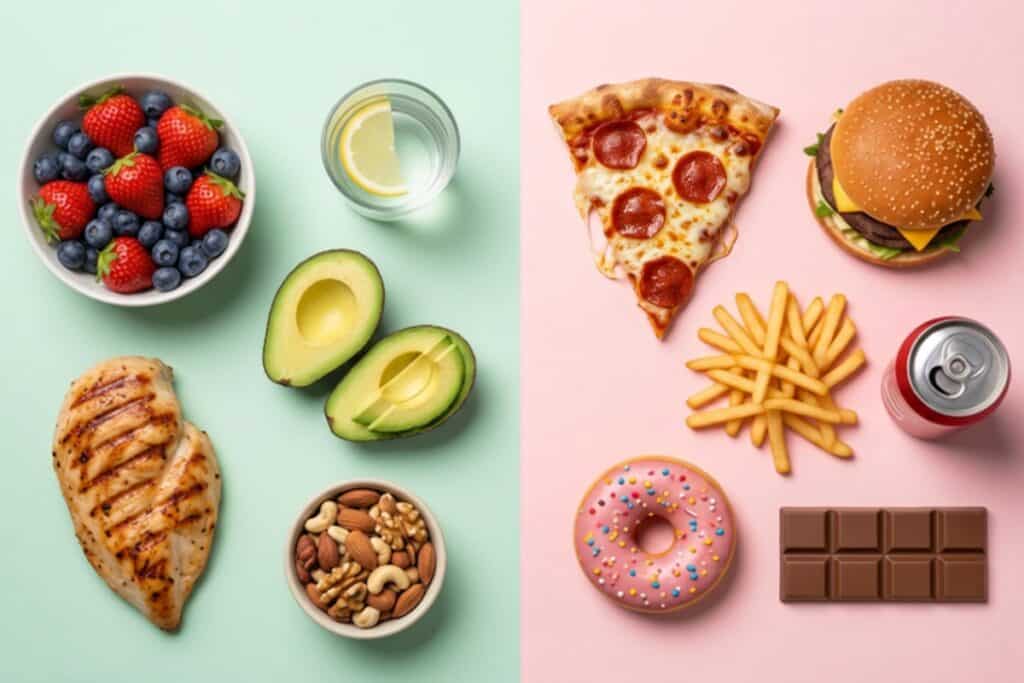
Do you talk to yourself about good foods and bad foods? Do you get annoyed with yourself when you feel you have failed and eaten bad food? Are there days you wonder why bad food tastes so good? This is the article for you. This is how I changed how I feel about good foods and bad foods and why I no longer believe in them.
The Realisation
I can still remember standing in my kitchen one evening after dinner, staring into the cupboard where the chocolate was. Not because I was hungry. Not because I particularly fancied chocolate. But because I’d already told myself I wasn’t allowed any.
The ridiculous thing is that, until I’d made that rule, I hadn’t even been thinking about it. As soon as it became “off limits”, though, it seemed to be all I could think about.
I’d make myself a coffee to distract myself. I’d walk into another room. I’d tell myself I had more willpower than this. Sometimes I’d even go to bed early just so I wouldn’t end up eating it.
Eventually, I’d give in, eat a couple of squares and instantly feel guilty. Then, because I’d already “failed”, I’d convince myself I may as well eat a bit more. Tomorrow would be a fresh start. Monday would be different. Next week I’d be back on track.
If you’ve ever done anything similar, I promise you’re not alone.
For years, I genuinely believed certain foods made me a better person than others. A bowl of fruit meant I’d had a good day. A takeaway meant I’d had a bad one. If I’d chosen salad at lunch, I could feel quietly pleased with myself. If someone suggested going out for pizza that evening, suddenly I felt anxious instead of excited.
It sounds irrational when I write it down now, but that’s exactly how my brain worked. The strange thing is that losing 10 stone didn’t change any of it.
People often imagine that once you’ve lost a significant amount of weight, you’ve somehow reached the finish line. They picture confidence, freedom and someone who instinctively knows how to eat “normally”. I wish it had been that simple.
Instead, I became even more frightened of getting it wrong.
I’d spend ages reading food labels in supermarkets, convinced I needed to find the healthiest option every single time. Going on holiday made me nervous because I wouldn’t have complete control over what I was eating. Meals out stopped feeling relaxing because I was mentally calculating everything before I’d even ordered.
I wasn’t just choosing food anymore.
I was judging myself through every mouthful.
Looking back on good foods and bad foods
Looking back now, I don’t think the biggest problem was the food itself. It was the language I’d wrapped around it.
Good.
Bad.
Treat.
Cheat.
Syns (now Swips)
Being “naughty”.
Being “good”.
I’d heard those words for so many years that I didn’t even question them anymore. They were just how we talked about food. Friends said them. Magazines said them. Diet clubs said them. Even adverts seemed determined to convince us we’d either earned our dinner or should feel guilty for enjoying it.
Eventually, I realised something that seems incredibly obvious now, but took me years to understand.
Food doesn’t have morals.
A slice of Victoria sponge hasn’t done anything wrong.
A bowl of pasta isn’t trying to sabotage my health.
A biscuit doesn’t know it’s supposed to make me feel guilty.
I’d been giving food a personality it never had.
Changing my thinking
What really changed my thinking wasn’t one particular book or one conversation. It was slowly rebuilding my relationship with food after years of dieting and years of believing thinner automatically meant healthier and happier.
I started noticing that the foods I’d labelled as “bad” were also the foods I couldn’t stop thinking about. The more I tried not to eat them, the more important they became. It wasn’t hunger. It wasn’t greed. It was an obsession.
Ironically, the moment I stopped banning foods, they began to lose their power over me.
Chocolate was still nice, of course it was, but it wasn’t magical anymore. It wasn’t my “last chance before Monday”. It wasn’t something to secretly eat because I’d failed. It became just another food I could choose to have or not.
That freedom surprised me more than anything.
I think one of the biggest myths we’ve been sold is that health only comes from discipline. That if we just had enough willpower, we’d all eat perfectly every day and never crave cake again. Real life simply doesn’t work like that.
Real life isn’t good foods and bad foods
Real life is birthdays when someone spends hours making you a cake because they love you. It’s fish and chips on the seafront after walking along the beach. It’s fresh pastries in France that somehow taste better than they ever do at home. It’s Christmas dinner around a crowded table. It’s your favourite dessert on holiday because you’re making memories you’ll hopefully still be talking about years later.
None of those moments has ever been made better by my sitting there worrying whether I’d been “good”. I didn’t praise myself or be angry with myself for eating good foods or bad foods. I just got on with life.
That’s not to say nutrition doesn’t matter because it absolutely does. I still eat plenty of vegetables. I think about protein, fibre and foods that help me feel my best. Losing 10 stone taught me a huge amount about looking after my body, and I don’t regret that.
What I do regret is believing that one meal could define whether I’d succeeded or failed as a person. Because health has never been built on one biscuit. Or destroyed by one pizza.
It’s built over months and years through thousands of choices, not one perfect day of eating followed by three days of guilt because life happened.
These days, I don’t aim to be “good”. I aim to be balanced.
Some days that means homemade soup and plenty of vegetables because that’s genuinely what I fancy. Other days, it means having dessert when we’re on holiday because life is for living too.
For the first time in a very long time, food feels like part of my life rather than something controlling it. Good foods and bad foods aren’t as important as I thought.
And honestly?
After everything I’ve been through with my weight, that’s a much bigger success than fitting into a smaller pair of jeans ever was.
Do you see everything as good foods and bad foods? Could you change your thinking? Let me know in the comments below.