
Homedics Wakeband Review: Does This Silent Alarm Actually Work?
This review was written by myself with our experiences of the Homedics Wakeband, which was sent to me for free in return for sharing our experiences with you. All views are our own.
As a parent, I’ve tried everything to wake up my 19-year-old son Ben. Shouting for ten minutes straight. Shaking his shoulders. Nothing works. Ben is what you might call a professional sleeper; he once slept through a proper thunderstorm right over our house and multiple car alarms going off outside his window.
When I discovered the Homedics Wakeband Silent Alarm, I thought it might be the answer to our morning struggles. After testing this vibrating wristband, I’m ready to share my honest thoughts. If you’re dealing with a heavy sleeper or just want a gentler way to wake up without disturbing your partner, this Wakeband review will tell you everything you need to know.
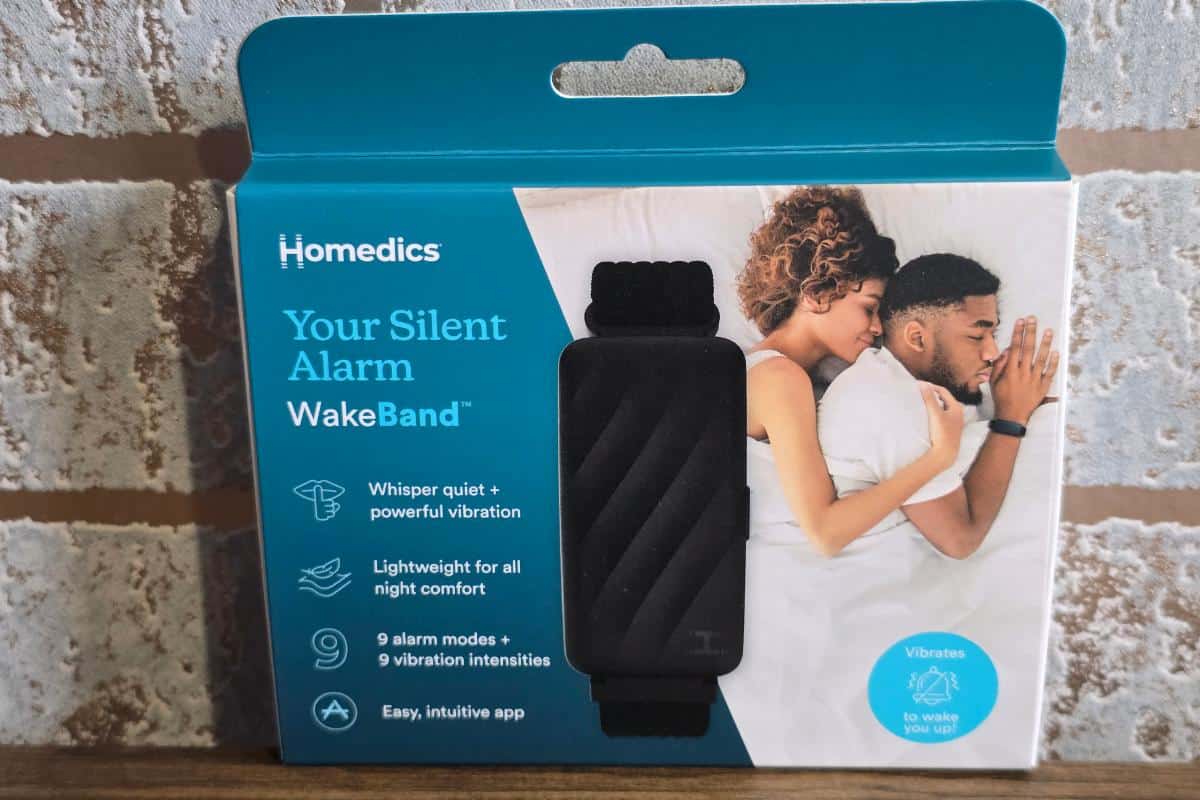
What is the Homedics Wakeband?
The Homedics Wakeband is a simple concept wrapped around your wrist. Instead of blaring sounds that wake up the entire house, this silent alarm uses vibrations to gently (or not so gently) rouse you from sleep.
The device comes in black or cream and connects to your smartphone through a free app. You can set multiple alarms, choose from nine different vibration intensities, and even hit snooze when you need those extra five minutes. The battery lasts up to six days, and it charges magnetically; just stick the charging cable to the back of the device.
At first glance, it seems almost too simple to work. But sometimes the best solutions are the simplest ones.
Setting Up the Wakeband: Easier Than Expected
I was unsure how easy it would be to set up, but I was impressed. Setting up the Wakeband was surprisingly straightforward.
First, you download the Homedics Wakeband app (available for both Android and iPhone). The app walks you through pairing the device with your phone via Bluetooth. The whole process took about five minutes, if not less. It is as easy as setting up something like a Bluetooth speaker.
The app interface is clean and simple. You can set multiple alarms, just like on your phone. The difference is that each alarm lets you choose how intense you want the vibration to be. Level 1 feels like a gentle tap on your wrist. Level 9 feels more like the vibration of your phone.
You can also choose different vibration patterns – some pulse steadily, others create more complex rhythms. You can experiment until you find what works for you.
The Real Test: Waking Up Ben
Now for the big question: would this silent alarm actually wake up someone who sleeps through thunderstorms?
I strapped the Wakeband onto Ben’s wrist, set it to the highest vibration level, and crossed my fingers. I waited by his door when I knew it was due to start, instead of barging in with my usual wake-up routine.
Fifteen minutes. That’s how long the Wakeband buzzed on his wrist before Ben finally stirred. Fifteen minutes of continuous vibration at the highest setting. I was starting to think nothing short of an earthquake would wake this boy up.
But here’s the interesting part – it did eventually work. And over the following days, something changed. The time it took for Ben to wake up gradually decreased.
I think his brain was learning to recognise the vibration as a wake-up signal. Either that, or the constant buzzing was slowly driving him mad in his sleep. Either way, it worked.
How the Wakeband Performs for Normal Sleepers
Of course, I had to test it on myself too. I’m what you’d call a normal sleeper – not as heavy as Ben, but not someone who wakes up at the slightest sound either.
The Wakeband woke me up easily on vibration level 4. It felt like someone gently tapping my wrist, gradually pulling me from sleep without that jarring shock of a traditional alarm. I actually found it quite pleasant compared to being jolted awake by my phone alarm.
The vibration is strong enough to wake you but gentle enough not to feel unpleasant. It’s like having someone shake your shoulder very persistently but politely.
Comfort and Design: Built for All-Night Wear
One of my biggest concerns was whether the Wakeband would be comfortable enough to wear all night. The Wakeband surprised me here. The fabric strap is genuinely soft and lightweight. The device itself is small and flat enough that it doesn’t dig into your wrist when you sleep on your side.
The adjustable strap fits a range of wrist sizes. The only minor issue I noticed was that the fabric strap can get a bit sweaty during warm nights. But it’s nothing worse than wearing a watch to bed.
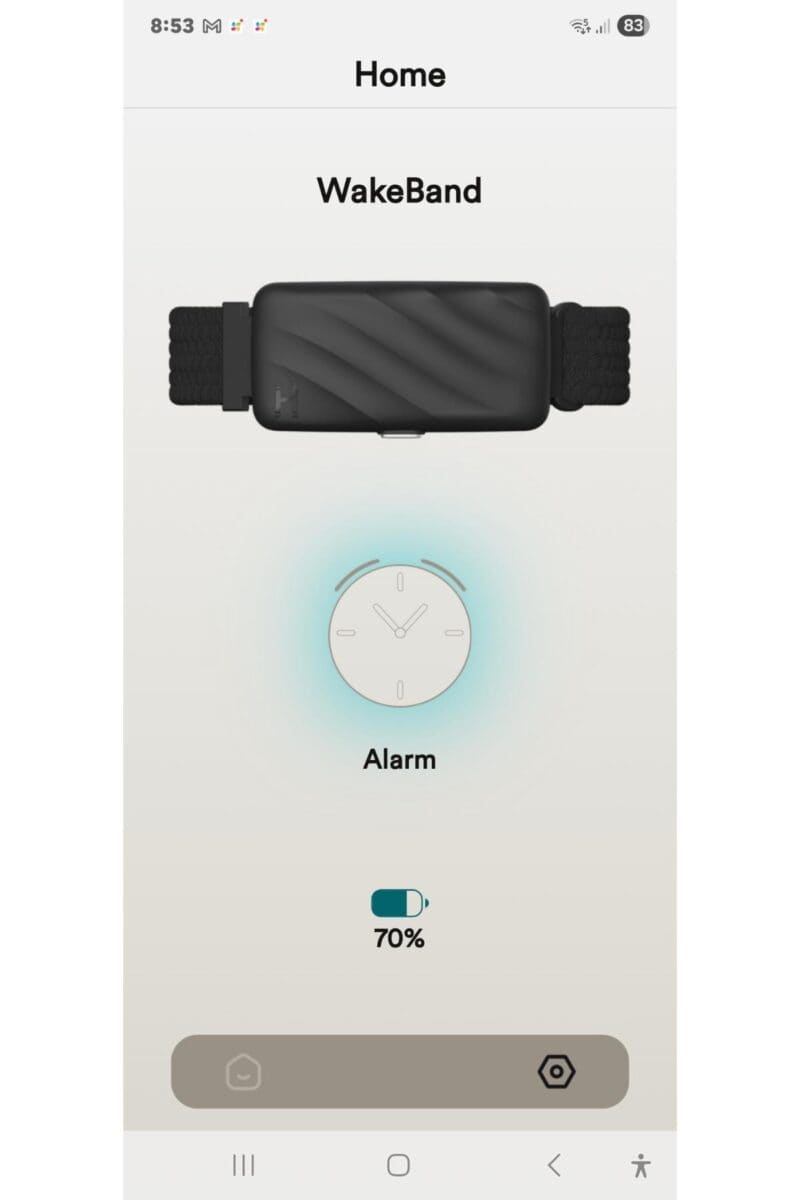
App Features: Simple But Effective
The Homedics Wakeband app won’t win any design awards, but it does everything you need it to do. Setting alarms is straightforward – just like setting them on your phone, but with the added vibration controls.
You can set multiple alarms for different days of the week. The snooze function works exactly as you’d expect. Tap the device when it starts buzzing, and you get five more minutes. Though you can turn off snooze if you prefer.
Battery Life: No Daily Charging Stress
One thing I really appreciate about the Homedics Wakeband is the battery life. The company claims up to six days, and in my experience, that’s probably accurate for people who don’t take long to wake. After 2 days of 15 minutes of buzzing each time, it was down to 50%. That said, it is easy to charge during the day for wearing at night, so this isn’t an issue.
The magnetic charging is clever, too. Just place the charging cable near the back of the device, and it snaps into place. No fumbling with tiny charging ports or USB cables. Charging is quick as well. An hour plugged in seems to give it enough power for several days of use.
Is the Wakeband Worth £29.99?
I think the Homedics Wakeband is absolutely worth the money – especially if you’re dealing with a heavy sleeper or want to avoid disturbing your partner. It is currently on offer in black for £24.99!
For context, we’ve tried everything else. Louder alarm clocks, multiple phone alarms, and even one of those sunrise simulation lamps. Nothing worked as consistently as the Wakeband for Ben. The fact that it gradually became more effective over time suggests it’s actually training his brain to respond to the vibration.
For normal sleepers, it’s a gentler, more pleasant way to wake up. The fact that it doesn’t disturb anyone else in the bed is worth the purchase price alone.
The build quality seems solid, and the three-year guarantee gives additional peace of mind.
What Could Be Better
No product is perfect, and the Wakeband has a few minor drawbacks worth mentioning.
First, it only works when connected to your phone via Bluetooth. If your phone dies overnight or you forget to turn Bluetooth on, the alarm won’t work.
Secondly, I feel perhaps for people like Ben, maybe there could be an even more intense vibration option? That said, this is working, so maybe I don’t need to worry!
Who Should Buy the Homedics Wakeband?
The Wakeband is perfect for several specific situations:
Heavy sleepers who struggle with traditional alarms. If you’re someone who sleeps through multiple phone alarms or needs someone else to wake you up, the Homedics Wakeband might be your solution.
People who share a bed and don’t want to wake their partner. The silent alarm means you can get up for early shifts or appointments without disturbing anyone else.
Light sleepers who find traditional alarms too harsh. If you’re someone who jumps awake at the sound of a regular alarm, the gentle vibration might be more pleasant.
People who are deaf or hard of hearing. The strong vibration can serve as an effective wake-up method when audio alarms aren’t suitable.
Parents of newborns who need to wake up for night feeds without waking the baby or their partner.
My Thoughts on the Homedics Wakeband
I no longer dread mornings. I don’t have to stand outside Ben’s door shouting and banging on his door. The Wakeband has given both of us more independence and less stress.
It’s solved a problem that was genuinely affecting our daily lives. The device is well-made, comfortable to wear, and surprisingly effective – even for the deepest sleepers.
If you’re struggling to wake up someone in your household, or if you want a gentler way to start your mornings, the Homedics Wakeband is worth trying.
Where to Buy
The Homedics Wakeband is available directly from the Homedics website and various online retailers. I’d recommend buying from an authorised seller to ensure you get the full three-year warranty.
A few tips if you decide to buy one:
Start with a lower vibration level and gradually increase it if needed. You might be surprised at how little vibration you actually need to wake up.
Make sure your phone’s Bluetooth is working properly before relying on it as your main alarm. Keep a backup alarm set for the first few nights.
Give it time to work, especially if you’re a very heavy sleeper.
The Homedics Wakeband isn’t a miracle device, but it’s a simple, effective solution to a common problem. Sometimes that’s exactly what you need.