

Oats on Slimming World: Syns, Porridge and Healthy Extra B
I’ve always liked porridge oats because they’re one of those ingredients you can keep in the cupboard and turn into all sorts of different meals without spending a fortune. I particularly like jumbo oats, and I’ve often bought White’s because I prefer the texture. I find some of the smaller oats can turn into something resembling wallpaper paste if you’re not careful, which isn’t quite what I fancy for breakfast!
If you’re following Slimming World, though, oats can also bring up quite a few questions. How many Syns are in 40g of porridge oats? Can you use them as your Healthy Extra B? Does it make a difference if you cook them with milk or water? And what happens if you decide to turn your porridge into baked oats instead?
I thought I’d put together a guide to oats on Slimming World, including the questions people often ask about allowances and some of my favourite ways to use them. After all, there’s only so much ordinary porridge you can eat before you start wondering what else you can do with that bag of oats!
This is an unofficial guide based on my experience of following Slimming World. The plan and its food allowances can change, so always check your current membership information for up-to-date Syn values and Healthy Extra choices.

How Many Syns Are in 40g of Porridge Oats?
This is probably the question you’re looking for if you’ve landed here after searching for porridge oats Syns.
Traditionally, 40g of plain porridge oats has been a popular Healthy Extra B choice on Slimming World. If the oats you’re using qualify under the current plan and you count the portion as your Healthy Extra B, you wouldn’t normally need to count that same portion again as Syns.
However, if you’ve already used your Healthy Extra B allowance or you’re eating more than your allowance, you’ll need to account for the oats according to the current Slimming World guidance.
I haven’t included a fixed Syn value here because I don’t want to give you a figure that could be out of date. The exact product and current plan rules matter, particularly if you’re using flavoured oats or instant porridge sachets rather than plain porridge oats.
I’d always recommend weighing your oats rather than guessing how much 40g looks like. Different types of oats can take up different amounts of space, so using tablespoons or a measuring cup isn’t necessarily accurate.
For the latest Healthy Extra B allowances and Syn values, check your membership information through the official Slimming World website, as the plan and individual product values can change.
Are Porridge Oats Free on Slimming World?
Porridge oats aren’t automatically a Free Food simply because they’re oats.
The important distinction is whether you’re using an eligible portion as your Healthy Extra B or counting it in another way under your current plan.
That’s why you might hear somebody say they have porridge without counting Syns, while somebody else is calculating Syns for exactly the same amount. They may simply be using their allowances differently.
If you’re new to Slimming World, it’s worth getting familiar with how Healthy Extra choices work, because it makes planning meals much easier.

How Much Porridge Can You Have on Slimming World?
The amount you can count as a Healthy Extra B depends on the current Slimming World allowance and the particular oats you’re using.
A 40g portion of plain porridge oats has traditionally been a familiar choice, but please check that this is still correct for your membership rather than relying on an older article.
If you fancy a larger bowl of porridge, you can still make one. You’ll just need to account for any oats beyond your allowance as appropriate.
I find weighing the dry oats before cooking is the easiest way to keep track. Once you’ve added water or milk, the finished porridge weighs considerably more, so weighing it afterwards isn’t particularly helpful for working out how many dry oats you’ve used.
How Many Syns Are in Porridge Made with Water?
If you’re making porridge using plain oats and water, the water itself doesn’t add any Syns.
What you need to account for is the oats and anything else you add, such as sugar, honey, chocolate spread or other toppings.
If you’re using your oats as an eligible Healthy Extra B choice, that affects how you account for the oats themselves.
I know some people think porridge made with water sounds a bit miserable, but it doesn’t have to be. You can add flavour with cinnamon or other ingredients you enjoy, and you can always stir in a little yoghurt afterwards if you prefer a creamier texture.
Just remember to check the yoghurt or other additions against your current plan.
What About Porridge Made with Milk?
Porridge made with milk is lovely and creamy, and I think it’s probably the version most of us are familiar with.
On Slimming World, you’ll need to consider the milk separately from the oats. Depending on the type and quantity, you may be able to use some of your Healthy Extra A allowance, or you may need to count it another way.
This also applies to alternatives such as oat milk, almond milk and soya milk. Don’t assume that every plant-based milk has the same allowance, because the nutritional values and product formulations can vary.
You can also make porridge with a mixture of milk and water if you want a creamier result without using as much milk.
Are Instant Porridge Sachets the Same as Plain Oats?
Not necessarily, and this is something I’d definitely check before assuming they’re all interchangeable.
Some instant porridge sachets contain only oats, while others have added sugar, flavourings, dried fruit or other ingredients.
The portion sizes can also be different from the amount of plain oats you would normally weigh out.
If you use porridge sachets regularly, check the exact brand and variety in your current Slimming World information. It’s much more reliable than assuming every sachet counts in the same way.
My Favourite Porridge Flavour Ideas
I think one of the reasons people get bored of porridge is that they make it exactly the same way every morning. There’s nothing wrong with plain porridge, but a few extra ingredients can make it feel like a completely different breakfast.
Here are some combinations I enjoy or think work particularly well. Remember that the additions may need to be counted separately if you’re following Slimming World.
Apple and Cinnamon Porridge
Apple and cinnamon is such a lovely combination, especially in autumn and winter when you want something warm.
You can make your porridge as normal and add some chopped apple and a little cinnamon. I quite like the idea of adding the apple just before eating so it keeps a little texture.
If you’re cooking or puréeing fruit, check the current Slimming World guidance rather than assuming it has the same value as fresh fruit eaten normally.
Chocolate Porridge
If you enjoy chocolate for breakfast, you can experiment with a little cocoa powder or a measured amount of chocolate sauce.
I’ve used Choc Shot products in the past, although I’d always check the current Syn value for the exact product because flavours and formulations can change.
You could also add a little orange essence for a chocolate orange flavour, which is one of my favourites.
Bounty-Inspired Porridge
I love Bounty bars, so a chocolate and coconut combination is always going to appeal to me!
You could try a little cocoa powder with coconut flavouring, or use a suitable chocolate and coconut sauce if you can find one.
If you’re adding desiccated coconut or chocolate sauce, remember to account for those ingredients rather than assuming they’re included in your oat allowance.
Cherry Bakewell Porridge
Cherry Bakewell is another flavour I really enjoy, and it’s surprisingly easy to recreate the general idea in a bowl of porridge.
You can use cherries with a little almond essence, and frozen cherries are particularly handy because you can take out just what you need.
If you’re using frozen fruit, follow the packet instructions, and remember to check how any cooked or puréed fruit should be counted on your plan.
Jam Porridge
Sometimes a spoonful of jam is all you need to make plain porridge a bit more interesting.
You can use whichever jam you enjoy, including reduced-sugar varieties, but check the nutritional information and current Syn value for the amount you’re adding.
I wouldn’t automatically assume that reduced-sugar jam is always the lowest-Syn option without checking the particular product.

Porridge with Raisins or Sultanas
Raisins and sultanas work really nicely with cinnamon or mixed spice, especially if you enjoy a sweeter breakfast.
They’re quite different from fresh fruit in terms of portion size and nutritional concentration, though, so make sure you account for the amount you use.
I would weigh them rather than throw in a handful and hope for the best, because it’s surprisingly easy to add more than you intended.
Baked Oats on Slimming World
If you haven’t tried baked oats yet, they’re definitely worth considering when you’re bored of ordinary porridge.
They’re made using oats with ingredients such as yoghurt and egg, then baked in a small dish until the mixture sets. Depending on the flavour you choose, they can feel a little like having cake for breakfast.
I’ve made Cherry Bakewell baked oats in silicone cake cases before, and they were lovely. I divided the mixture into three little portions and added cherries and almond flavouring, which made them feel like something completely different from a bowl of porridge.
I’ve now got a separate guide to my Slimming World baked oats recipe and flavour ideas, including chocolate orange, banoffee, carrot cake and several fruity combinations.
I’d recommend following that recipe for the quantities and cooking instructions rather than trying to guess them from a short description here.
The oats may qualify as a Healthy Extra B depending on your current plan, but remember to check the other ingredients and any cooked fruit or toppings.
Overnight Oats on Slimming World
Overnight oats are another of my favourite ways to use porridge oats, especially when I know the following morning is going to be busy.
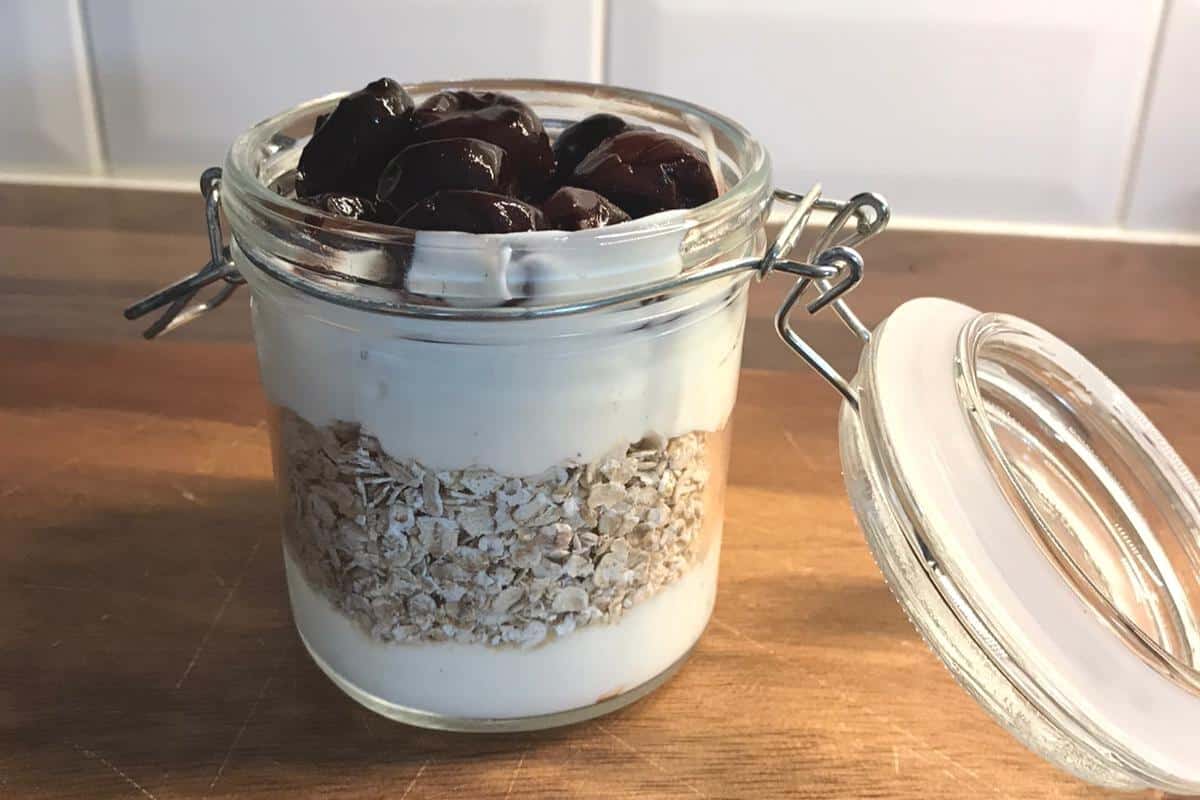
Instead of cooking them, you mix or layer the oats with yoghurt, milk or another suitable liquid and leave them in the fridge to soften overnight.
I quite like making them in a glass jar because you can see the different layers, although they taste just as good in an ordinary bowl. There’s no need to buy a collection of fancy jars unless you particularly want to!
You can add strawberries, other fruit or different flavourings depending on what you enjoy.
I’ve got a full guide to overnight oats recipes, along with more specific Slimming World overnight oats tips.
Just remember that the oats, yoghurt, milk and toppings all need to be considered when you’re working out how the finished breakfast fits into your plan.
Can You Use Oats Instead of Breadcrumbs?
Yes, and I think this is one of those ideas people often overlook because we’re so used to thinking of oats as a breakfast ingredient.
You can use oats to coat suitable pieces of chicken or fish, either on their own or mixed with seasonings.
You may find that smaller oats or oats you’ve briefly processed work better for coating than very large jumbo oats, depending on the texture you want.
If you’re using your oats as a Healthy Extra B choice, make sure you measure the amount used and account for any other ingredients in the coating.
It’s a handy alternative if you’ve run out of breadcrumbs or simply fancy trying something different.
Using Oats to Thicken Soup or Casseroles
This is another useful way of using oats, particularly if you’ve got a bag in the cupboard and want to experiment.
Adding a small amount of oats to a soup or casserole can help thicken it as they absorb liquid and soften.
I’d start with a little and see how the texture develops, because you don’t want to add so much that your soup suddenly resembles a bowl of porridge!
You could try them in a vegetable soup or a hearty casserole, particularly if you want something more substantial.
Again, remember that using oats in a savoury meal doesn’t automatically change how they count on Slimming World.
Are Oats Healthy?
Oats can be a useful part of a balanced diet because they provide fibre and other nutrients, and they’re relatively easy to include in different meals.
I also like that they’re affordable, widely available and don’t require lots of specialist ingredients.
However, I wouldn’t describe them as a magic food for weight loss. Whether you’re trying to lose weight, maintain your weight or simply eat a more varied diet, it’s the overall pattern of what you eat that matters.
For me, the biggest advantage of oats is their versatility. You can make porridge, baked oats, overnight oats and even use them in savoury cooking, so one bag can go quite a long way.
Frequently Asked Questions About Oats on Slimming World
Are 40g of oats Syn-free?
If an eligible 40g portion is being counted as your Healthy Extra B under the current Slimming World rules, you wouldn’t normally count that same portion again as Syns. If you’re not using the allowance, check the current Syn value.
Can you eat porridge every day on Slimming World?
You can include porridge regularly if it fits your current plan and allowances. It’s worth varying your meals and toppings so you’re enjoying a range of foods rather than relying on exactly the same breakfast every day.
Does cooking oats change their Syn value?
Cooking oats doesn’t automatically mean the oats themselves become a completely different food, but how ingredients are prepared can matter under Slimming World rules. Check the current guidance for the oats and any additions, particularly cooked or puréed fruit.
Can you use jumbo oats for overnight oats?
Yes, although jumbo oats can take longer to soften and may have a chewier texture than smaller rolled oats. I actually quite like the texture of jumbo oats, but it’s very much down to personal preference.
Can you use oats in savoury recipes?
Absolutely! They’re useful in coatings, soups and casseroles as well as breakfast recipes. Just measure the amount you’re using if you need to account for it on your eating plan.
More Oat Recipes and Breakfast Ideas
If you’ve got a bag of oats in the cupboard and want to try something different, I’ve got a few more articles that might help.
My porridge oats guide has more ideas for making and using porridge oats, while my baked oats recipe is ideal if you fancy something warm and a little more cake-like.
For mornings when you want breakfast waiting in the fridge, have a look at my overnight oats recipes.
You can also browse all my breakfast ideas if you’re looking for a change from oats altogether.
What do you normally make with your oats? Are you a traditional porridge person, or do you prefer baked oats and overnight oats? I’m always interested to hear about new flavour combinations, especially ones I haven’t tried before!
🎄 Still got Christmas shopping to do?
I’ve put all my Christmas gift guides, festive recipes and other Christmas bits together in one place to make life a little easier!





Will sure try it out with some leftover oat.
I’ve just had oat cakes for lunch! I love oats and you’ve got some great ideas here.
These are all great ideas. I have not tried overnight oats but I really should. Sounds delish!
That overnight oats dish with fruti and yoghurt looks amazing! Kaz
I am a porridge baby and love mg oats often making overnight oats with favourite fruits.
These are fab ideas! Oats are so versatile arent they, I always have lots in the cupboard!