Ways to Cook Chicken Breast: 6 Easy Cooking Methods
Chicken breast is one of those ingredients Stuart and Ben will happily eat regularly, but there are only so many times you can cook it exactly the same way before dinner gets a bit repetitive. As I’m vegetarian, I’m not standing there tasting their chicken to decide whether it’s done or whether it needs another few minutes, either, so I’ve always preferred cooking methods that are straightforward and checking the chicken properly rather than guessing.
There are plenty of ways to cook chicken breast, and changing the cooking method can make just as much difference as changing the seasoning. Chicken cooked in the slow cooker is completely different from crispy chicken from the air fryer, while poached chicken can be useful for salads, sandwiches and lunches.
This guide isn’t another enormous list of chicken recipes. I’ve already got my healthy chicken recipes collection for that. Instead, these are the main ways you can cook chicken breast, what each method is useful for and where you can find my more detailed recipes and cooking guides when you need exact instructions.
Before you cook chicken breast
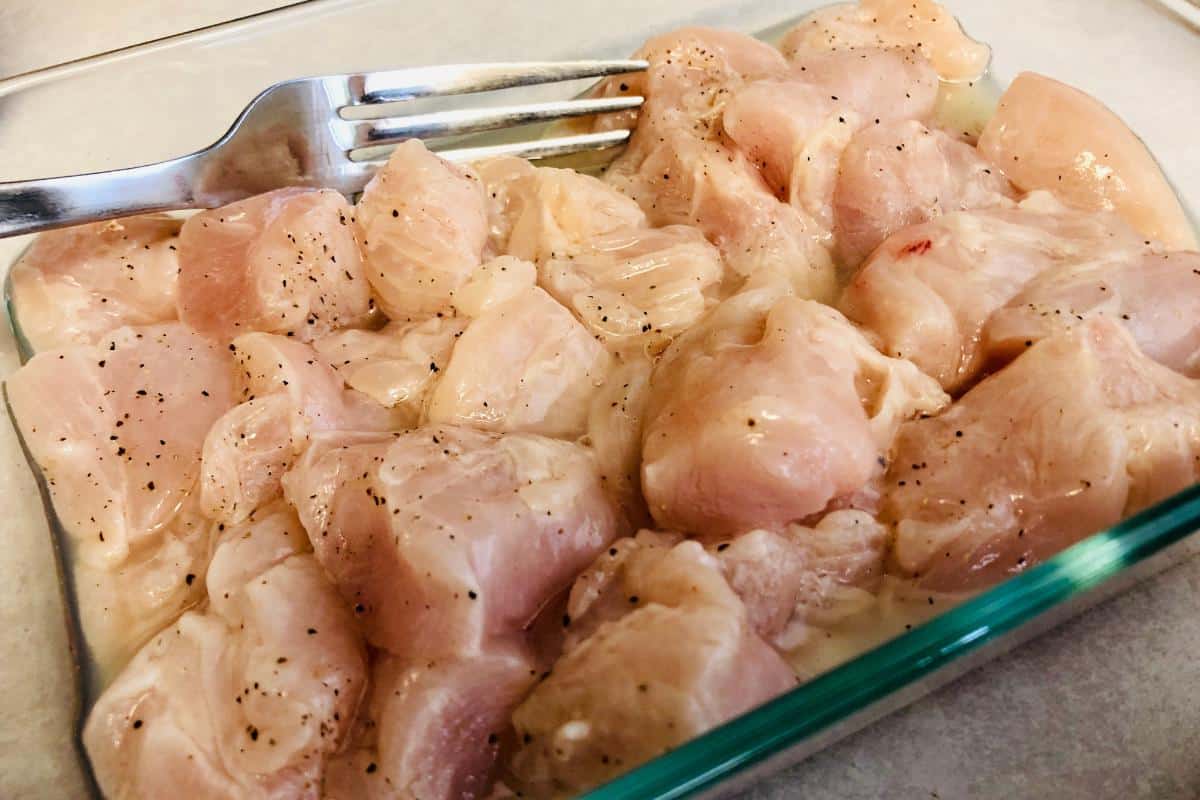
However you’re planning to cook it, start with pieces that are reasonably even in size. A whole chicken breast can be much thicker at one end than the other, which makes it very easy to overcook the thin end while you’re waiting for the thickest part to cook.
Depending on the recipe, you can slice the breast horizontally into thinner fillets, dice it into similarly sized pieces or gently flatten the thicker part.
If your chicken is frozen, have a look at my guide to defrosting chicken safely before you start. The methods below generally assume you’re beginning with defrosted chicken unless the recipe you’re following specifically says otherwise.
1. Pan frying chicken breast
Pan frying is useful when you want chicken fairly quickly and don’t want to turn the oven on.
Thinner chicken breasts or fillets are easier to cook evenly in a frying pan than very thick ones, so slicing or flattening the chicken first can help. A little oil and simple seasoning is enough, although this is also an easy method to use with spice blends and marinades.
Rather than relying on one cooking time for every chicken breast, check that the thickest part is thoroughly cooked before serving. Size and thickness make a huge difference.
Pan-fried or pan-grilled chicken works particularly well sliced over rice and salads. My chicken burrito bowl is a good example if you want an actual meal rather than another plain chicken breast!
2. Cooking chicken breast in the oven
The oven is handy when you’re cooking several portions at once or want to cook chicken alongside vegetables.
One of my favourite ways of doing that is a traybake because everything cooks together rather than creating a mountain of pans. Peppers, onions, courgettes, tomatoes and potatoes can all work well depending on the recipe and seasoning you’re using.
You can also cook chicken in sauces and casseroles in the oven. My Moroccan chicken casserole is a completely different style of chicken dinner and is lovely when you want something warming.
3. Slow cooking chicken
Slow cookers are brilliant for chicken when it’s being cooked as part of a curry, casserole or other saucy meal.
I wouldn’t give one universal slow-cooker time for chicken because the amount of meat, size of the pieces, other ingredients and slow cooker itself all matter. Follow the recipe you’re actually making.
If this is the cooking method you’re interested in, start with my slow cooker chicken recipes or my slow cooker chicken curry tips. I’ve also got a slow cooker chicken tikka masala if curry is what you had in mind.
4. Air frying chicken breast
The air fryer is particularly useful when you want chicken with more colour or a slightly crispier outside without having to heat a full-sized oven.
You can air fry whole chicken breasts, smaller pieces and breaded chicken, but they don’t all take the same amount of time. Even two whole chicken breasts can be very different in thickness.
I’ve already put together a separate air fryer chicken cooking times guide, so use that rather than assuming one temperature and time will work for every piece of chicken.
For something a little less plain, my air fryer buttermilk chicken is worth a look too.
5. Barbecuing chicken
Chicken can be lovely on the barbecue, but thick pieces need a bit more attention because you don’t want a beautifully charred outside hiding chicken that isn’t properly cooked in the middle.
Using evenly sized pieces helps, as does checking the thickest part properly before serving.
Marinades can add loads of flavour to barbecue chicken. Yoghurt-based marinades, spice rubs, citrus, garlic and herbs all give you very different results without needing a completely different meal.
If you’re cooking outside, be particularly careful about keeping raw chicken, utensils and plates away from cooked food.
6. Poaching chicken
Poaching doesn’t get anything like the attention that frying, roasting and air frying do, but it can be really useful if you want chicken for another dish rather than a browned or crispy finish.
The chicken cooks gently in liquid and can then be cooled and sliced or shredded for salads, sandwiches and other meals.
This is particularly useful for meal preparation because you’re starting with fairly simply cooked chicken that can then be used with different flavours rather than eating exactly the same meal several days running.
My sticky chicken salad is another option if you’d rather have warm, strongly flavoured chicken with your salad.
How do you stop chicken breast becoming dry?
Chicken breast is relatively lean, so it can become dry when it is overcooked.
Keeping pieces an even thickness helps because you’re not waiting for one enormous section to cook while the thinner part gets drier and drier. The cooking method matters too: chicken cooked in a sauce or casserole behaves very differently from a thin fillet in a frying pan.
Most importantly, don’t rely entirely on appearance or a generic cooking time.
How to check chicken is safely cooked
I don’t like guessing with chicken.
The Food Standards Agency advises against washing raw chicken because splashing water can spread bacteria around your kitchen. Instead, handle it carefully, wash your hands and anything that has been in contact with the raw chicken, and cook it thoroughly.
A clean food thermometer is really useful, particularly when you’re cooking a thick chicken breast. Check the thickest part and follow the current Food Standards Agency guidance for cooking food safely.
Storing leftover cooked chicken
If you’ve deliberately cooked extra chicken for another meal, cool and refrigerate it promptly and store it properly.
Leftover chicken can be useful cold in salads and sandwiches or reheated as part of another meal, but follow current food-safety advice on cooling, storage and reheating rather than leaving it hanging around in the fridge indefinitely.
The Food Standards Agency advice on storing and reheating leftovers is worth checking if you’re unsure.
Which way of cooking chicken is best?
There isn’t really one best method because it depends what you’re making.
If you want something quick, pan frying or air frying may suit you. For curries and casseroles, the slow cooker can be much more convenient. Oven cooking works well when you’re making several portions or a traybake, while poaching is useful when you want simply cooked chicken to use cold afterwards.
And if you’ve got the chicken but absolutely no idea what you fancy making with it, that’s when I’d head to my healthy chicken recipes collection instead.