
Everything you need to know about Lentils (and how to cook them)
Let us be honest for a moment. Lentils have a bit of a reputation. You might think of them as boring, beige food for people who wear hemp sandals. Or maybe you just remember a mushy, tasteless stew from your school dinners.
But if you ignore them, you are missing out on one of the cheapest and healthiest foods in the supermarket. They are packed with protein, full of fibre, and they cost pennies. Plus, they are actually delicious if you know what to do with them.
In this guide, I will share everything you need to know about lentils. We will cover why they are so good for you, the different types you can buy, and how to turn them into meals you will actually want to eat.
What exactly are lentils?
Lentils are the seeds of a plant that is part of the legume family. They grow in pods, usually with two seeds per pod. They are also known as “pulses”.
People have been eating them for a very long time. In fact, archaeologists have found evidence of lentils being eaten over 8,000 years ago. They have stayed popular for a reason. They are easy to grow, they last a long time in the cupboard, and they fill you up.
Unlike beans, you do not need to soak dried lentils before you cook them. This makes them much quicker to prepare when you need a speedy dinner.
Why you should be eating them
You might have heard people say they are good for you, but do you know why? It is not just about general health. Adding these pulses to your diet can offer specific benefits for your body.
Good for your heart
Your heart works hard, so it deserves some support. Lentils are great for this. According to the British Heart Foundation, pulses like lentils are high in fibre and protein but low in fat. This combination can help lower your cholesterol and reduce your risk of heart disease.
They keep your tummy happy
Most of us in the UK do not eat enough fibre. The NHS says we should aim for 30g of fibre a day, but most adults only manage about 20g.
Fibre is what keeps your digestion moving properly. It helps prevent constipation and feeds the good bacteria in your gut. Lentils are absolutely full of it. Just a small portion can get you much closer to that 30g target.
They give you steady energy
Have you ever eaten a sugary snack, felt great for twenty minutes, and then felt tired and grumpy afterwards? That is a blood sugar crash.
Lentils contain complex carbohydrates. This means your body breaks them down slowly. This gives you a steady supply of energy instead of a quick spike and a crash. The experts at Harvard University explain that this slow digestion can even help improve blood sugar levels.
They are plant protein stars
If you are trying to eat less meat, lentils are a perfect swap. They provide a good amount of protein, which your body needs to repair cells and build muscle.
The nutrition numbers
It helps to see exactly what you are getting in your bowl. Here is the nutritional breakdown for cooked lentils.
The USDA FoodData Central provides detailed data for boiled lentils. Here is what you get in 100g of cooked lentils (that is about half a cup):
- Calories: 116
- Protein: 9g
- Fibre: 7.9g
- Fat: 0.4g
- Carbohydrates: 20g
- Iron: 3.3mg (about 18% of what many adults need)
- Folate: 181mcg (about 45% of your daily needs)
What does this mean for you?
Look at that fibre number. Getting nearly 8g of fibre in a small serving is impressive. For comparison, a slice of wholemeal bread usually has about 2g to 3g of fibre.
The iron content is also important. Iron helps carry oxygen around your body so you do not feel tired. Plant iron is harder for the body to absorb than meat iron, but you can help this by eating lentils with foods rich in Vitamin C, like peppers or tomatoes.
A guide to the varieties
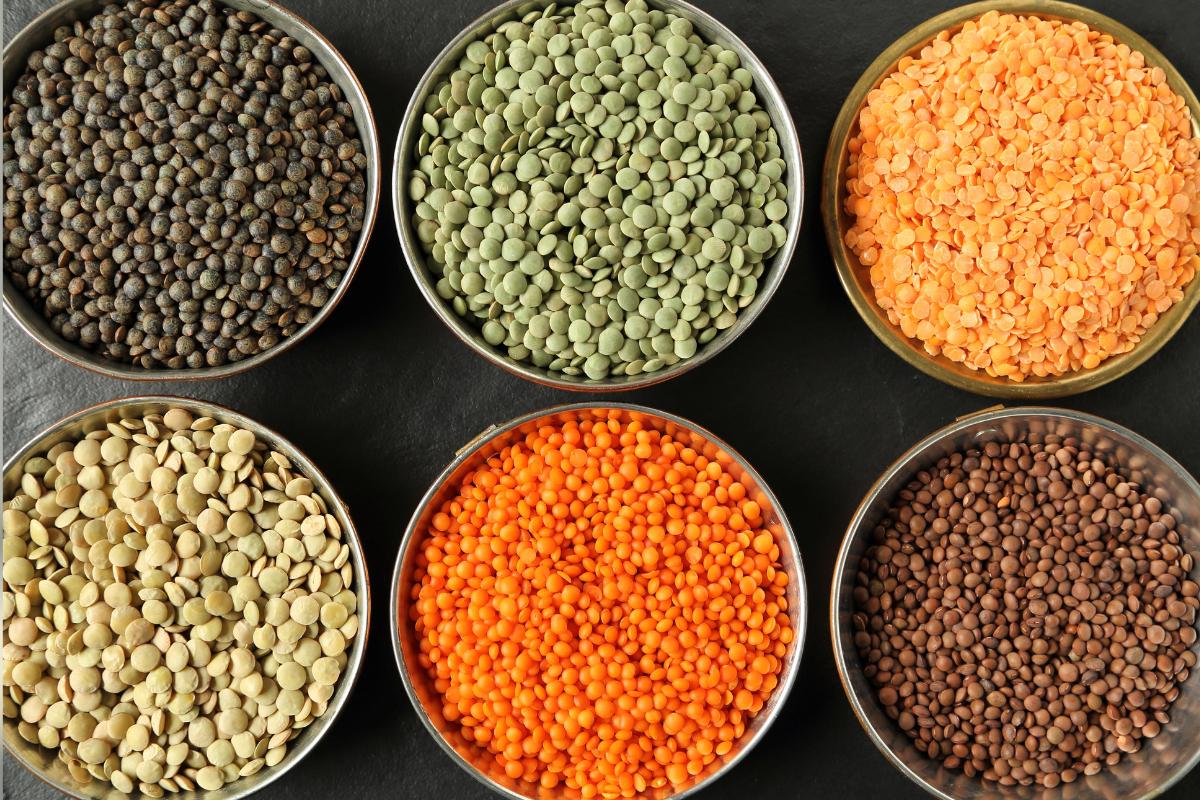
Walk down the aisle in the supermarket and you will see bags of orange, green, brown, and black lentils. It can be confusing. Do they all taste the same? Can you swap them in recipes?
Here is a simple breakdown to help you choose the right bag.
Red and Split Lentils
These are the orange or pink ones. They have had their outer skins removed and are often split in half.
- Texture: They cook very fast (about 15 to 20 minutes) and break down into a soft mush.
- Best for: Soups, stews, and Indian dals. They act like a thickener. Do not use these for salads as they will turn into a paste.
- Flavour: Mild and sweet.
Brown Lentils
These are the most common type you will see. They are usually a muddy brown colour.
- Texture: They hold their shape reasonably well if you do not overcook them, but they can get soft. They take about 20 to 30 minutes to cook.
- Best for: Warm salads, casseroles, and veggie burgers. They are a good all-rounder.
- Flavour: Earthy.
Green Lentils (and Puy Lentils)
These are slightly more expensive, especially the “Puy” variety from France. They are a dark, speckled green.
- Texture: These are the firmest lentils. They stay firm and hold their little button shape even after cooking. They take a bit longer to cook, usually around 30 to 45 minutes.
- Best for: Salads and side dishes where you want some chew.
- Flavour: Peppery and nutty.
Black (Beluga) Lentils
These are small, shiny, and black. They look a bit like caviar (Beluga caviar, hence the name) when they are cooked.
- Texture: Similar to green lentils, they hold their shape very well.
- Best for: Fancy salads or served as a side dish with fish or roasted vegetables.
- Flavour: Rich and earthy.
How to cook dried lentils
Cooking dried lentils is much easier than cooking dried beans. You do not need to soak them overnight.
- Measure: Pour out the amount you need. Remember that they will double or triple in size once cooked. One cup of dried lentils makes about two and a half cups of cooked lentils.
- Rinse: Put them in a sieve and rinse them well under cold water. This washes away dust. It is also a good time to check for any little stones or debris that might have snuck in.
- Boil: Tip them into a large pan and cover them with plenty of water or vegetable stock.
- Simmer: Bring the water to the boil, then turn the heat down low. Put the lid on the pan but leave it slightly open so steam can escape.
- Check: Simmer them for the time listed on the packet. Red lentils might only need 15 minutes. Green ones might need 40. Taste one to see if it is tender.
- Drain: Pour them back into the sieve to drain the water.
A tip on salt: Some people say adding salt at the start of cooking makes the skins tough. Just to be safe, add your salt at the end when they are almost done.
Canned vs Dried: Which is better?
You can buy them dried in bags or cooked in cans (tins). Both are excellent choices.
Dried
- Cheaper.
- You can control the texture better.
- Takes about 20-30 minutes to cook.
Canned
- More convenient. Open the tin and they are ready.
- Great for last-minute meals.
- Often sitting in salty water.
If you use canned lentils, just tip them into a sieve and give them a good rinse under the tap. This washes away the starchy liquid and helps remove some of the added salt.
5 easy ways to eat more lentils
If you are stuck for ideas, try these simple swaps to get more of them into your week.
1. The Bolognese Swap
You do not have to become a vegetarian to eat lentils. Try replacing half of the beef mince in your spaghetti bolognese or shepherd’s pie with cooked brown or green lentils. It adds texture and fibre, and it makes the meat go further. This saves you money, too.
2. Super soups
Red lentils are perfect for thickening soups. If you are making a vegetable soup, throw in a handful of dried red lentils. As they cook, they will dissolve, making the soup creamy and filling without any cream.
3. Hearty salads
Cook some green or Puy lentils and let them cool down. Mix them with chopped cucumber, tomatoes, feta cheese, and a lemon dressing. This makes a lunch that will actually keep you full until dinner time.
4. Tacos
Use brown lentils instead of meat for taco fillings. Cook them with taco spices (cumin, paprika, chilli powder) and a splash of water until the water is absorbed. They have a great texture that works well in a crunchy shell.
5. Dahls and curries
This is the classic way to eat them. Simmer red lentils with coconut milk, turmeric, garlic, and ginger until soft. Serve it with rice or naan bread for a comforting dinner.
Are there any downsides?
They are safe for most people, but there are two small things to keep in mind.
The “musical fruit” effect
Because they are so high in fibre, they can cause a bit of gas or bloating if you are not used to them. This is normal. It is just your gut bacteria working hard on that new fibre.
To avoid this, start slowly. Do not go from eating none to a giant bowl of lentil stew in one day. Start with a few spoonfuls and build up over a few weeks. Drinking plenty of water helps, too.
Anti-nutrients
You might read scary articles online about “lectins” or “anti-nutrients” in lentils. These are natural compounds in plants that can block the absorption of some minerals.
However, you do not need to worry about this. Soaking and cooking lentils breaks these compounds down. As long as you are eating them cooked (which you should be!), they are perfectly safe.
Frequently Asked Questions
Do I really need to rinse lentils?
Yes, you should. Dried lentils are a natural product and can sometimes be dusty. Rinsing cleans them. If you are using canned lentils, rinsing removes the salty, starchy liquid they are stored in. This can help reduce gas and improves the flavour.
Can you eat lentils raw?
No. You should always cook them. Eating them raw would be very hard on your teeth and your stomach. You can eat sprouted lentils raw, but that is a different process where the seed has started to grow. If you buy them dried, always boil them.
How long do cooked lentils last?
If you cook too many, do not throw them away. They keep well in the fridge in a sealed container for up to 5 days. You can also freeze them. Put them in a freezer bag or container, and they will last for 3 months. This is great for meal prepping.
Are lentils gluten-free?
Yes, lentils are naturally gluten-free. However, if you have coeliac disease, you should check the packet. Sometimes they are processed in factories that also handle wheat or barley, so there could be cross-contamination. Look for a “gluten-free” label to be sure.
Which varieties are best for a beginner?
Red lentils are the easiest place to start. They cook very quickly (15 minutes) and dissolve into sauces. You can hide them in soups or curries easily, so you get the nutrition without having to chew through a bowl of whole pulses.
Time to get cooking
Lentils might not be the most glamorous food on the shelf, but they are certainly one of the smartest. They look after your heart, keep your energy steady, and help you save money on your supermarket bill.
You do not need to change your whole diet overnight. Just buy one bag of red lentils next time you are at the shops. Throw a handful into your next soup or stew.
Have you made any interesting recipes with them? Do share in the comments below.