
A Guide to Using a Rowing Machine and RM4 Review
If you have ever walked into a gym and looked at the rowing machine with a mix of curiosity and confusion, you are not alone. It is actually one of the best pieces of equipment you can use.
Rowing is unique because it works almost your entire body at once. It is not just for your arms, even though it looks like it is. When you do it right, you use your legs, your core, and your back. It is efficient, it burns a lot of calories, and it is low-impact. That means your knees and ankles will be supported and less likely to get injured.
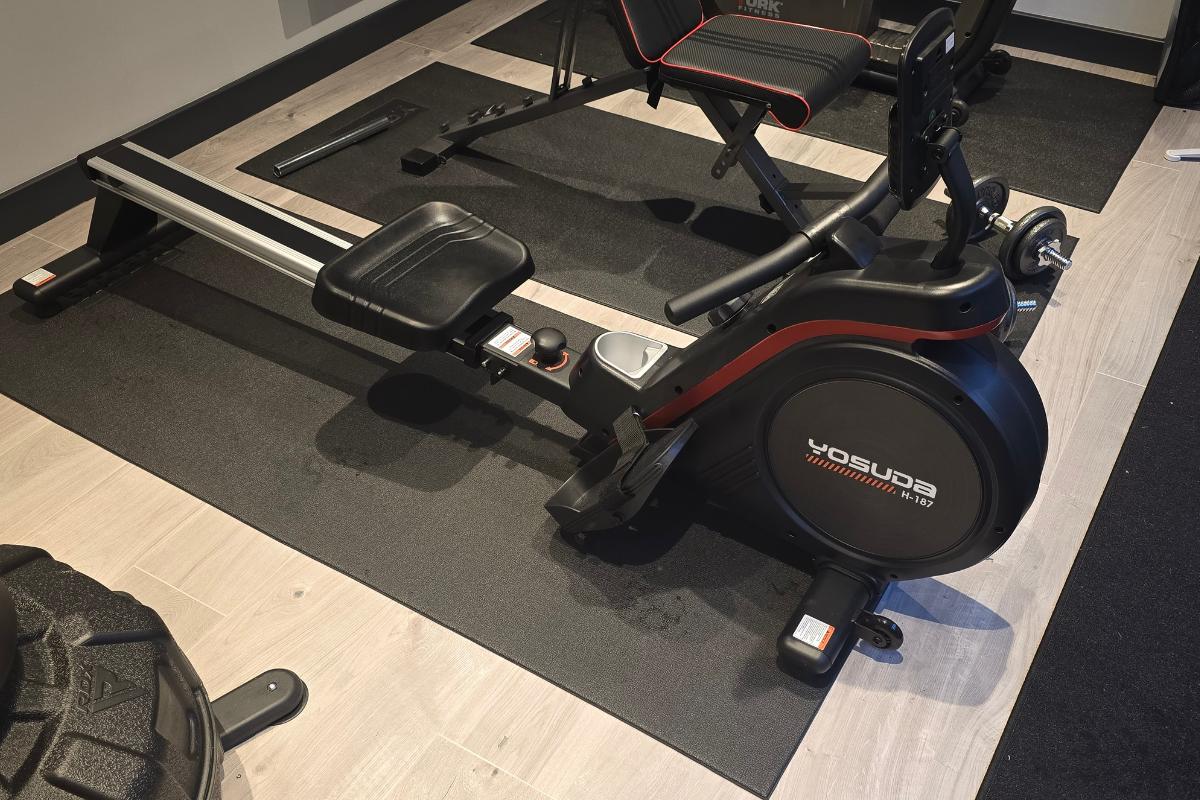
In this guide, I am going to walk you through exactly how to use a rowing machine, even if you have never sat on a machine before. I will also share my thoughts on the RM4 Magnetic Foldable Rowing Machine from FED Fitness. I have looked at the specs, and why it is a popular choice for home gyms right now.
Why You Should Start Rowing
Before we get into the “how,” let’s talk about the “why.” Why should you choose the rowing machine over the treadmill or the bike?
According to health experts at Healthline, rowing engages 86% of your muscles. That is huge. When you run, you are mostly using your legs. When you row, you are pushing with your legs, holding tight with your core, and pulling with your arms. It is a total body workout in one smooth motion.
Here are a few more reasons to give it a try:
- It saves time: Because you are working so many muscles at once, you can get a great workout in less time. 20 minutes on a rower can feel like an hour on other machines.
- It is kind to your joints: Running involves pounding the pavement. Rowing is smooth. You sit down, and your feet stay in the straps. This makes it a great option if you have stiff knees or are recovering from an injury.
- It boosts your heart health: It gets your heart pumping quickly. This strengthens your cardiovascular system, making your heart and lungs stronger.
- It is meditative: Once you get the rhythm down, the “swish-swish” sound of the machine can be very relaxing. It is a great way to clear your head after a busy day.
How to use a rowing machine
This is the most important part. If you have ever watched people row at the gym, you might see them hunching their backs or pulling the handle wildly to their chin. Do not do that.
Rowing is all about sequence. You need to move your body parts in a specific order to get the power and avoid injury.
The sequence is: Legs, Body, Arms with four simple steps.
1. The Catch (The Start)
Sit on the seat and strap your feet in. Slide forward until your shins are vertical (straight up and down). Your knees should be bent and near your chest.
- Grab the handle with a loose grip. Don’t squeeze it too hard.
- Keep your arms straight in front of you.
- Lean forward slightly from your hips.
- Your back should be straight, not rounded like a turtle.
2. The Drive (The Work)
This is where the power happens.
- Legs: Push hard with your legs first. This is where 60% of your power comes from. Think about jumping off the footrests.
- Body: Once your legs are almost straight, swing your body backwards.
- Arms: Finally, pull the handle to your lower chest (right below your ribs). Keep your elbows tucked in, not flapping out like chicken wings.
3. The Finish (The End of the Stroke)
Now you are at the back of the machine.
- Your legs are straight but not locked tight.
- Your body is leaning back slightly.
- The handle is touching your shirt just below your chest.
- Your core (stomach muscles) should be tight.
4. The Recovery (The Return)
Now you need to go back to the start. You just do the drive in reverse.
- Arms: Push your arms away from your body until they are straight.
- Body: Lean your body forward from the hips back to that start position.
- Legs: Once the handle passes your knees, bend your legs and slide the seat forward.
Remember: Arms, Body, Legs.
It might feel robotic at first. You might find yourself chanting “Legs, Body, Arms” in your head. That is totally normal. British Rowing suggests focusing on the legs because that is where most of your power should come from. If your arms get tired quickly, you are probably pulling too early.
Common Rowing Machine Mistakes to Avoid
Here are a few things to watch out for so you stay safe.
Shooting the Slide
This happens when you push your legs back, but your seat moves faster than the handle. You end up with your legs straight and your body still hunched forward. To fix this, make sure the handle moves at the same speed as your seat when you start the drive.
The Rainbow
This is when you lift the handle up and over your knees on the way back. It usually happens because you bent your knees too early. Remember the recovery sequence: straighten your arms first, then bend your knees.
The Turtle Back
Slouching is bad for your spine. Always keep your chest up and your shoulders down. If you feel your back rounding, stop and reset. It is better to do fewer strokes with good form than a hundred strokes with bad form.
Holding Your Breath
Muscles need oxygen! Try to breathe out when you push back (the hard part) and breathe in when you slide forward (the easy part). This will help you keep a steady rhythm on your rowing machine.
Review: The FED Fitness RM4 Magnetic Foldable Rowing Machine
Now that you know how to row, you need a machine. I spent some time looking into the RM4 Magnetic Foldable Rowing Machine from FED Fitness. If you are looking to build a home gym without spending a fortune, this is a strong contender.
Here is some of the information you need about this specific model.
The Basics
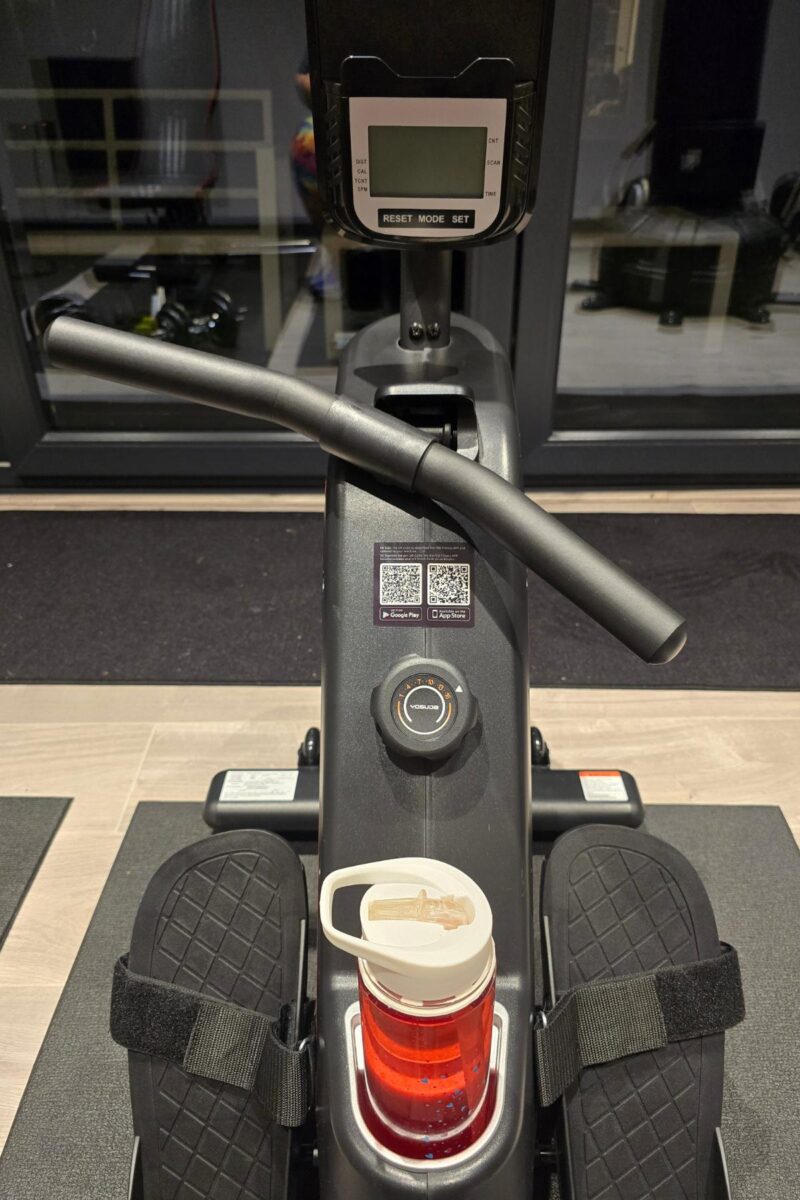
The RM4 is a magnetic rower. This means it uses magnets to create resistance rather than water or air. Magnetic rowing machines are known for being very quiet and smooth. This is great if you live in an apartment or want to watch TV while you exercise.
Key Features
1. Silence is Golden
The biggest selling point here is the noise level. Or rather, the lack of it. It claims to operate at 25 decibels. To put that in perspective, a whisper is about 30 decibels. You could row early in the morning while your family is asleep, and you probably wouldn’t wake them up. To be fair, in our house, you could have a party, and Ben wouldn’t wake up!
2. Resistance for Everyone
This rowing machine comes with 16 levels of resistance.
- Levels 1-4: Great for warming up or cool-downs.
- Levels 5-10: Good for aerobic exercise (cardio).
- Levels 11-16: Heavy resistance for building muscle power.
This range is excellent because beginners can start light, but strong rowers won’t outgrow the machine too quickly. The 12 lb flywheel helps make that resistance feel consistent and smooth.
3. Built for Stability
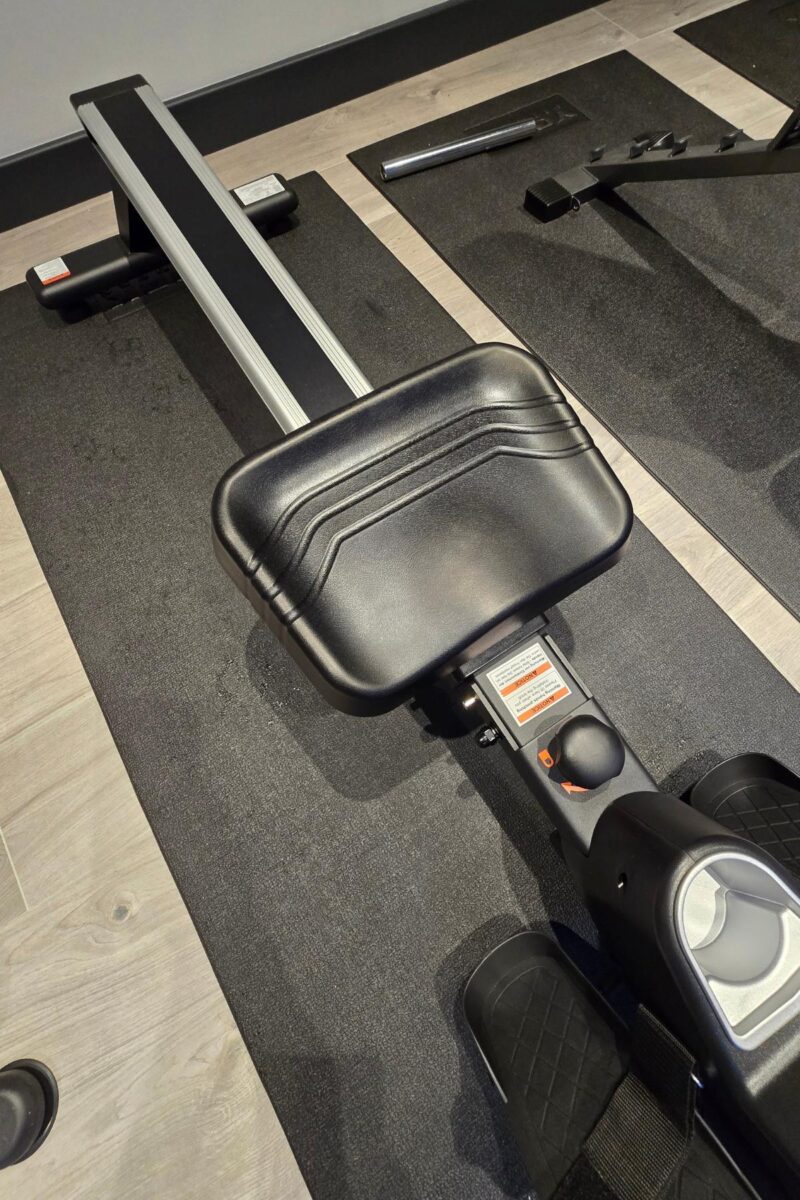
One worry with foldable home equipment is that it might feel wobbly. The RM4 uses 4mm thick commercial steel for the slide rail. It can support users up to 350 lbs (approx. 158 kg). That is a high weight capacity for a budget-friendly machine, which suggests it is built to last.
4. Space Saver
If you do not have a dedicated gym room, this feature is vital. The machine folds up. You can stand it upright against a wall or tuck it into a corner. It has wheels on the front, so you can tilt it and roll it away when you are done. We have a home gym, so it can stay unfolded for us, but I do like this feature.
5. The Tech
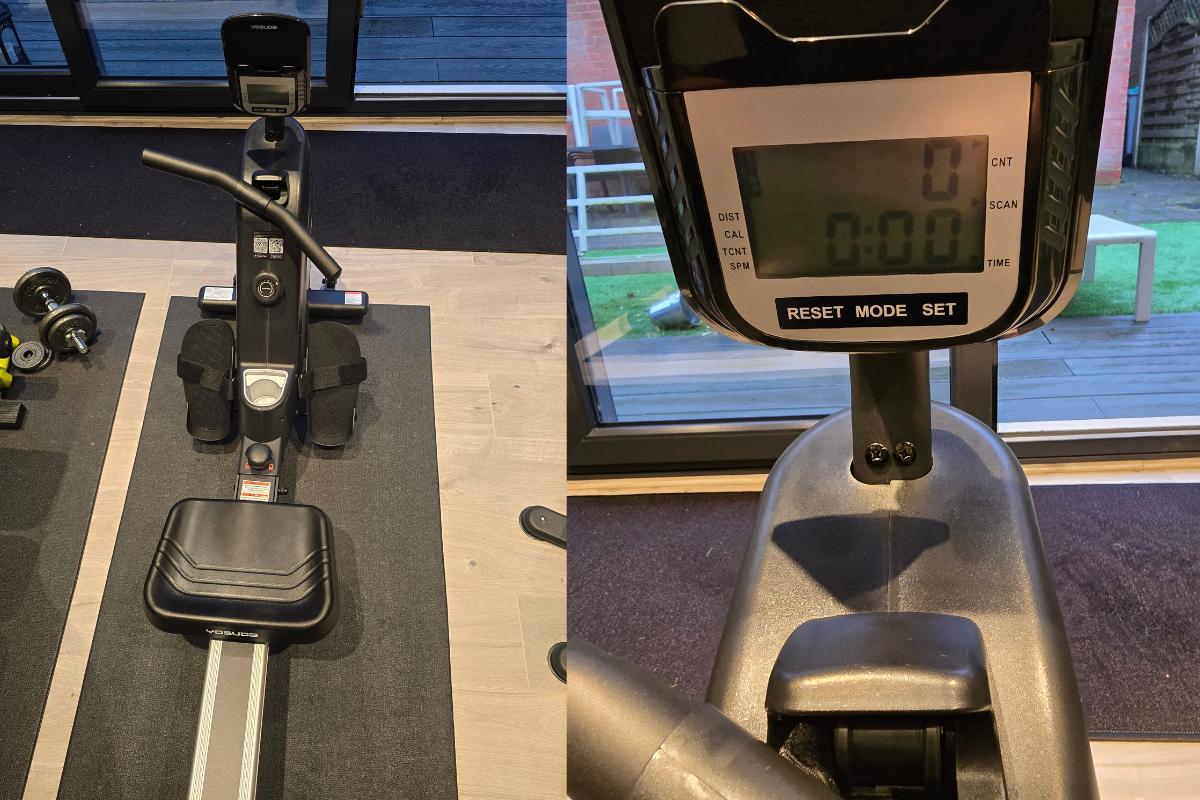
The monitor is adjustable, which is helpful. It tracks the basics:
- Time
- Speed
- Distance
- Calories burned
- Stroke count
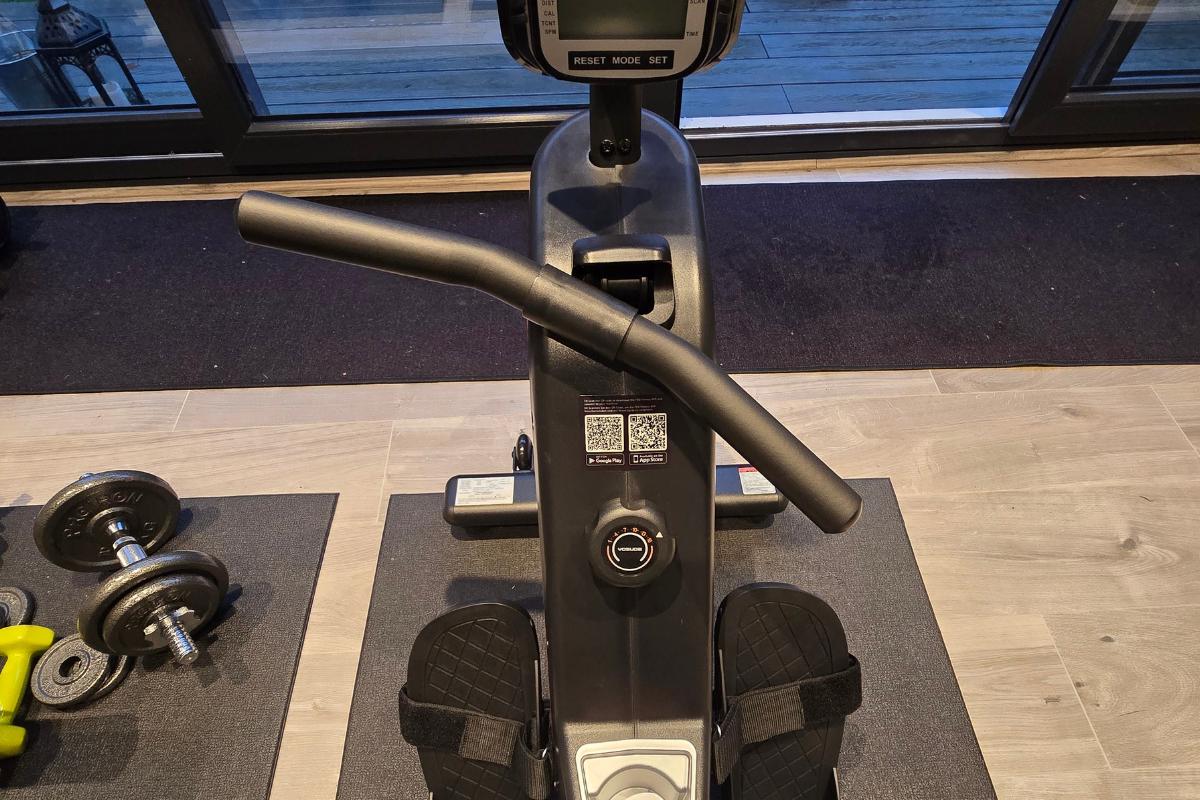
It also has a holder for your tablet or phone. This is perfect if you want to follow a workout video or just watch Netflix while you sweat. I love the fact the holder doesn’t obscure the monitor so you can watch what you like and still see how far you have rowed, calories burned etc.
Who is this machine for?
I think the RM4 is perfect for beginners and intermediate rowers. The price is reasonable, and it offers a solid, stable workout.
If you are an Olympic rower, you might prefer an air rowing machine (like a Concept2) because it better mimics the feel of water. But for 95% of people just wanting to get fit at home, the magnetic resistance of the RM4 rowing machine is smoother, quieter, and more than enough to get your heart rate up.
A Simple Beginner Rowing Machine Workout Plan
Ready to hop on your FED Fitness machine (or whatever rower you have) and give it a go? Here is a simple 20-minute workout to get you started.
0:00 – 5:00: Warm Up
Row at a slow, comfortable pace. Focus entirely on your form: Legs, Body, Arms. Keep the resistance low (Level 3-4).
5:00 – 10:00: Pick Up The Pace
Increase your stroke rate slightly. You shouldn’t be sprinting, but you should be breathing harder. If you can talk in full sentences easily, push a little harder. (Level 6-8).
10:00 – 15:00: Power Intervals
- Row hard for 1 minute. Focus on pushing hard with your legs.
- Row slowly for 1 minute. Catch your breath.
- Repeat this pattern until you hit the 15-minute mark.
15:00 – 20:00: Cool Down
Slow right down. Return to the pace you used in your warm-up. Let your heart rate come down gradually.
Do this workout three times a week. As you get stronger, you can increase the resistance or lengthen the “hard” intervals.
Rowing is one of the best exercise machines for your joints while still being a blooming good workout.
The RM4 seems like a fantastic rowing machine to help you build this habit. It is sturdy, quiet, and fits easily into a normal home.
Check out the full specs of the RM4 on the FED Fitness website.
Rowing Machine – Frequently Asked Questions
Does rowing build muscle?
Yes, it does. While it is famous for cardio, the resistance builds muscle endurance. It targets your legs (quads, calves, glutes), your back (lats), and your shoulders. It is great for toning up.
How long should I row for to lose weight?
Consistency is key. Aim for 30 minutes of moderate rowing most days of the week. Harvard Health notes that vigorous rowing burns calories very efficiently. Combined with a healthy diet, this will help with weight loss.
Can I row every day?
You can, but listen to your body. Because rowing is low-impact, it is safe to do often. However, your muscles grow when they rest. If you are rowing hard, try taking a rest day in between, or alternate hard days with light recovery days.
Is the FED Fitness RM4 rowing machine hard to assemble?
We found it pretty straightforward. It took about 45 minutes to assemble and the box contained all the tools we needed. The instructions were clear and easy to follow.
What is the difference between magnetic and air rowing machines?
Air rowing machines get harder the faster you row (due to wind resistance). They are noisy but feel more like rowing on water. Magnetic rowers (like the RM4) have set resistance levels. They are quiet and smooth but the resistance feels constant, regardless of how fast you pull.
Do you have a rowing machine? Would you like one? Let me know your thoughts in the comments below.