
Disordered Eating vs Eating Disorder: What’s the Difference?
You’ve skipped lunch because you felt guilty about breakfast. You’ve scrolled through fitness accounts and started mentally labelling foods as “good” or “bad.” You’ve eaten a whole pack of biscuits in one sitting and spent the rest of the evening feeling awful about it. Sound familiar?
Most of us have had a complicated moment or two with food. But there’s a big difference between an off day and something that’s genuinely taking over your life. Understanding where disordered eating ends and an eating disorder begins isn’t always straightforward, and the line between the two can feel blurry, especially when diet culture has made a lot of harmful habits look perfectly normal.
This post breaks it all down clearly and kindly. No scary medical jargon, no judgment. Just honest, useful information to help you (or someone you care about) understand the differences between Disordered Eating vs Eating Disorder, what’s going on and, if needed, where to find help.
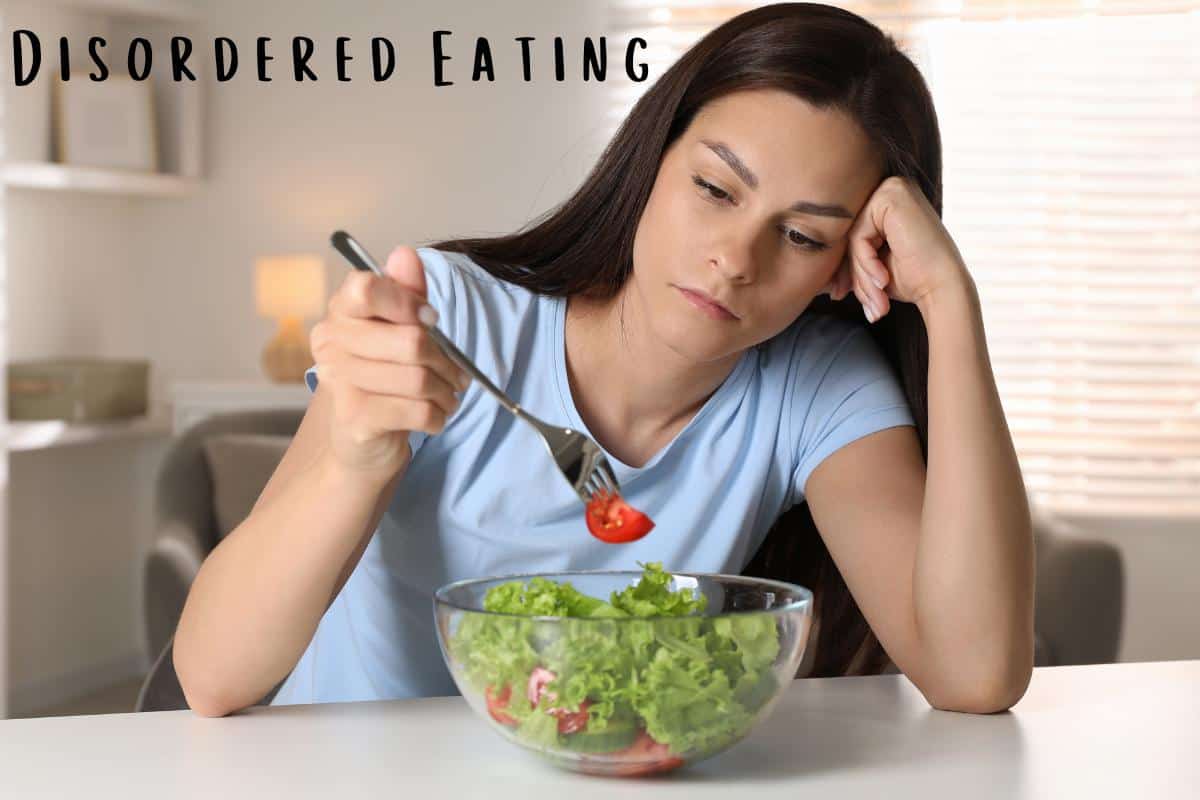
Here I want to help you understand Disordered Eating vs Eating Disorder, what do they mean, do you have either, and what are the signs of Disordered Eating vs Eating Disorder you need to know about.
What Is Disordered Eating?
Disordered eating is a broad term that covers a range of unhealthy attitudes and behaviours around food. Think of it as a spectrum of habits that aren’t quite “normal” but don’t yet meet the full criteria for a clinical diagnosis.
According to Dr Omara Naseem, a senior psychologist, disordered eating can be described as “symptoms of an eating disorder which are at the subclinical level for diagnosis.” In plain English, that means the behaviours are real and harmful, but they haven’t yet reached the point where a doctor would formally diagnose an eating disorder.
Disordered eating can look like:
- Frequently skipping meals or restricting what you eat
- Feeling intense guilt or shame after eating certain foods
- Cutting out whole food groups without a medical reason
- Obsessing over calories, macros, or “clean eating”
- Using extreme diets, fasting, detox teas, or cleanses regularly
- Exercising to “burn off” food rather than for enjoyment or health
- Boredom or emotional eating that feels hard to control
None of these behaviours on their own automatically means you have an eating disorder. But they all deserve attention. As Dr Naseem explains, they “still warrant attention, as early intervention is the key to stopping disordered habits becoming entrenched.”
It’s also worth noting that diet culture has made a lot of these behaviours seem completely normal. When “clean eating” and extreme fitness challenges flood your social media feed, it can be hard to spot where healthy habits end and harmful ones begin. That’s a real problem, and it’s not your fault. I wrote an article about the signs of disordered eating that may also help you.
What Is an Eating Disorder?
An eating disorder is a serious mental health condition. According to the NHS, “an eating disorder is a mental health condition where you use the control of food to cope with feelings and other situations.”
Crucially, a formal diagnosis requires symptoms to meet a specific set of clinical criteria. Eating disorders are diagnosed by GPs, psychiatrists, psychologists, and other trained healthcare professionals. They are not simply “bad eating habits.” They are complex mental illnesses that affect a person’s thoughts, emotions, and behaviours, often in ways that can have serious physical consequences.
As Beat, the UK’s leading eating disorder charity, explains: “Eating disorders are serious mental illnesses affecting people of all ages, genders, ethnicities and backgrounds.”
The most commonly diagnosed eating disorders in the UK include:
Anorexia Nervosa: Involves severely restricting food intake, often alongside excessive exercise, and is linked to an intense fear of weight gain.
Bulimia Nervosa: A cycle of eating large amounts of food followed by behaviours to “undo” the eating, such as making oneself sick or using laxatives.
Binge Eating Disorder (BED): Involves eating very large amounts of food in a short time, feeling completely out of control, and then experiencing intense shame or guilt. Crucially, there are no compensatory behaviours like purging. You can read more about this in our guide to binge eating disorder.
Other Specified Feeding or Eating Disorder (OSFED): This is actually the most common diagnosis. It applies when a person’s symptoms are serious and clinically significant but don’t fit neatly into the above categories. OSFED is no less serious than any other eating disorder.
Other recognised conditions include ARFID (Avoidant/Restrictive Food Intake Disorder), Pica, Rumination Disorder, and Orthorexia (an unhealthy obsession with eating “pure” food, though this is not yet formally recognised as a clinical diagnosis in the UK).
So Disordered Eating vs Eating Disorder, What’s the Actual Difference?
Here’s the simplest way to think about Disordered Eating vs Eating Disorder.
Disordered eating sits on a spectrum. It includes behaviours and thoughts around food that are unhealthy, but they haven’t yet reached the severity, frequency, or intensity that would warrant a formal diagnosis. A person with disordered eating might go through phases of restrictive behaviour or emotional eating, but their overall functioning isn’t yet seriously disrupted.
An eating disorder, on the other hand, is a clinical condition. The thoughts and behaviours are persistent, intense, and interfere significantly with daily life. Dr Naseem notes that “when disordered eating starts to interfere with daily life, this is an early warning sign of the development of an eating disorder.” So, as you can see it isn’t Disordered Eating vs Eating Disorder, it is how much your issues with food affect you.
That interference might look like:
- Withdrawing from social events because food is involved
- Difficulty concentrating on work or school
- Rigid or compulsive rituals around food
- Intense emotional distress connected to eating
- Physical symptoms like dizziness, fatigue, digestive issues, or changes in menstrual cycle
Importantly, disordered eating doesn’t always develop into an eating disorder, but it can. That’s why catching it early matters so much.
Why Eating Disorders Are So Often Misunderstood
One of the biggest barriers to getting help is the misconception that eating disorders have a certain “look.” Many people believe you have to be visibly underweight to have an eating disorder. That is simply not true.
Eating disorders do not discriminate. They affect people of all genders, ages, races, sexualities, and body sizes. According to Beat, around a quarter of people with eating disorders are male, yet men are far less likely to seek help because of the stigma attached. People from marginalised communities also face additional barriers to recognition and support.
A person does not need to be at a low weight to be suffering. Many people with bulimia or binge eating disorder are in larger bodies, which can make their condition harder to spot and, tragically, harder for others to take seriously.
It’s also worth flagging that disordered eating behaviours can sometimes be mistakenly viewed as someone being “healthy.” Someone obsessively tracking their food or refusing to eat at social occasions might be praised for their “discipline,” when actually they’re struggling.
Disordered Eating vs Eating Disorder: The Role of Diet Culture
We can’t talk about disordered eating without talking about diet culture. The constant messaging that smaller bodies are better, that certain foods are “toxic,” and that discipline and restriction equal health has created an environment where unhealthy behaviours are rewarded and even celebrated.
Crash diets, for example, are well known to backfire for most people, and research consistently links a history of restrictive dieting to a higher risk of developing an eating disorder. The deprivation that comes with extreme restriction can trigger intense cravings, which can in turn lead to binge episodes, followed by guilt, followed by restriction again. It’s a cycle that can quickly become very hard to break.
If you’re trying to find a more compassionate path to health and well-being, there’s a wonderful post on this site about losing weight with self-love that takes a very different approach to the usual diet-culture messaging. It doesn’t matter, Disordered Eating vs Eating Disorder, if you need help, then I want to help.
Disordered Eating vs Eating Disorder: Warning Signs to Look Out For
Whether you’re concerned about yourself or someone else, here are some signs that eating habits may have moved beyond “normal” territory:
- Spending a lot of time worrying about food, weight, or body shape
- Eating very little, or eating secretly and in large amounts
- Going to the bathroom straight after meals
- Noticeable changes in weight, energy, or mood
- Becoming withdrawn, anxious, or irritable around food or mealtimes
- Wearing loose clothing to hide body changes
- Talking about food in a fearful or obsessive way
If several of these apply, it’s worth taking it seriously. You can use Beat’s self-assessment tool as a starting point.
Disordered Eating vs Eating Disorder – When and How to Get Help
If you think you or someone you know might have an eating disorder, the first step is to speak to a GP. They can assess what’s going on, refer you to a specialist, and check on any physical health concerns. It can feel daunting, but GPs deal with sensitive issues every single day. You can even write down your thoughts beforehand so you don’t forget anything important in the appointment.
The NICE guideline on eating disorders (NG69) recommends that if a GP suspects an eating disorder, they should refer the person to a specialist as soon as possible. Early treatment makes a real difference to recovery outcomes.
Treatment usually includes talking therapies such as Cognitive Behavioural Therapy (CBT), and in some cases, guided self-help programmes or more intensive support. For binge eating disorder specifically, you can read more about the treatment options in my detailed BED guide. There are various eating disorder treatments available across the world, including virtual IOP eating disorder support online, which is popular in the USA.
If you’re not ready to see a GP yet, or if you’re supporting someone else, Beat offers free, confidential support via their helpline on 0808 801 0677, as well as online chat and email support. Mind also has excellent resources for understanding eating problems and finding local support.
Disordered Eating vs Eating Disorder: Frequently Asked Questions
Can disordered eating be just as dangerous as an eating disorder?
Yes, it can. Although disordered eating doesn’t meet the clinical threshold for an eating disorder diagnosis, that doesn’t mean the behaviours are harmless. They can still cause physical and emotional harm, and they can progress into a full eating disorder if left unaddressed.
Can someone have disordered eating and not realise it?
Absolutely. Many disordered eating habits are so normalised by diet culture that people genuinely don’t recognise them as problematic. Skipping meals, obsessing over “clean” food, and punishing yourself with exercise after eating are all examples of behaviours that might seem like healthy choices but can actually signal a troubled relationship with food.
Can men get eating disorders?
Yes. Beat estimates that around a quarter of people with eating disorders are male. Unfortunately, men are far less likely to be diagnosed or to seek help, partly due to the stereotype that eating disorders are a “female” condition.
Do you have to look a certain way to have an eating disorder?
No. Eating disorders affect people of all body sizes. A person does not need to be visibly underweight to have a serious and clinically significant eating disorder.
What’s the difference between emotional eating and binge eating disorder?
Emotional eating involves turning to food to manage feelings. It’s usually occasional and conscious. Binge eating disorder involves compulsive, out-of-control episodes of eating large amounts of food, followed by intense shame and guilt. It’s a clinical condition, not simply a bad habit or emotional response.
Is orthorexia an eating disorder?
Orthorexia (an obsession with eating “pure” or “healthy” food) is not yet formally recognised as a standalone eating disorder in clinical guidelines in the UK. However, Beat acknowledges it as a real and harmful condition that shares features with other eating disorders.
If You’re Struggling, You Don’t Have to Figure This Disordered Eating vs Eating Disorder Dilemma Out Alone
There’s a lot of noise out there about food, bodies, and health. Some of it is helpful. A lot of it isn’t. If you’ve read this far and something has resonated, that recognition itself is worth paying attention to.
You don’t need to wait until things are “bad enough” to reach out. You don’t need a diagnosis to deserve support. Whether you’re dealing with disordered eating habits or something more serious, speaking to someone is always a good idea.
Your GP is the best first port of call. If you’d prefer to talk to someone before that, Beat’s helpline is open seven days a week. And if you’re looking for a gentler, more compassionate approach to your relationship with food and your body, there’s plenty more on this site to help you along the way.
Pin this for later


