How to Use an Air Fryer for Beginners: Your First Cook
Everyone seems to have an air fryer these days. You might have seen them all over TikTok or heard your friends at work raving about how they cooked a whole roast chicken in 40 minutes. It feels a bit like a secret club, doesn’t it? Well, you have finally joined the club. You bought one, you unboxed it, and now it is sitting on your kitchen counter staring at you.
It can be a bit intimidating at first. It looks like a spaceship and sounds like a hairdryer. But I promise you that once you get the hang of it, you will wonder how you ever managed without it.
This guide is here to help you get over that initial fear. I am going to walk you through everything you need to know, from finding the perfect spot for it in your kitchen to making sure you do not give your family food poisoning. We will look at safety tips from UK experts and cover the basic rules of getting crispy, delicious food every time.
What is an air fryer actually?
Before we start cooking, it helps to know what is going on inside that plastic box. Despite the name, it is not actually a fryer. You are not submerging food in oil like you would with a chip pan.
Think of it as a very powerful, mini fan oven. There is a heating element at the top and a large fan that blows hot air around the food at high speed. Because the space is small and the air is moving fast, it cooks food much quicker than your big oven. It also crisps things up nicely, which is why we call it “frying” even though it is really baking.
This means you can get that lovely fried texture with a fraction of the oil. It is often cheaper to run than a big oven too, simply because it heats up faster and cooks quicker.
Finding a safe spot in your kitchen for an air fryer
You might be tempted to shove your new gadget into a corner or under a cupboard, but placement matters a lot for safety. This thing gets hot. Really hot.
The London Borough of Hammersmith & Fulham recommends using the “hand-span rule”. This means you should leave a gap of at least 5 inches, or the width of your hand, all around the air fryer. This space allows the air vents to do their job and stops the machine from overheating.
Here are a few more safety checks I always do before I switch mine on:
Check your surface
Never put an air fryer on a tea towel or any soft surface that could catch fire. It needs to sit on a stable, heat-resistant worktop. If you are worried about your worktop, you can buy a heat-safe board or mat to put underneath it.
Watch the plug
Electrical Safety First advises that you should avoid using extension leads if you can. Plug it directly into a wall socket. If you must use an extension lead, make sure it is not overloaded. Also, have a quick look at the plug and cord. If you see any burn marks or hear any buzzing sounds, do not use it.
Ventilation
Make sure the exhaust vent, usually at the back of an air fryer, is not blowing hot air directly into a wall socket or onto a packet of biscuits. Give it room to breathe.
Before you use your air fryer for the first time
Before cooking anything, take everything out of the box and have a proper look at what you’ve bought. That sounds ridiculously obvious, but air fryers can come with cardboard, stickers, packaging and removable pieces tucked inside the drawer, so don’t just plug it in and start cooking.
Take the basket or drawer out and remove all the packaging. Wash the removable parts according to the manufacturer’s instructions and dry them properly before putting everything back together.
This is also a good time to read the instruction booklet. I know nobody buys a new kitchen gadget because they’re excited about reading a manual, but air fryers aren’t all identical. Some need preheating, some don’t, dishwasher-safe parts vary and the clearance needed around the machine can differ too.
Where should you put an air fryer?
Your air fryer needs a stable, heat-resistant surface with enough room around it for ventilation. Don’t put it on a tea towel or another soft surface, and don’t wedge it tightly underneath a cupboard without checking the clearance recommended for your particular model.
Pay particular attention to the exhaust at the back because this is where hot air comes out. You don’t want that pointing straight at a plug socket, wall or anything that could be damaged by heat.
I also plug mine directly into a wall socket rather than using an extension lead wherever possible. If you’re unsure about the electrical side of things, Electrical Safety First has useful guidance specifically about air fryers.
What do the buttons on an air fryer do?
This is the bit that can make a new air fryer look far more complicated than it really is.
Most models basically need you to choose a temperature and a cooking time. That’s it. All the pictures of chips, chicken, fish and cakes are usually preset programmes which choose a suggested time and temperature for you.
You don’t have to use the presets.
I quite often set the temperature and time myself because I’m following a recipe I’ve already tested rather than asking the air fryer to guess what I’m cooking.
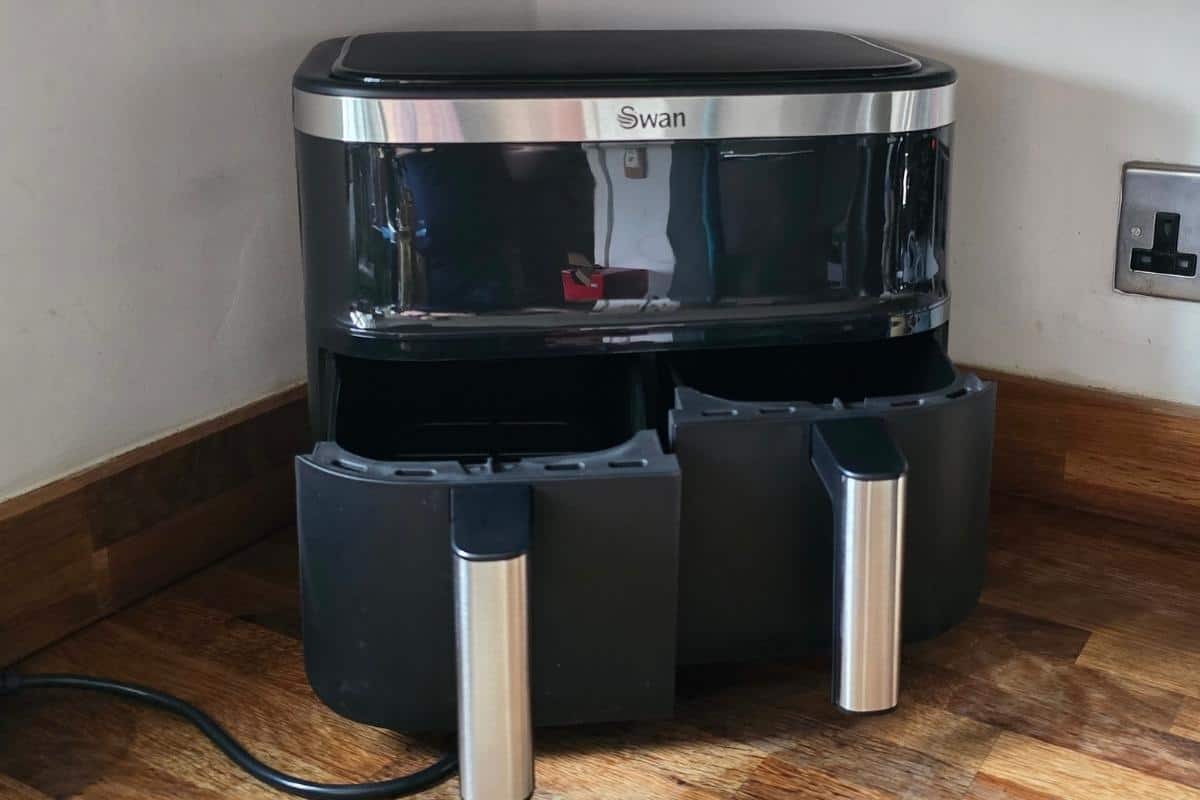
If you have a dual-drawer model, you’ll normally be able to set each drawer separately. Some models also have a sync or match function so that two foods with different cooking times finish together. The exact buttons vary between manufacturers, so this is one occasion when that instruction booklet earns its keep.
Where does the food actually go?
Food normally goes into the removable basket or onto the crisper plate inside the drawer, depending on the design of your air fryer.
You don’t fill the bottom of the air fryer with oil as you would with a deep-fat fryer. The whole point is that hot air circulates around the food.
Don’t remove the crisper plate simply because you aren’t sure what it’s for. Raising the food allows hot air to circulate underneath it, which is important for the way many air fryers cook.
There are exceptions because some recipes use suitable dishes, ramekins or cake tins inside the basket. If you’re trying something like that, check that whatever you’re putting inside is heatproof and suitable for the temperature you’re using.
My air fryer accessories guide explains the bits and pieces that are genuinely useful if you want to do more than put chips in the basket.
How to use an air fryer for the first time
Once you’ve unpacked it, washed the removable parts and found somewhere safe to put it, using an air fryer is much less exciting than you might expect!
Choose something simple for your first attempt. I wouldn’t christen a brand-new air fryer with an enormous roast dinner involving both drawers, six different timings and a chicken you’ve promised everyone will be ready at six.
Something familiar such as frozen chips is ideal because you already know roughly what the finished food should look like.
Put the food into the basket, leaving enough room for air to move around it. Set the temperature and cooking time according to the packet instructions or the recipe you’re following, then start the air fryer.
Some foods need shaking or turning partway through. With many models, pulling the drawer out automatically pauses cooking and putting it back in starts it again, although check your own instructions rather than assuming yours works exactly like mine.
Start checking the food before the full cooking time has elapsed, particularly the first time you make something. You can always cook it for another couple of minutes.
Once you’ve cooked a few things, this becomes completely automatic and you stop wondering what half the buttons are for.
Do you need to preheat an air fryer?
Sometimes, but not always.
Some air fryers have a specific preheat setting, some manufacturers recommend preheating for particular foods and plenty of recipes don’t require it at all.
Rather than automatically preheating for three or five minutes every single time, follow the instructions for your model and the recipe you’re making.
For much more on things such as preheating, overcrowding, shaking the basket, liners and getting food crispy, have a look at my air fryer tips and mistakes guide. I’ve kept all of that together there rather than turning this beginner’s guide into an enormous air fryer encyclopedia.
What should you cook first in an air fryer?
Frozen chips, potato wedges, sausages or vegetables are all much less intimidating than trying to cook a whole chicken on day one. Once you’ve got used to setting the time and temperature and seeing how quickly your particular machine cooks, you can move onto more interesting things.
If you’re stuck for ideas, my air fryer recipes and cooking tips page brings all my air fryer recipes and guides together. You can also try my air fryer sausages, air fryer roast potatoes or air fryer cauliflower if you want something straightforward to start with.
How do you know food is cooked in an air fryer?
An air fryer can brown the outside of food quite quickly, so don’t assume something is cooked through simply because it looks done.
This is particularly important with chicken and other foods where thorough cooking matters. I find a digital food thermometer useful because I can check the centre of the thickest part rather than trying to judge it from the outside.
The Food Standards Agency gives several safe time-and-temperature combinations for cooking food, including a core temperature of 70°C for two minutes or equivalent combinations at higher temperatures. Check its current cooking guidance if you’re unsure, particularly when cooking meat.
Cooking times in recipes should still be treated as a guide because the thickness of the food and the air fryer you’re using can affect how quickly it cooks.
For specific chicken timings, I’ve also put together my air fryer chicken cooking times guide.
Cleaning your air fryer after using it
I am definitely not somebody who enjoys washing up, but air fryers are much easier to live with if you don’t let grease and bits of food build up for weeks. Once you’ve finished cooking, unplug the air fryer and leave it to cool before doing anything with it.
The basket, drawer and any removable parts can usually be washed with warm soapy water, although I would always check the instructions for your particular model before putting anything in the dishwasher. Avoid metal scourers on non-stick surfaces, and never immerse the main electrical part of the air fryer in water.
You don’t need to turn cleaning it into a huge job every time you cook. A quick clean after use makes life much easier, then every so often it is worth checking around the heating element and the less obvious places where grease can collect.
I’ve written a separate guide to cleaning an air fryer with the full process, so head over there if yours needs rather more than a quick wash!
Can you use foil or baking paper in an air fryer?
You can use foil or baking paper in many air fryers, but this is another area where I would check the instructions for your particular model first.
One thing I wouldn’t do is put a loose sheet of baking paper into an empty air fryer while it is heating. The fan can lift lightweight paper towards the heating element, so if I use baking paper I make sure the food is sitting securely on top of it.
You also need to think about airflow. Completely covering the holes in the basket or crisper plate can stop the hot air from circulating underneath your food, which rather defeats the point of using an air fryer in the first place.
The same applies to silicone liners. They can be really handy for messy foods, but I don’t automatically use one for everything, especially if I’m trying to get something really crisp.
Do you need to boil potatoes before putting them in the air fryer?
It depends entirely on what you’re making.
You don’t have to boil potatoes before they go into an air fryer, and plenty of potato dishes start with raw potatoes. For roast potatoes, however, parboiling them first can help you get the fluffy middle and crisp outside you expect from a proper roastie.
I’ve been working on my air fryer roast potatoes separately because there are enough variables with potatoes to deserve their own guide rather than trying to squeeze a universal cooking time into this one.
Can you bake in an air fryer?
Yes, although I wouldn’t assume that you can take absolutely any oven recipe, put it in the air fryer at a randomly reduced temperature and expect it to work perfectly.
The smaller cooking space and circulating hot air can mean cakes and other bakes brown on top before the middle is ready. The size and shape of the tin matter too, as does the amount of space left around it for air to circulate.
I’ve written a separate guide to baking bread in an air fryer, which explains some of the things I’ve learnt about size, temperature, airflow and why a huge loaf isn’t necessarily the best thing to attempt in a small basket.
If you’re adapting another baking recipe, I’d use the original recipe as a starting point, check it earlier than you would in a conventional oven and make notes about what works in your particular machine rather than relying on one conversion rule for everything.
What accessories do you actually need for an air fryer?
You really don’t need to buy a box containing 27 mysterious silicone objects just because you’ve bought an air fryer.
I find a food thermometer useful, particularly for meat, and silicone-tipped tongs can be handy for turning food without scratching a non-stick basket. Depending on what you cook, you might also use small heatproof dishes, ramekins, baking tins or liners.
Before buying anything, check the dimensions of your actual basket. An accessory being described as suitable for air fryers doesn’t mean it will fit yours, especially now there are so many different sizes and dual-drawer models around.
I’ve put the things that are genuinely useful, along with what they’re actually for, in my air fryer accessories guide.
What shouldn’t you put in an air fryer?
Once you realise how many things you can cook in an air fryer, it becomes quite tempting to see it as a replacement for every other appliance in your kitchen.
There are still things you need to be careful with, though. Lightweight ingredients can potentially move around in the strong airflow, very wet mixtures aren’t necessarily suitable for putting directly into the basket, and you need to think about anything that could drip, splash or get too close to the heating element.
Rather than giving you a tiny list here and pretending it covers every possible situation, I’ve written a separate guide to what you shouldn’t put in an air fryer. Your manufacturer’s instructions should also be your first port of call if you’re unsure whether a particular dish, liner or accessory is suitable for your model.
Is an air fryer worth having?
For me, yes, but not because I think an air fryer is a magical appliance that makes every meal healthier, cheaper and ready in ten minutes.
What I like is the convenience. If I’m cooking a relatively small amount of food, I don’t necessarily want to heat the full oven, and there are plenty of things that cook really nicely in the air fryer. It is particularly useful for potatoes, vegetables, sausages, reheating certain foods and all those little things where turning the oven on can feel like overkill.
That doesn’t mean I use it for everything. Sometimes the oven is easier, sometimes a saucepan makes more sense and sometimes I simply can’t fit enough food into the air fryer without cooking it in several batches.
Once you’ve had yours for a while, you’ll soon work out which jobs it genuinely makes easier in your kitchen rather than trying to air fry something simply because you can.
What should you try after your first air fryer meal?
Once you’ve managed that first cook and realised the air fryer isn’t nearly as intimidating as all the buttons make it look, start experimenting with foods you already know and like.
You could try sausages in the air fryer, air fryer cauliflower or my air fryer cheese toastie before moving on to anything more adventurous. I’ve even got a guide to eggs in the air fryer, with different times and temperatures depending on how you want to cook them.
The more you use your own machine, the easier it becomes to recognise how quickly it cooks and when something needs an extra couple of minutes. Don’t worry if your timings aren’t identical to somebody else’s because air fryers, portion sizes and even the size you cut your food can all make a difference.
If something comes out a little soggy or cooks unevenly, have a look at my air fryer tips and mistakes next. That’s where I’ve covered things such as overcrowding, shaking the basket, oil, liners and getting crispier results without repeating all of it here.
Then, when you’re ready for something new, my air fryer recipes and cooking tips page brings all my recipes and individual cooking guides together. There are plenty of ideas there now, and I’m adding to it as I test more things in my own air fryer.
The main thing is not to overthink it. Start with something easy, learn what your particular air fryer does and go from there. Before long, you’ll probably be using the temperature and timer without giving all those buttons a second thought.