Is Bread Healthy? White vs Brown Bread and Other Options
Bread gets a surprisingly bad reputation for something most of us have eaten all our lives. If you’re trying to lose weight or eat a little more healthily, you’ve probably wondered whether you should swap white bread for brown, buy one of those very worthy-looking seeded loaves or perhaps stop eating bread altogether.
I’ve certainly been through phases where bread felt like something I shouldn’t really be eating if I was trying to lose weight. These days, I don’t think about food like that.
Bread isn’t inherently unhealthy, and you don’t need to give it up to lose weight. There are nutritional differences between different breads, though, particularly when it comes to fibre.
So, is brown bread really healthier than white? Is sourdough as wonderful as we’re constantly told? And what should you actually look for when you’re standing in the bread aisle?
Is bread healthy?
Bread can absolutely be part of a healthy, balanced diet. So go ahead and try my air fryer bread recipe!
It’s a starchy carbohydrate and provides energy alongside nutrients including B vitamins and minerals. Depending on the bread you choose, it can also be a useful source of fibre.
The NHS Eatwell Guide actually recommends basing meals around starchy carbohydrates such as bread, potatoes, rice and pasta, choosing higher-fibre or wholegrain versions where possible.
That’s rather different from the message you sometimes see online that bread is something we should all be desperately trying to avoid.
The nutritional value varies considerably between loaves, of course, but that’s true of most foods.
Is brown bread healthier than white bread?
Generally, wholemeal and wholegrain breads contain more fibre than standard white bread. When whole grains are used, more of the grain remains in the finished flour, including the fibre-rich outer layers.
This is one reason the NHS recommends choosing wholegrain, wholemeal or higher-fibre versions of starchy carbohydrates where possible. That doesn’t mean white bread is nutritionally useless.
White bread still contains vitamins and minerals; it simply tends to contain less fibre.
If you love white bread and hate wholemeal, there’s no reason you need to spend the rest of your life resentfully chewing your way through a loaf you don’t enjoy. Higher-fibre white bread can be a useful middle ground too.
Brown doesn’t necessarily mean wholemeal
This is something worth checking when you’re shopping. A loaf looking brown doesn’t automatically tell you how much wholegrain it contains.
Rather than choosing bread based entirely on its colour or how healthy the packaging looks, turn it over and look at the ingredients and nutrition information.
If increasing your fibre intake is your priority, compare the fibre figures between a few loaves. You might be surprised by the differences.
Why does fibre matter?
Fibre is one of the main reasons wholemeal bread gets recommended over white. UK adults are advised to aim for around 30g of fibre each day, and choosing wholemeal, granary or higher-fibre bread is one fairly painless way of adding more.
Fibre is important for digestive health and can help foods feel more filling. Personally, I find this a much more useful way to think about bread than asking whether one loaf is “good” and another is “bad”.
If you already eat plenty of fibre from beans, lentils, fruit, vegetables, oats and other wholegrains, choosing white bread occasionally isn’t suddenly going to ruin your diet. It’s the bigger picture that matters.
Why you need fibre during weight loss
Is white bread unhealthy?
No. This is exactly the kind of black-and-white thinking around food that I try to avoid now.
Standard white bread generally contains less fibre than wholemeal bread, so if you eat bread regularly, switching some of it for a higher-fibre variety can be an easy nutritional improvement. But white bread itself isn’t something you need to fear.
Sometimes white bread is exactly what I want. Beans on toast, a bacon sandwich, toast when you’re feeling rubbish – there are occasions when a dense seeded loaf simply isn’t going to hit the spot! You can eat white bread as part of a balanced diet.
Is wholemeal bread good for weight loss?
It can certainly be included in a weight-loss diet, but eating wholemeal bread doesn’t cause weight loss any more than eating white bread prevents it. Weight loss depends on your overall energy intake over time.
The advantage of wholemeal bread is primarily that it generally contains more fibre, which may help make your meal more satisfying.
What you put on the bread matters too. Two slices of toast with eggs and tomatoes make a very different meal from two slices of toast eaten alone or with chocolate spread!
If you regularly find yourself hungry an hour after breakfast, rather than automatically blaming the bread, I’d look at the whole meal. Could you add some protein? Fruit? Vegetables? Something else containing fibre?
That’s much more useful than simply banning toast.
What about seeded bread?
Seeded bread can be lovely, and it’s one of my favourites when I want something a little more substantial. Depending on the loaf, seeds can contribute additional fibre, protein and unsaturated fats.
But again, don’t assume every seeded loaf is automatically “healthier” than everything sitting next to it. Different brands and recipes vary. If there’s something particular you’re interested in – perhaps fibre, calories or salt – compare the labels.
And remember that seeds contain fat and therefore energy too. That’s not a reason to avoid them; it’s simply another example of why describing foods as healthy or unhealthy based on one ingredient isn’t particularly useful.
Is granary bread healthy?
Granary-style and malted grain breads can be another tasty way to increase the variety of grains in your diet. They tend to have a nuttier flavour and more texture than ordinary white bread, which I personally quite like.
The fibre content will depend on the particular loaf, so once again I’d check the label rather than assuming anything called “granary” must have a particular nutritional profile.
If you enjoy it, brilliant. If you don’t, there are plenty of other ways to eat more fibre.
Is sourdough healthier than normal bread?
Sourdough seems to have acquired an almost magical reputation over the last few years.
Real sourdough is made using a fermented starter rather than relying solely on commercial baker’s yeast, which gives it that distinctive flavour and texture.
There is research into how sourdough fermentation may affect digestion and blood-glucose responses, but I wouldn’t buy an expensive sourdough loaf because you’ve been convinced it’s some sort of health food.
What it’s made from still matters. A wholegrain sourdough, for example, is going to have a different nutritional profile from one made primarily with refined white flour.
Personally, I’d choose sourdough because I like sourdough. Anything else is a bonus.
What about rye bread?
Rye is another option if you’re bored with ordinary sliced bread. Some rye breads are incredibly dense and filling, while others are much lighter, depending on how they’re made and whether rye has been combined with wheat flour.
Wholegrain rye can be a good source of fibre, but check the ingredients because something labelled “rye bread” isn’t necessarily made entirely from wholegrain rye.
I think this is one of the nice things about bread that gets forgotten when we’re busy arguing about white versus brown. There are loads of different types to try.
Is bread high in calories?
Bread isn’t automatically particularly high in calories. The exact amount varies according to the type, thickness and ingredients, so check the packet if calories are something you’re monitoring.
Where things can change quite dramatically is what you put on it. Bread with a thin spread of something isn’t nutritionally identical to bread covered in a generous amount of butter, cheese, mayonnaise or nut butter.
Again, that doesn’t make those foods bad. It just means that if you’re trying to understand the calorie content of your lunch, looking solely at whether the bread is white or brown doesn’t tell you very much.
Do you need bread alternatives?
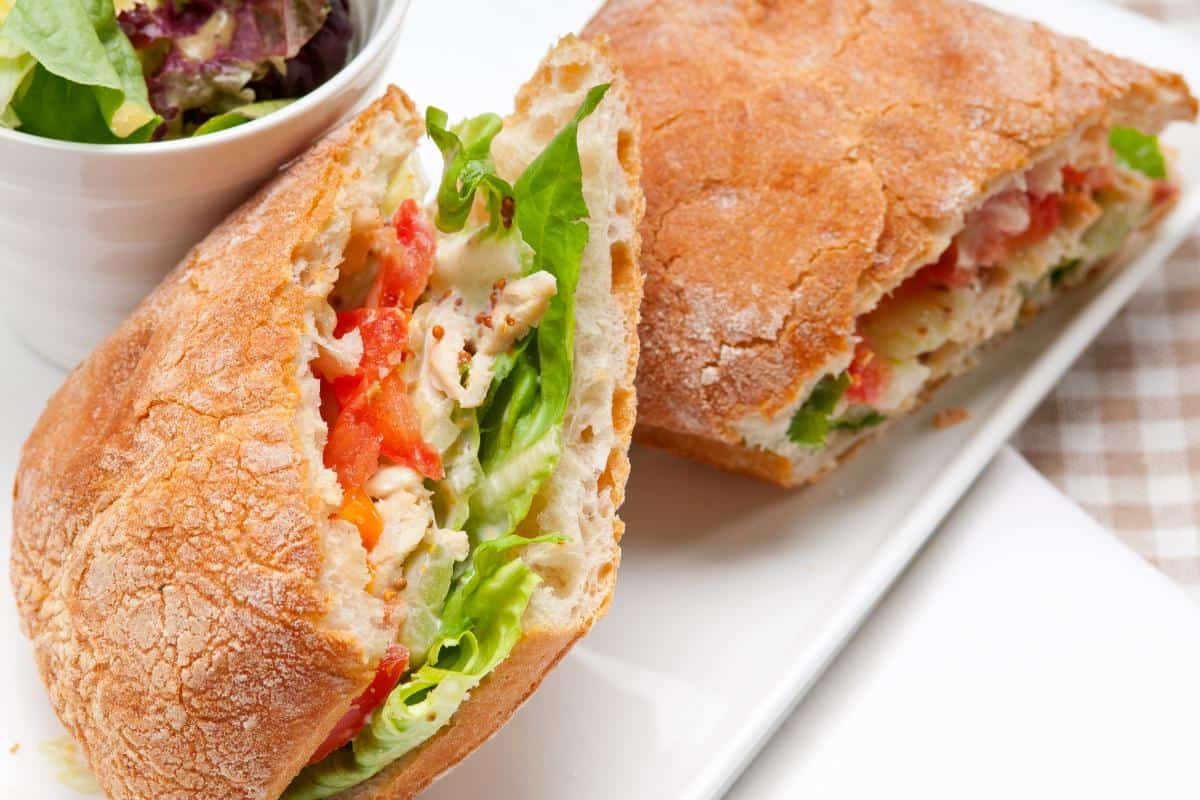
This is another thing I want to change from the way I used to think about dieting. You don’t need to replace bread with a lettuce leaf simply because you’re trying to lose weight. If you fancy a sandwich, have a sandwich.
Lettuce wraps can be nice. Oatcakes can be nice. A baked sweet potato can be lovely. But they’re different foods rather than clever substitutes designed to save you from the terrible consequences of eating two slices of bread.
Use alternatives because you enjoy them or fancy some variety, not because you think bread is something you need to escape from.
What can you have instead of bread?
If you’re genuinely bored with bread or simply want some different ideas, there are loads of options.
Oatcakes are handy with cheese, hummus or other toppings and can contribute some extra fibre.
Wraps and pittas give you many of the same possibilities as sandwiches while making lunch feel slightly different.
A jacket potato is an easy alternative if you want something warm and filling.
Crackers, crispbreads and rice cakes can all work with toppings too, although their nutritional content varies considerably, so I wouldn’t automatically consider them “healthier” than bread.
You could also simply change the bread you’re buying. Try rye, sourdough, seeded bread, bagels, pitta, wraps or a nice crusty roll. Sometimes we don’t actually need a bread alternative. We just need a change from the same boring sliced loaf we’ve been eating for six months.
What if bread makes you feel bloated?
Feeling bloated after eating bread doesn’t automatically mean you’re intolerant to gluten. Bread contains several components that can cause digestive symptoms in different people, and portion size and what you’re eating alongside it can matter too.
If you regularly experience symptoms after eating bread or other wheat-containing foods, don’t immediately remove gluten from your diet and diagnose yourself from TikTok. Speak to your GP, particularly if symptoms are persistent.
This is especially important because testing for coeliac disease is most useful while you’re still eating gluten.
Is gluten-free bread healthier?
Not automatically. Gluten-free bread is incredibly useful for people who medically need to avoid gluten, including those with coeliac disease. But removing gluten doesn’t inherently make bread healthier or better for weight loss.
Gluten-free breads vary just as much as ordinary breads do in fibre, calories, salt and other nutrients. If you don’t medically need to avoid gluten, there’s generally no nutritional reason to swap ordinary bread for gluten-free purely because the packaging makes it sound healthy.
How do I choose a healthier loaf?
I’d keep this incredibly simple. If you’re looking for an everyday bread, find one you actually enjoy eating and then compare the fibre content of a few similar options.
Wholemeal, wholegrain and higher-fibre breads are useful choices if you’re trying to increase your fibre intake. If salt is something you’re monitoring, compare that too. Beyond that, don’t drive yourself mad trying to identify the world’s healthiest loaf.
You might choose wholemeal for everyday sandwiches, sourdough when you fancy it and white bread for the occasional chip butty. That’s normal eating.
So, which bread should you buy?
For most people, I’d choose a higher-fibre bread you genuinely like for everyday use. That could be wholemeal, seeded, granary, rye or even a higher-fibre white loaf. Then eat other breads when you fancy them.
The NHS recommends choosing wholegrain or higher-fibre starchy carbohydrates where possible, but bread itself isn’t something you need to eliminate from a healthy diet.
And that’s probably the biggest thing I want you to take from this.
If you’re trying to lose weight, you don’t need to replace your sandwich with two enormous lettuce leaves and pretend it’s equally satisfying.
I’ve done enough dieting over the years to know that making food progressively sadder isn’t the secret to a healthy relationship with it.
Choose a bread you enjoy, think about fibre, add fillings that make your meal satisfying and get on with your day.
Sometimes lunch really can just be a sandwich.