High Protein Pasta Salad: Easy Ways to Add More Protein
I love pasta salad for lunch, especially when I want something I can make in advance and just get out of the fridge. The only problem I’ve sometimes found is that a bowl that’s mostly pasta and a few bits of tomato or cucumber doesn’t always make a particularly satisfying lunch.
Adding a source of protein is an easy way to turn pasta salad into a more substantial meal. That doesn’t have to mean chicken or tuna either. As a vegetarian, I’d be much more likely to add beans, edamame, tofu, cheese or perhaps a yoghurt-based dressing, while Stuart and Ben have plenty of meat and fish options if that’s what they fancy.
Rather than giving you one high protein pasta salad recipe and pretending that’s the only combination that works, I’ve put together lots of ways you can build one according to what you like and what you’ve already got in the fridge.
How do you add protein to pasta salad?
The easiest way is to think about the pasta, the main protein ingredient and then everything you’re adding for flavour and texture.
You could use ordinary pasta and add chicken, tuna, beans, tofu or cheese. Alternatively, you could choose a pasta made from ingredients such as chickpeas, lentils or peas and then add another protein source on top of that.
You don’t need every ingredient in the bowl to be high in protein. I’d much rather have a pasta salad I actually enjoy eating than construct something according to the numbers on the packet and discover it tastes awful.
If protein is particularly important to you, check the nutritional information on the ingredients you’re buying. The amount can vary considerably between brands and products, so the packet is far more useful than assuming every type of pasta, cheese or yoghurt contains the same amount.
Choosing pasta for a high protein pasta salad
There’s absolutely nothing wrong with using ordinary pasta. If that’s what you’ve already got and what you enjoy, start there and add your protein elsewhere in the meal.
Wholewheat pasta contains more fibre than standard white pasta, so that’s another option if you like it.
You’ll also find pasta made with chickpeas, lentils, peas and other pulses. These can contain more protein and fibre than conventional pasta, although the exact amount varies by product and the texture can be quite different.
If you need gluten-free pasta for medical reasons such as coeliac disease, don’t assume a product is suitable purely because it’s made predominantly from lentils or chickpeas. Check the actual packaging and allergen information.
I’ve compared several options in my pasta alternatives guide if you’re interested in trying something different from conventional wheat pasta.
Chicken and turkey for pasta salad
Cooked chicken is probably one of the easiest additions if you eat meat because it works with so many different flavours.
You could keep things simple with chicken, tomatoes, cucumber and peppers or go for something spicier with fajita-style seasoning. Leftover cooked chicken can also be useful, provided it has been stored safely.
Turkey works in much the same way, so there’s no reason to buy chicken especially if you’ve already got cooked turkey that needs using.
For more ideas using chicken and pasta together, have a look at my easy chicken pasta recipes.
Tuna, salmon and prawns
Tinned tuna is convenient because there’s no extra cooking involved, and it works particularly well with sweetcorn, cucumber, tomatoes, peppers and spring onions.
Salmon is another option, either cooked salmon or smoked salmon depending on the flavours you’re using. Prawns work well with lemon, herbs and crunchy vegetables.
I don’t eat fish myself, so these aren’t the combinations you’ll find me pinching from Stuart’s plate, but they’re easy options if fish is something you enjoy.
Vegetarian protein for pasta salad
This is much more my territory.
Chickpeas are one of the easiest additions because you can drain a tin, rinse them and throw them straight in. Butter beans and other beans work too, although I’d choose the bean according to the rest of the salad rather than adding something purely because it contains protein.
Edamame beans are another useful option and add a completely different texture.
Tofu works particularly well if it’s smoked, marinated or seasoned first. Plain tofu straight from the packet wouldn’t be my first choice for a pasta salad because I’d rather get some flavour into it before adding it.
You can also combine ingredients. Chickpea pasta with edamame, vegetables and a yoghurt-based dressing, for example, gives you several sources of protein without needing meat or fish.
Cheese and dairy options
Feta is brilliant in pasta salad because you don’t need much to get plenty of salty flavour. It’s particularly good with tomatoes, cucumber, olives and peppers, which is why those ingredients work so well in my Greek pasta salad.
Mozzarella is milder and works beautifully with tomatoes and basil. My tomato and mozzarella pasta salad is a really simple example.
Cottage cheese can work too, particularly blended or stirred into a dressing rather than sitting in big spoonfuls amongst the pasta.
If you’re comparing cheeses specifically for protein, look at the nutritional information rather than assuming reduced-fat automatically means higher protein. Different products can vary considerably.
Make a higher-protein pasta salad dressing
You can add some extra protein through the dressing as well.
One easy option is a yoghurt and mustard dressing. For a small batch, mix:
- 4 tablespoons Greek yoghurt
- a squeeze of lemon juice
- 1 teaspoon Dijon mustard
- ½ teaspoon garlic granules
- salt and pepper to taste
Stir everything together, taste it and adjust the lemon or seasoning if necessary before mixing it through the salad.
You could add fresh herbs too. Chives, parsley, basil and dill all work, although which one I’d choose would depend on everything else in the bowl.
If you don’t eat dairy, choose a plant-based yoghurt that works for you and check its nutritional information if protein content is important, as different alternatives can vary quite a lot.
Don’t forget the vegetables
This is where pasta salad gets much more interesting.
Cherry tomatoes, cucumber, peppers, sweetcorn, spring onions, grated carrot and spinach are all easy additions. Roasted vegetables work too if you’ve got leftovers from dinner.
Olives, capers and artichokes add stronger flavours, while fresh herbs can make an enormous difference without requiring much effort.
You don’t have to add half the contents of the vegetable drawer. Two or three ingredients that actually work together will usually make a much nicer pasta salad than throwing in absolutely everything because it needs using.
Although I have definitely made a few fridge-clear-out lunches that would suggest I don’t always follow my own advice!
High protein vegetarian pasta salad ideas
If you want a few combinations to start with rather than standing in front of the fridge wondering what goes with what, try something along these lines:
Greek-style: pasta, chickpeas, feta, cucumber, tomatoes, peppers and olives.
Tomato and mozzarella: pasta, mozzarella, tomatoes, basil and edamame.
Smoky tofu: pasta, smoked tofu, peppers, sweetcorn, spring onions and a yoghurt or plant-based yoghurt dressing.
Chickpea and roasted vegetable: pasta, chickpeas, roasted courgette and peppers with tomatoes and herbs.
Green pasta salad: pasta, edamame, spinach, cucumber, spring onions and a lemony yoghurt dressing.
They’re ideas rather than strict recipes, so change them according to what you enjoy.
High protein pasta salad for meal prep
Pasta salad can be really useful for meal prep, but I wouldn’t automatically mix absolutely everything together several days in advance.
Leafy ingredients such as rocket and spinach are nicer added closer to serving because they can wilt. You may also find the pasta absorbs some of the dressing while it’s sitting in the fridge, so keeping a little dressing separately can help.
Most importantly, cool cooked ingredients and refrigerate the salad promptly rather than leaving it sitting around at room temperature. How long it can safely be kept will also depend on what you’ve put in it, so follow current UK food-safety advice for the ingredients you’re using.
High protein pasta salad FAQs
What protein can I put in pasta salad?
Depending on your diet, options include chicken, turkey, tuna, salmon, prawns, eggs, beans, chickpeas, edamame, tofu and cheese. You can also choose higher-protein pasta or use yoghurt in the dressing.
What is the highest-protein pasta?
There isn’t one type I would universally call the highest because nutritional values vary between ingredients and brands. Pasta made from pulses such as chickpeas or lentils often contains more protein than conventional pasta, while specialist high-protein wheat pastas are also available.
Compare the protein per 100g on the nutritional labels if you’re choosing specifically on protein content.
Can high protein pasta salad be vegetarian?
Definitely. Beans, chickpeas, lentil or chickpea pasta, edamame, tofu, cheese and yoghurt give you plenty of possible combinations without meat or fish.
As a vegetarian myself, I’d much rather make a pasta salad around ingredients like these than use meat substitutes simply for the sake of it.
Can I make it vegan?
Yes. Beans, chickpeas, edamame and tofu are all useful options, and you can choose a suitable plant-based dressing.
If you’re specifically aiming for a certain amount of protein, check the labels because plant-based yoghurts and cheeses can vary significantly in their nutritional content.
Should you rinse pasta for pasta salad?
Rinsing cooked pasta under cold water can cool it quickly and remove some surface starch, although it’s not compulsory for every pasta salad. Another option is to drain it well and allow it to cool before adding ingredients.
Which method works best can depend on the pasta and dressing you’re using.
Can you freeze pasta salad?
I generally wouldn’t. Cooked pasta itself can be frozen, but fresh vegetables and creamy dressings don’t necessarily have a great texture once they’ve been frozen and defrosted.
Pasta salad is one of those things I’d rather make in a quantity we’ll actually eat from the fridge.
More healthy pasta salad ideas
If you’re looking for actual measured recipes rather than building your own bowl, have a look at my healthy pasta salad recipes collection.
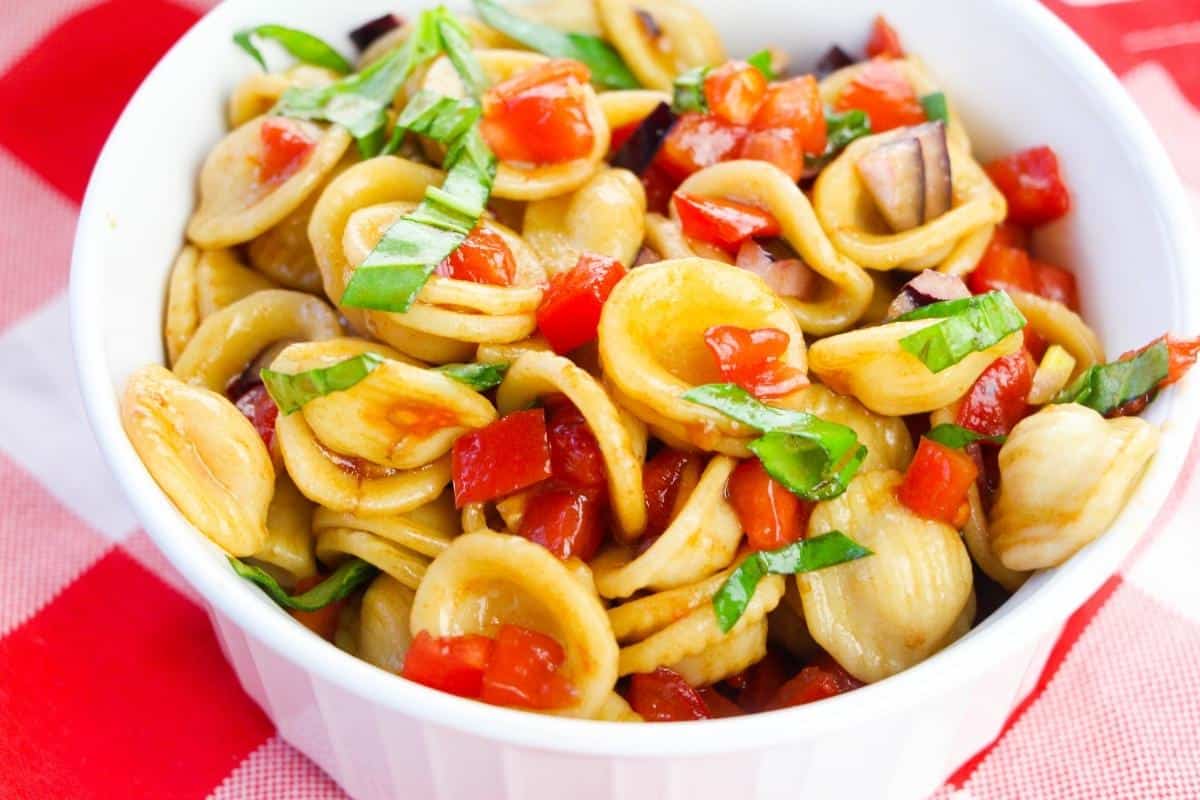
You’ll find options including Greek pasta salad, tomato and mozzarella pasta salad and bruschetta pasta salad, so you can choose something according to the ingredients and flavours you fancy.
For everything from pasta bakes to creamy dinners and tomato-based sauces, head over to my Slimming World pasta recipes hub too.
There isn’t one perfect high protein pasta salad. Start with pasta you like, add a protein source that fits your diet, throw in vegetables and flavours you actually enjoy and you’ve got a much better chance of making a lunch you’ll look forward to eating.