
The Art of Saying No: Why You Don’t Need an Excuse
We have all been there. Your phone pings on a Friday evening. It’s a friend asking for a favour you absolutely do not have the energy for. Or perhaps it’s your boss, casually dropping a “small task” on your desk at 4:55 pm.
Your stomach drops. Your brain screams, “No! Absolutely not! I am tired!” But what comes out of your mouth? “Sure, no problem.” Saying no is just too hard to do, and we avoid it when we really shouldn’t.
Almost immediately, the regret sets in. You are now committed to something that drains your time, your energy, and your mood. Why do we do this to ourselves? Why is a tiny, two-letter word so incredibly hard to say?
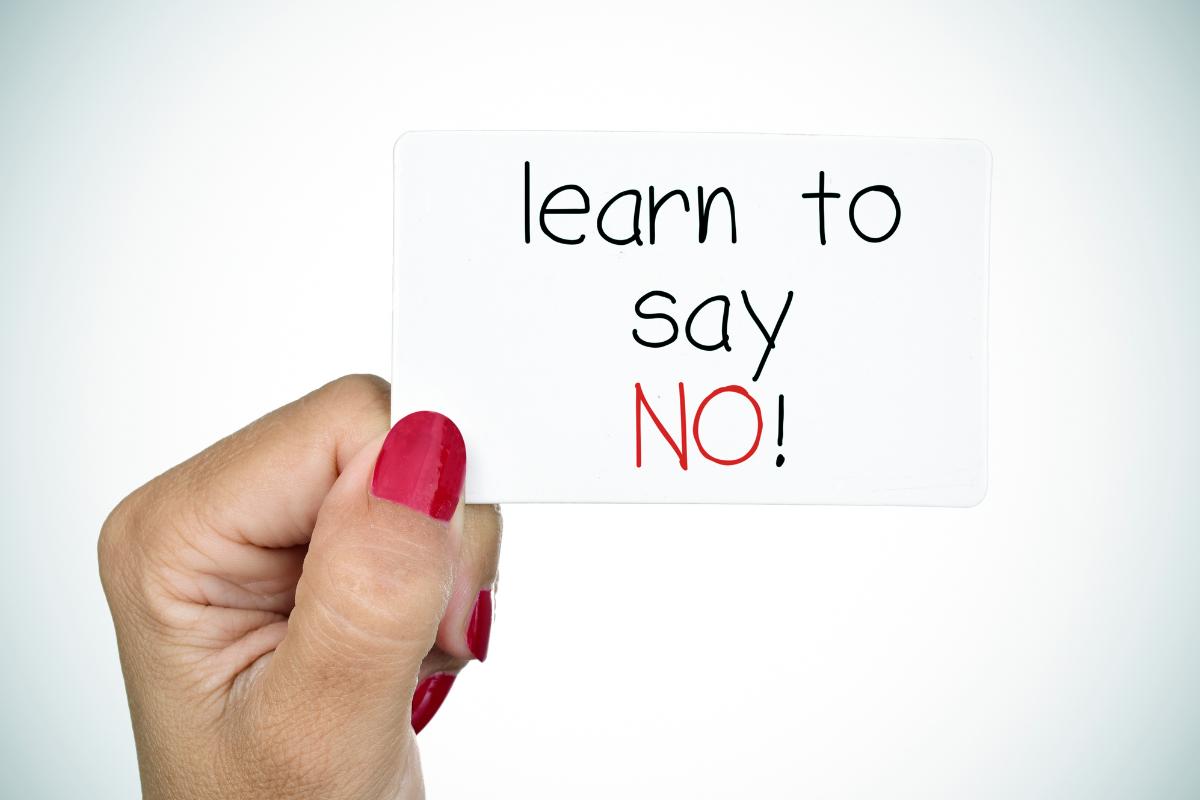
We live in a culture that often praises busyness and equates saying “yes” with being helpful, capable, or kind. But constantly agreeing to things we don’t want to do isn’t kindness. It’s a one-way ticket to burnout.
The truth is, learning to say no is one of the most important skills you can master for your mental health. It is not about being difficult or selfish. It is about respecting your own limits so that when you do say yes, you actually mean it.
Why is it so hard to say no?
Before we can start saying no, we have to understand why we are so terrified of it. For many of us, the fear of saying no is deeply rooted in a desire to be liked. We worry that if we refuse a request, we will be seen as lazy, unhelpful, or uncaring.
Psychologists often refer to this as “people-pleasing”. It is a behaviour pattern where you value the needs of others above your own. You might feel that your value as a friend or employee depends on how much you can do for people.
There is also the fear of missing out (FOMO). If you say no to that dinner invitation, will they stop inviting you? If you say no to that extra project, will you be passed over for a promotion? These fears feel very real in the moment, making “yes” feel like the safer option.
But there is a trap here. When you say yes to everyone else, you are often saying no to yourself. You are saying no to your rest, your hobbies, and your mental space.
The hidden cost of always saying yes
You might think that saying yes keeps the peace, but it often wages a war inside your own head. The most common side effect of chronic people-pleasing is resentment.
Author and professor Brené Brown put it perfectly when she said: “Compassionate people ask for what they need. They say no when they need to and when they say yes, they mean it. They’re compassionate because their boundaries keep them out of resentment.” (Source: HFEH Mind).
Think about the last time you agreed to something you didn’t want to do. Did you show up with a smile, or did you spend the entire time secretly fuming? That resentment affects the quality of your relationships. Eventually, you snap or you withdraw, and the relationship suffers anyway, the very thing you were trying to avoid by saying yes.
There is also the issue of burnout. You cannot pour from an empty cup. If you give away every ounce of your energy to others, you leave nothing for yourself. This can lead to exhaustion, stress, and even physical illness.
“No” is a complete sentence
This is a concept that can change your life: You do not need to explain yourself.
When we do muster the courage to say no, we often follow it up with a lengthy excuse.
“I can’t come to the party because my cat is sick, and I have a headache, and I have to get up early…”
We over-explain because we feel guilty. We think that if we provide enough evidence, the other person will grant us permission to say no. But here is the secret: you don’t need their permission, saying no on its own is ok.
When you offer a long list of excuses, you often give the other person an opening to negotiate.
- You: “I can’t help with the move on Saturday, I don’t have a car.”
- Them: “Oh, don’t worry, I can pick you up!”
Now you are trapped.
If you simply state your boundary clearly, there is less room for negotiation. “I can’t make it this weekend” is firm, polite, and final. You don’t have to lie, and you don’t have to justify your choices. Your time belongs to you.
How to say no without feeling guilty
Okay, so we know why we should say no. But how do we actually do it without sweating bullets? It takes practice. Here are some strategies and scripts you can use to soften the blow without wavering.
The “Let me check” tactic
If you are put on the spot, your instinct might be to just agree to end the awkwardness. Instead, buy yourself some time before saying no.
- “That sounds interesting! Let me check my diary and get back to you.”
- “I need to look at my workload before I commit. I’ll let you know by tomorrow.”
This gives you a chance to check in with yourself. Do you actually have the time? Do you want to do it? It is much easier to send a polite “no” via text or email later than it is to say it face-to-face.
The “Positive sandwich”
This is a classic technique where you sandwich the refusal between two positive statements. It shows you care about the person, even if you can’t help them with the task.
- “Thank you so much for asking me! I’m absolutely swamped this week so I can’t make it, but I hope you have a wonderful time.”
- “I really appreciate you thinking of me for this project. I can’t take on anything new right now, but I’d love to hear how it goes.”
The “Alternative offer”
If you genuinely want to help but can’t do exactly what is asked, offer a compromise. This sets a boundary while still being supportive.
- “I can’t help you move house all day Saturday, but I can come by for two hours in the morning.”
- “I can’t write that report for you, but I can read it over once you’re done.”
This shifts the dynamic. You are still being helpful, but on your terms.
The direct (but kind) no
Sometimes, you just need to be clear. Being vague can give people false hope. Saying no is important even if you do so indirectly.
- “I’m not able to take that on right now.”
- “That doesn’t work for me.”
- “My plate is full at the moment.”
Setting boundaries at work
Workplace boundaries can be tricky. You want to be a team player, but you also don’t want to be the office doormat.
If your boss assigns you a task that will push you over the edge, try to reframe your refusal as a prioritisation question. It’s not that you won’t do the work; it’s that you want to do your existing work well.
Try saying:
“I can certainly take a look at that project. However, my schedule is fully booked with [Project A] and [Project B] right now. Which of these would you like me to deprioritise so I can focus on the new task?”
This puts the ball back in their court. It reminds them that your time is a finite resource.
Organisations like Mind UK suggest having designated workspaces and times to help separate your professional life from your personal life. This physical boundary can make it easier to mentally switch off and say “no” to checking emails at 9 pm.
Setting boundaries with friends and family
This is often where we struggle the most, saying no. We love our friends and family, so saying no feels personal. But remember the “empty cup” analogy from earlier. If you are burned out, you are not much fun to be around anyway.
If a friend asks to borrow money, stay at your house, or demands emotional support you can’t give right now, it is okay to draw a line.
A useful phrase from the Counselling Directory is: “I’m not in the right headspace to talk about this right now, but I’m happy to check in another time.” This protects your emotional energy without shutting the person down completely.
For family obligations that feel draining, try to focus on quality over quantity.
“I can’t come for the whole weekend, but I’ll come for Sunday lunch.”
What to do if they push back
Sometimes, people won’t accept your first “no”. They might guilt-trip you, beg, or get angry. This is often a sign that they benefited from your past lack of boundaries and rarely saying no before.
If someone pushes back, stand your ground. You don’t need to get angry or defensive. Just repeat your answer calmly. This is sometimes called the “broken record” technique.
- Them: “But you always help with the bake sale! We can’t do it without you.”
- You: “I know, I’ve enjoyed it in the past. But I can’t do it this year.”
- Them: “It will only take an hour!”
- You: “I understand, but I can’t do it this year.”
Eventually, they will realise that your “no” is firm.
Treating yourself with kindness
The guilt might flare up after you refuse someone. That is normal. Acknowledge the feeling, but don’t let it change your mind. Remind yourself that you are protecting your well-being.
Treat yourself with the same compassion you would show a friend. If your best friend told you they were exhausted and overwhelmed, would you tell them to work harder? No. You would tell them to rest. Give yourself that same permission.
Start small. Saying no to something minor, like a coffee invite you don’t really want to attend, or buying a raffle ticket you don’t want. See how it feels. Notice that the world doesn’t end. The more you flex your “no” muscle, the stronger it will get.
Saying No – Frequently Asked Questions (FAQ)
Is saying no selfish?
Not at all. Saying no is a form of self-care. If you don’t look after your own needs, you will eventually burn out and be unable to support anyone. Think of the safety instructions on an aeroplane: you have to put on your own oxygen mask before you can help others.
What if I say no and they get angry?
You cannot control how other people react to your boundaries. If someone gets angry because you told them no, it is often a reflection of their expectations, not your behaviour. You are not responsible for managing their emotions. A respectful relationship should be able to withstand a respectful refusal.
How do I say no to my boss without getting fired?
It is all about how you frame it. Instead of a flat “no”, try to offer a solution or ask for help with prioritisation. Show that you are committed to the quality of your work. Most reasonable managers will appreciate you being honest about your capacity rather than taking on too much and missing deadlines.
Do I always have to give a reason?
No. While it can feel polite to give a reason, it is rarely necessary. In fact, giving a reason often invites the other person to solve your “problem” so you can say yes. “No, I can’t make it” is a perfectly valid response. Saying no can be a full sentence on its own and doesn’t always need anything else.
Why you should start saying no today
Imagine a life where your calendar is filled only with things you want to do, or things that truly matter to you. Imagine finishing work on time without guilt. Imagine having the energy to actually enjoy your weekend.
That life is possible, but it requires boundaries. It requires the courage to disappoint others in the short term to preserve your own happiness in the long term.
So, the next time you feel that dread in your stomach, take a deep breath. Pause. And remember that you have a choice. You can say no. And you don’t even need an excuse.
Do you want to start saying no more often and reclaim more of your time? Have these tips helped? I know I struggle with saying no but I am getting much better at it and often practise saying no when I am out and about. It is so much easier saying no to a stranger asking you to buy something than to a family member.