Are Sausage Rolls Bad for You? What You Need to Know
Are sausage rolls bad for you? They certainly aren’t the first food that springs to mind when you think of healthy eating, but that doesn’t mean you need to avoid them completely.
A typical sausage roll can be fairly high in calories, saturated fat and salt, and traditional sausage meat is classed as processed meat. However, how healthy your overall diet is isn’t determined by whether you occasionally eat a sausage roll. How often you eat them, the portion size and what you eat alongside them all matter too.
I think this is particularly important if you’re trying to lose weight. I’ve spent far too much of my life thinking about foods as either “good” or “bad”, when in reality you can lose weight while still eating foods such as sausage rolls. You just need to understand what you’re eating and decide how it fits into your day.
There can also be quite a difference between a small homemade sausage roll, a large bakery sausage roll and one you’ve picked up from the supermarket. So, let’s look at the calories and nutrition in sausage rolls, whether they’re actually unhealthy and some simple ways you can make them a little healthier if you want to.
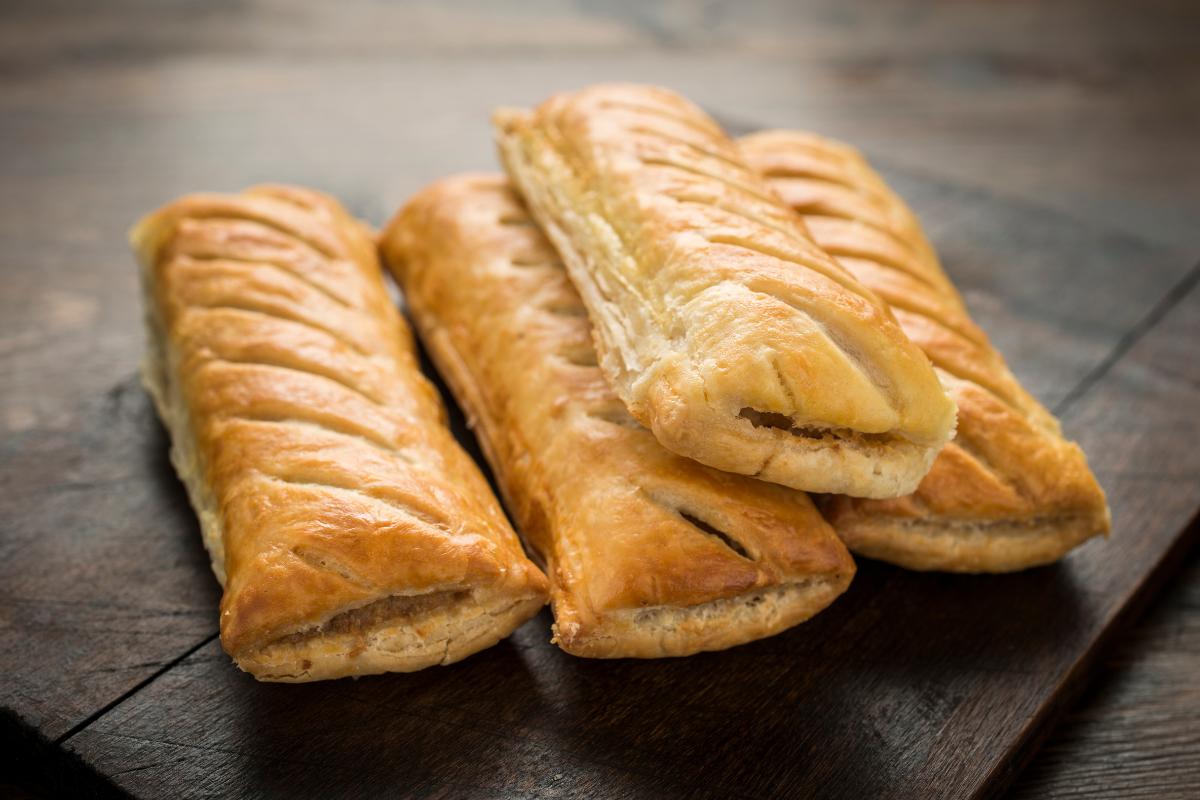
Quick Answer: Are Sausage Rolls Bad For You?
Sausage rolls are usually high in calories, saturated fat, salt and processed meat, so they are best enjoyed occasionally rather than every day. However, having a sausage roll now and then is unlikely to harm your health if the rest of your diet is balanced and nutritious.
What is actually in a sausage roll?
To understand if sausage rolls are healthy, I first need to look at what they are made of. The two main parts are the sausage meat and the pastry.
Most sausage rolls use puff pastry. This is what gives them that light and flaky texture that we all love. But that texture comes at a cost. Puff pastry is made by layering dough and fat, usually butter or processed vegetable oils. This means it is very high in calories and fat before you even add the filling.
Then there is the meat. The filling is usually made from pork sausage meat. In many store-bought rolls, this is not just pure pork. It is often a mix of meat, fat, rusk (a type of breadcrumb), water and seasonings. This mixture falls into the category of processed meat.
Processed meat is any meat that has been preserved by smoking, curing, salting or adding chemical preservatives. This includes bacon, ham, hot dogs and the meat inside your sausage roll. This processing is great for keeping food fresh longer and adding flavour. However, it alters the meat in ways that can harm our bodies. It’s worth understanding the difference because the ingredients in a sausage roll can affect its nutritional value. However, I wouldn’t worry too much about one individual sausage roll. It’s what you’re eating regularly that matters much more than the occasional pastry from the bakery!
How many calories are in a sausage roll?
There isn’t one simple answer to how many calories are in a sausage roll because they vary enormously in size and ingredients.
A little cocktail sausage roll is obviously going to contain far fewer calories than a huge bakery sausage roll, while the amount and type of pastry and sausage meat used can make a big difference too. Vegetarian and vegan versions aren’t automatically lower in calories either, particularly if they still contain plenty of pastry.
If you’re buying a packaged sausage roll, the nutritional information on the packet is therefore much more useful than a generic figure online. Pay attention to whether the information is given per sausage roll, per 100g or per portion, because it’s surprisingly easy to compare two completely different serving sizes without realising.
Calories aren’t the only thing worth looking at, either. Sausage rolls can contain protein from their filling, but they can also contain quite a lot of saturated fat and salt. If you’re comparing a few different options, looking at the whole nutritional label gives you a much better picture than calories alone.
If you’re trying to lose weight, you certainly don’t need to find the lowest-calorie sausage roll available. Sometimes I’d much rather have the sausage roll I actually fancy, enjoy it properly and build the rest of my meal around it.
How much fat, protein and carbohydrate is in a sausage roll?
The nutritional content of a sausage roll depends heavily on its recipe, but most of the calories tend to come from a combination of the pastry and sausage filling.
The pastry contributes much of the fat and carbohydrate, while the sausage meat provides protein as well as additional fat. This is why two sausage rolls of a similar size can have surprisingly different nutritional values depending on the pastry, meat content and other ingredients used.
If protein is important to you, don’t assume that something containing sausage meat is automatically a particularly high-protein choice. Check the label and compare it with other foods you might be considering for lunch.
The same goes for fat. There’s nothing inherently wrong with eating fat, but sausage rolls can contain a fair amount of saturated fat, so it’s worth being aware of if they’re something you eat regularly.
Sausage rolls and processed meat
One reason sausage rolls aren’t generally considered an everyday health food is that traditional sausage meat is a form of processed meat.
Processed meat includes meat that has been preserved or altered through methods such as curing, smoking, salting or adding preservatives. Sausages, bacon, ham and salami are common examples.
Health guidance generally recommends limiting processed meat rather than suggesting that you can never eat it. This is an important distinction because I don’t think frightening people about individual foods is particularly helpful.
If you enjoy sausage rolls occasionally, you don’t need to panic about having one. If you’re eating processed meat several times every day, however, that’s something you might want to look at as part of your diet overall.
You could perhaps swap some processed meat for chicken, fish, eggs, beans, lentils or other protein sources during the week while still having the sausage roll when you actually fancy one.
The NHS advises that if you currently eat more than 90g of red or processed meat a day, you should cut down to 70g. This is a very specific target to keep in mind. It does not mean you can never eat a sausage roll again. It doesn’t mean you can never enjoy a sausage roll, but if processed meat is something you eat regularly, it’s worth considering how much you’re having overall and whether you could vary your choices a little more.
Why salt is a hidden problem
Salt is another thing worth checking when you’re buying sausage rolls, particularly if you eat them regularly. It’s easy to focus on calories and forget about salt, but some sausage rolls can contain quite a lot of it, especially when you consider the sausage filling and pastry together.
According to the NHS, adults should have no more than 6g of salt a day, which is roughly one teaspoon. Eating too much salt over time can contribute to high blood pressure, increasing your risk of heart disease and stroke.
Of course, this doesn’t mean you need to panic about having a sausage roll for lunch! I think it’s much more useful to look at how much salt you’re eating overall rather than worrying about one particular food.
If you’re buying sausage rolls from the supermarket, have a look at the nutritional information. In the UK, a food containing more than 1.5g of salt per 100g is considered high in salt, while 0.3g or less per 100g is considered low. It’s worth checking the portion size too, because a large bakery sausage roll could weigh considerably more than a little party sausage roll.
Saturated fat and your heart
Sausage rolls can also contain quite a lot of saturated fat, partly because of the sausage meat and partly because of the pastry. If you’ve ever made anything with puff pastry, you’ll know just how much fat goes into creating those lovely flaky layers!
We do need some fat in our diets, but eating too much saturated fat can raise LDL cholesterol, which increases the risk of heart disease over time.
The NHS recommends that the average woman should have no more than 20g of saturated fat a day, while the average man should have no more than 30g. These are general guidelines rather than individual targets for everybody.
Does that mean you should avoid sausage rolls completely? Not at all. I think it’s simply worth knowing what you’re eating, particularly if sausage rolls are something you have regularly.
When I’m comparing supermarket sausage rolls, I’d look at the saturated fat content per 100g as well as per sausage roll. That way, I’m not accidentally comparing a tiny party sausage roll with one of those enormous bakery ones that could practically be a meal on its own!
Are Greggs sausage rolls bad for you?
Greggs sausage rolls are probably the most famous sausage rolls in Britain, so it’s hardly surprising that lots of people specifically wonder whether a Greggs sausage roll is bad for you.
I’d look at it in exactly the same way as any other sausage roll.
It’s a pastry product containing processed meat, so it isn’t something I’d choose because of its nutritional benefits. On the other hand, eating a Greggs sausage roll occasionally doesn’t suddenly make your diet unhealthy.
If you’re interested in the calories, fat, salt or protein in a Greggs sausage roll, check the current nutritional information provided by Greggs rather than relying on figures quoted in old articles or social media posts. Recipes, serving sizes and nutritional information can change.
And if you’re losing weight? Yes, you can still have one.
You might decide to have it with some fruit or another lighter side rather than automatically adding crisps and something else, or perhaps it’s substantial enough for you on its own. Equally, if you really want the sausage roll and the crisps, you can make that choice too.
One lunch doesn’t determine whether you’re successful at losing weight.
Are all calories created equal?
When you’re trying to lose weight, it’s easy to become completely focused on calories, especially when you’re comparing something like a sausage roll with a sandwich or salad. I’ve certainly spent enough time over the years looking at calorie counts and wondering which option would be the best choice!
The thing is, while calories matter when it comes to weight management, they don’t tell you everything about how nutritious or satisfying a food might be.
A sausage roll can provide some protein, but depending on its size and ingredients, it may also contain quite a lot of fat and relatively little fibre. Compare that with a meal containing vegetables, wholegrains and a good source of protein, and you might find the second option keeps you feeling satisfied for longer.
Of course, that doesn’t mean you should always choose the supposedly healthier option. Sometimes you really fancy a sausage roll, and there’s nothing wrong with that. You could have it alongside some salad or fruit if you want to make your lunch a little more balanced, or simply enjoy it as it is.
I think the important thing is remembering that food is about more than numbers on a packet. What you enjoy, how satisfied you feel afterwards and what you’re eating across the rest of the day all matter too.
Can sausage rolls ever be part of a healthy diet?
After reading all those risks, you might be thinking I am going to tell you to ban sausage rolls forever. That is not my style. I believe that strict bans often lead to cravings and binges.
The keyword here is moderation. If you have a healthy diet full of fruits, vegetables, whole grains and lean proteins, an occasional sausage roll is not going to ruin your health.
The problem arises when these treats become daily habits. If you grab a sausage roll for breakfast every morning or have one for lunch three times a week, the risks start to add up. Salt, saturated fat, and processed meat accumulate over time.
Think of them as a “sometimes” food. Save them for a treat rather than a staple meal. When you do eat one, really enjoy it. Eat it slowly and savour the taste. This can help you feel satisfied without needing to eat a second one.
Can you eat sausage rolls and still lose weight?
Absolutely. Losing weight doesn’t require you to stop eating sausage rolls.
Weight loss happens when, over time, you use more energy than you consume. That means higher-calorie foods can still fit into a weight-loss diet; you simply need to consider them as part of everything else you’re eating.
This is something my own attitude towards food has changed a lot on over the years. When I originally lost weight, I became very focused on finding lower-calorie or lower-Syn versions of everything. Sometimes that’s genuinely useful, but I’ve since realised that there are occasions when I’d rather eat a smaller amount of the food I actually want.
If you love sausage rolls, completely banning them because you’re trying to lose weight can make dieting feel unnecessarily restrictive.
You could choose a smaller sausage roll, make your own with leaner sausage meat, have one alongside salad or vegetables, or simply enjoy the normal sausage roll you fancy and carry on with your day.
It’s also worth remembering that eating something like a sausage roll doesn’t mean any increase on the scales the following morning is automatically body fat. A saltier meal can temporarily affect how much water your body holds onto, which is one reason I think it’s important not to judge your progress on a single weigh-in. I’ve explained this in more detail in my article about water weight vs fat loss, including why your weight can change even when you haven’t gained fat.
There’s no need for the “I’ve ruined my diet now, so I might as well eat everything in the kitchen” mentality. One sausage roll really doesn’t have that much power!
Are air fryer sausage rolls healthier?
Cooking sausage rolls in an air fryer doesn’t automatically make them healthier.
An air fryer can cook sausage rolls beautifully without needing to add extra oil, but most sausage rolls wouldn’t require much additional oil in an oven anyway because pastry and sausage meat already contain fat.
Where the air fryer can be useful is when you’re making your own sausage rolls. You can choose leaner sausages or sausage meat, control how much pastry you use and experiment with vegetables or alternative fillings.
So I wouldn’t buy a standard sausage roll, put it in the air fryer and expect the calories to somehow disappear!
The main advantage is convenience. Air fryers are brilliant for cooking or reheating smaller portions without heating a full oven, and they can give the pastry that lovely crisp outside that makes a sausage roll worth eating in the first place.
I think this is where so many weight loss myths can make life unnecessarily difficult. We’re often told that certain foods are completely off limits if we want to lose weight, when actually it’s much more complicated than that. I’ve written about some of the most common weight loss myths I’ve come across over the years, including why you don’t have to give up carbohydrates or your favourite foods just because you’re trying to lose weight.
How to find healthier store-bought options
If you are buying sausage rolls from a shop, there are ways to make a slightly better choice. I always suggest becoming a label detective.
Look for options that have “reduced salt” or “reduced fat” on the package. Be careful though. Sometimes when fat is removed, sugar or salt is added to keep the flavour. You have to read the back of the pack to be sure.
Check the meat content. Some premium sausage rolls use a higher percentage of pork and less filler. While this is still processed meat, it might have slightly less rusk and additives.
Also, look at the size. Many shops sell “jumbo” rolls that are essentially two portions in one. Buying a mini roll or a standard size can instantly cut your calorie and fat intake in half.
Making your own healthier sausage rolls
If you enjoy sausage rolls but would like to make them a little healthier, making your own can be a great option. You don’t have to give up that lovely flaky pastry or completely reinvent the sausage roll, either. Sometimes a few small changes to the ingredients can make a difference without leaving you wondering why you bothered!
One of the things I like about homemade food is being able to decide exactly what goes into it. You can experiment with different fillings, use leaner meat, add vegetables or even try a different type of pastry. Of course, homemade doesn’t automatically mean healthier, but it does give you more control over the ingredients and portion sizes.
Here are a few ideas worth trying if you fancy making your own sausage rolls.
1. Change the meat
Instead of fatty pork sausage meat, try using lean turkey mince or chicken mince. These meats are naturally lower in saturated fat. Because poultry is milder in flavour, you can add plenty of herbs and spices. I like to add sage, onion powder, a little garlic and black pepper. This gives you a punchy flavour without needing tons of salt.
2. Add hidden vegetables
This is a great trick, especially if you have picky eaters in the house. I grate carrots, courgettes (zucchini) or apples and mix them into the meat. This adds moisture and bulk to the filling. It means you eat less meat per roll, which lowers the processed meat intake. It also adds fibre and vitamins. Just remember to squeeze the water out of the grated vegetables before mixing so the pastry does not get soggy.
3. Swap the pastry
Puff pastry is delicious but very fatty. You can try using filo pastry instead. Filo is much thinner and contains very little fat. You layer a few sheets together with a light brush of oil instead of butter. This creates a lovely crunch but with far fewer calories.
Another option is to use a “shortcrust” pastry made with wholemeal flour. This adds fibre, which is good for your digestion. It is heavier than puff pastry but very satisfying.
4. Bake, do not fry
Always bake your sausage rolls in the oven. I put them on a wire rack over a baking tray. This allows any excess fat from the meat to drip away while they cook. If you have an air fryer, that works brilliantly too. It gets the pastry crisp without adding any extra oil.
Tasty vegetarian and vegan alternatives
You do not need meat to make a meat roll. Plant-based fillings can be incredibly tasty and nutritious.
I love making rolls filled with a mixture of lentils, mushrooms and walnuts. You cook the lentils until soft, then blend them slightly with sautéed mushrooms and nuts. The texture is surprisingly meaty. Mushrooms add a savoury “umami” flavour that mimics meat very well.
Beans are another great base. Canned kidney beans or black beans can be mashed up with spices. They are packed with protein and fibre. This keeps you full for much longer than a standard pork roll.
There are also many meat-free sausages available in supermarkets now. Some are made from soy or pea protein. While these are still processed foods, they usually do not carry the same colorectal cancer risks associated with red and processed meats. However, I still check the salt levels on these products as they can sometimes be high.
What to eat instead of sausage rolls when you are on the go
If you are out and about and need a snack, it is easy to default to the bakery. But if you want to avoid the sausage roll, what should you grab?
I look for snacks that have some nutritional value.
- A small bag of unsalted nuts: These provide healthy fats and protein.
- A boiled egg pot: Many supermarkets sell these now. They are great for protein.
- Fruit: A banana or apple comes in its own packaging and is perfect for a quick energy boost.
- Yoghurt: A plain yoghurt pot is good for calcium. You can add a little fruit if you need sweetness.
- Vegetable sticks and hummus: This is a classic healthy snack. The hummus gives you protein and the veg gives you crunch and hydration.
If you really want something warm and savoury, a vegetable soup is a fantastic choice. It fills you up, hydrates you and counts towards your daily vegetable intake.
What’s Healthier Than a Sausage Roll?
If you’re grabbing lunch on the go, you may be wondering what offers better nutritional value than a sausage roll.
Generally, options such as:
- Chicken salad sandwiches
- Soup and a roll
- Boiled eggs and fruit
- Chicken wraps
- Protein pots
- Tuna sandwiches
will provide more protein and often less saturated fat than a traditional sausage roll.
That doesn’t mean you can never choose a sausage roll. It simply helps to understand how different options compare if you’re trying to make more balanced choices.
Understanding food labels properly
I mentioned reading labels earlier when thinking are sausage rolls bad for you, but I want to explain how to do it simply. In the UK, many packages use a traffic light sIf you’re trying to compare sausage rolls in the supermarket, the nutritional information on the packaging can be really helpful, although I know it isn’t always the most exciting thing to read when you’re standing in the middle of Tesco deciding what to have for lunch!
In the UK, many food packets use a traffic light system to show whether a product is high, medium or low in fat, saturated fat, sugar and salt. Red means high, amber means medium and green means low.
I find it particularly useful to compare the figures per 100g, because sausage rolls can vary so much in size. It’s also worth checking the information per sausage roll so you know what you’re actually eating.
You don’t need to find a sausage roll with all green traffic lights. The idea is simply to have enough information to make a choice that suits you.
Why I Don’t Believe Foods Should Be Off Limits
Over the years I’ve tried lots of different approaches to weight loss, and one thing I’ve learned is that banning foods rarely works for me.
When I used to tell myself I could never have something again, it often made me want it even more.
These days I try to focus on balance. Most of the time I eat foods that help me feel energised and satisfied, but I also enjoy treats occasionally without feeling guilty about them.
For me, that’s a much healthier mindset than constantly worrying whether a food is “good” or “bad”.
So, are sausage rolls really that bad for you?
I think the important thing to remember is that enjoying a sausage roll occasionally doesn’t mean you’re eating badly, and it certainly doesn’t mean you’ve ruined your chances of losing weight. Yes, sausage rolls can contain quite a lot of saturated fat, salt and calories, but that doesn’t mean you need to feel guilty every time you fancy one.
Having spent years thinking about food and weight loss, I’ve come to realise that worrying about every individual thing you eat can make healthy eating far more stressful than it needs to be. There are plenty of ways to make sausage rolls a little healthier if you want to, whether that’s choosing a smaller one, experimenting with homemade versions or simply having one alongside something more nutritious.
But sometimes you just want a proper sausage roll with lovely flaky pastry, don’t you? And I think that’s absolutely fine too. It’s your overall eating habits that matter much more than the occasional lunch from the bakery.
I’d much rather you enjoyed your sausage roll and got on with your day than spent the afternoon feeling guilty about it!
FAQs
Are sausage rolls unhealthy?
Sausage rolls tend to be relatively high in calories, saturated fat and salt and usually contain processed meat, so they’re better thought of as something to enjoy as part of a varied diet rather than a particularly nutritious everyday food. That doesn’t mean eating a sausage roll occasionally is unhealthy.
Are sausage rolls good for you?
Sausage rolls do provide some protein and other nutrients, but there are generally more nutritious ways to get those nutrients. You don’t need every food you eat to be chosen purely for its health benefits, though!
Are sausage rolls healthy for weight loss?
They can certainly be included in a weight-loss diet. The important thing is your overall calorie intake rather than whether you’ve eaten one particular food. Portion size and what you eat alongside your sausage roll can make it easier to fit into your day.
Are vegetarian sausage rolls healthier?
Not necessarily. Vegetarian or vegan sausage rolls don’t contain processed meat in the same way as traditional versions, but they can still contain significant amounts of calories, saturated fat and salt. Compare the nutritional information rather than assuming vegetarian automatically means healthier.
Is a homemade sausage roll healthier?
It can be, particularly because you have control over the ingredients. You could use leaner sausages, reduce the amount of pastry, add vegetables or experiment with different fillings. Homemade doesn’t automatically mean healthy, though — it all depends on what you put in it.
Do you like sausage rolls? Will you eat them more or less, having read this? Let me know in the comments below.