

Easy Cauliflower and Chickpea Curry
This cauliflower and chickpea curry is one of my simpler vegetarian curries, which is sometimes exactly what I want. There aren’t twenty different spices to measure out, there’s no separate sauce to make and you don’t need to remember to marinate anything three hours before you actually want to eat.
Everything is cooked in one pan using chickpeas, cauliflower, peppers and tomatoes, with curry powder, ginger and garlic providing the flavour. It’s naturally vegan as I make it and takes around 35 minutes, so it’s a useful recipe to have when you want a proper dinner without turning it into an evening project.
I’ve been vegetarian since I was 10 and chickpeas have always been one of those ingredients I fall back on when I need something easy. They’re cheap, I nearly always have a tin somewhere in the cupboard and, unlike some meat substitutes, I don’t need to remember to get them out of the freezer first.
If you’re looking for more meat-free curry ideas, I’ve put all my favourites together in my vegetarian curry recipes collection.
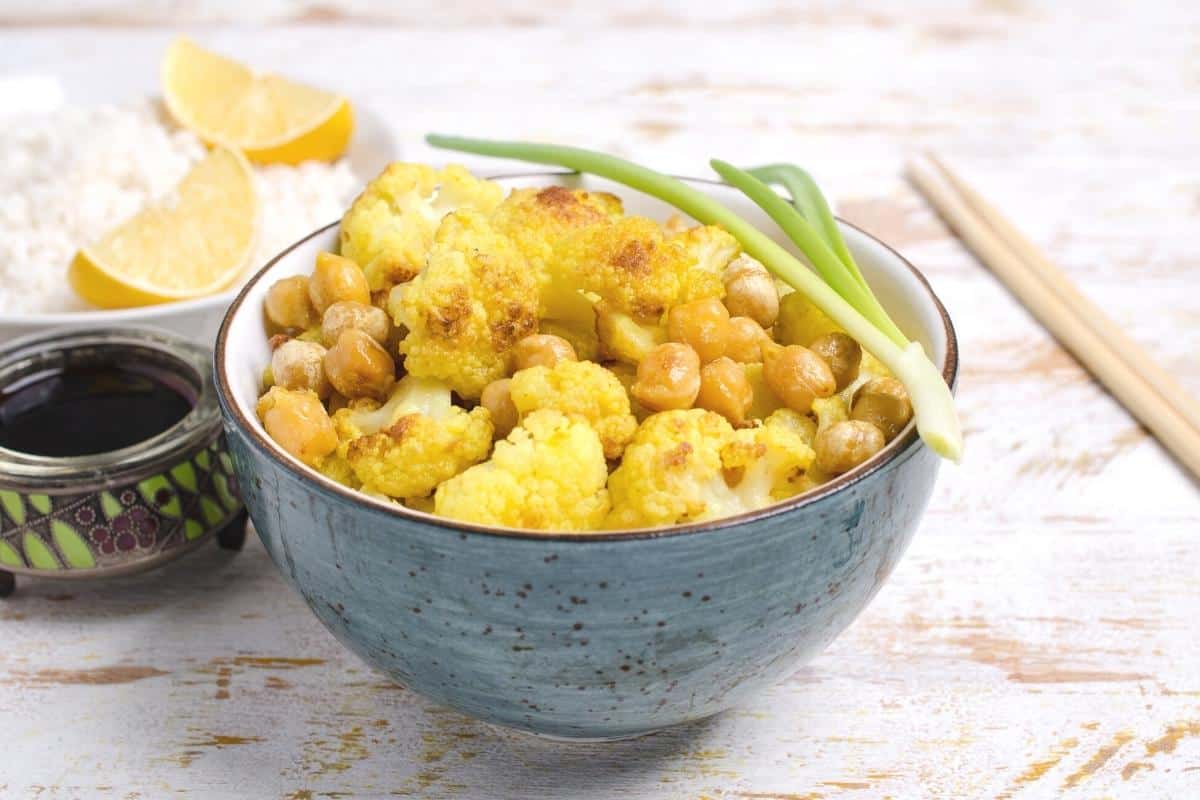
What you’ll need for cauliflower and chickpea curry
This isn’t one of those recipes where you need to buy twelve spices you’ll never use again. The main flavour comes from medium curry powder, fresh ginger and garlic, while the vegetables and chickpeas make up most of the curry itself.
I use 300g of cauliflower florets, which is enough for the cauliflower to be a proper part of the meal rather than a few token pieces floating around in the sauce. You’ll also need a red pepper and a yellow pepper, although I wouldn’t worry if the packet you’ve bought contains different colours. Use what you’ve got rather than buying another pepper purely because I’ve specified yellow.
There’s also a bunch of spring onions, which is slightly different from the ordinary onion I use at the beginning of many of my other curries. They’re cut into fairly chunky lengths rather than finely diced, so you still get some texture from them in the finished dish.
The sauce couldn’t really be much easier because it’s simply a tin of chopped tomatoes cooked with the curry powder, ginger and garlic. The chickpeas go in towards the end because they’re already cooked and only need heating through.
Using fresh or frozen cauliflower
Fresh cauliflower is what I used when developing the recipe, but frozen cauliflower is one of those vegetables I find really handy to have around, particularly when I’m cooking for myself.
If you’re using frozen cauliflower, bear in mind that it can release a little more water and may soften more quickly than fresh florets. I wouldn’t automatically give it exactly the same cooking time without checking it because nobody wants cauliflower that has quietly dissolved into the curry while they weren’t looking.
Whatever you use, try to keep the florets a reasonably similar size. If half of them are enormous and the others are tiny, you’ll inevitably end up with some cooked perfectly while others are still putting up a fight.

How to make cauliflower and chickpea curry
Start by heating a large non-stick frying pan with a little cooking spray, then add the spring onions and stir-fry them for around three minutes.
Once they’ve started to soften, add the garlic, ginger and curry powder. These only need around 30 seconds before you add the cauliflower and peppers, then cook everything together for another three minutes.
Stir in the chopped tomatoes and bring the mixture up to the boil before reducing the heat. Cover the pan and let it simmer for around 10 minutes, stirring occasionally so nothing catches on the bottom.
This is the point where I’d start checking the cauliflower rather than blindly watching the clock. You want it cooked through but still recognisably cauliflower rather than so soft that it falls apart when you stir the curry.
Once you’re happy with it, add the drained and rinsed chickpeas, season if needed and bring everything back up to temperature. As the chickpeas are already cooked, they don’t need another lengthy simmer; you’re really just making sure they’re thoroughly hot before serving.
The full quantities are in the recipe card below.
How do I stop the cauliflower being too hard or too soft?
This is apparently not just a me problem! One of the lovely comments on this recipe came from Trisha, who described cauliflower as her nemesis because she normally manages to cook it either so little that it’s almost impossible to bite or so much that it turns to mush.
She said this recipe helped her get it right and that both she and her husband loved the curry, which made me smile because cauliflower really does seem to have quite a small window between why is this still crunchy? and where has it gone?
The easiest thing you can do is simply check it.
Cooking times are useful guides, but your cauliflower florets might be bigger than mine, your pan might be different and your hob certainly isn’t going to know that my recipe says ten minutes. Stick a knife into one of the larger florets towards the end of the simmering time and see how it feels.
If it’s still much firmer than you’d like, give it another couple of minutes. If it’s already perfect, move on and add the chickpeas rather than continuing to cook it because the timer hasn’t beeped yet.
Is this cauliflower and chickpea curry spicy?
Not particularly. I use medium curry powder, but there’s no additional chilli in the recipe, so the flavour is much more about the curry powder, ginger and garlic than making it really hot.
Obviously curry powders vary between brands, and one person’s idea of medium seems to be another person’s idea of having their tongue removed, so use one you’re familiar with if you’re cooking for someone who doesn’t like much heat.
You could use a mild curry powder if necessary, or add chilli if you deliberately want to make it hotter. I’d make the original first, though, before deciding it needs six extra spices and three chillies!
Is this curry vegan?
Yes, the recipe as I make it is vegan. There are no dairy products, eggs or meat substitutes involved, which also makes it useful if you’re cooking for a mixture of vegetarians and vegans and don’t particularly want to make two separate meals.
Obviously it’s still worth checking the packaging of the particular curry powder and other prepared ingredients you use if you’re cooking for someone with specific dietary requirements.
I’ve got lots more ideas in my vegetarian and vegan recipes collection if you’re looking for other meat-free dinners.
What’s the difference between this and my other chickpea curry?
I definitely wondered whether I needed two chickpea curries when I was going through all my older recipes, but they’re actually quite different.
My one-pot chickpea curry also contains red lentils, broccoli and spinach, with Greek-style yoghurt making the sauce creamier. It’s a more substantial chickpea-and-lentil curry and isn’t vegan as originally written because of the yoghurt.
This one puts the cauliflower much more at the centre of the meal and has a simpler tomato sauce, with peppers and chickpeas alongside it. It’s naturally vegan and has fewer ingredients, so which one I’d choose really depends on what I had in the fridge and how much effort I could be bothered with that evening.
I think there’s easily room for both, especially as I know plenty of people specifically look for ways to use cauliflower in curry.
What should I serve with it?
Rice is probably the obvious choice if you want to make this into a bigger dinner, and plain basmati rice works perfectly well because the curry already has plenty going on.
If rice is something you inexplicably manage to get wrong despite it supposedly being one of the easiest foods in the world, my guide to cooking rice might help. I’ve certainly had enough pans of rice over the years that have been sticky, soggy or welded to the bottom to know that “just cook some rice” isn’t always as simple as recipes make it sound!
You could also add air fryer onion bhajis or naan if you’re making more of a curry night of it, although most of the time I’d be perfectly happy with a bowl of this and some rice.
Is cauliflower and chickpea curry expensive to make?
This is actually one of the reasons I like chickpea curries. Tinned chickpeas and tomatoes are relatively inexpensive cupboard ingredients, and you don’t need any specialist curry pastes or unusual spices for this one.
The price of fresh cauliflower can vary enormously, though. There are weeks when they’re cheap and enormous and others when the supermarket appears to want the price of a small car for one the size of a tennis ball.
That’s where frozen cauliflower can be handy. I’d rather adjust how I cook frozen cauliflower than spend far more on fresh purely because that’s what I used when I originally wrote the recipe.
Buying curry powder, ginger and garlic for one meal isn’t particularly expensive either, especially as they’re ingredients you’ll be able to use in plenty of other dinners.
Can I make this curry ahead?
You can make it ahead, although I’d be particularly careful not to overcook the cauliflower the first time if you know you’re going to reheat it later.
Once the curry is cooked, cool it promptly and store it covered in the fridge. When you want to eat it, reheat it thoroughly until it’s steaming hot throughout.
It can also be frozen in individual portions. The cauliflower may be a little softer after freezing and reheating, but for me that’s preferable to discovering a forgotten portion of curry at the back of the fridge several days later!
If you’re making rice to go with it, I prefer to store that separately and follow the appropriate guidance for cooling and reheating cooked rice.
More easy vegetarian curries
If you’ve bought cauliflower specifically for this recipe and still have some left, my aloo gobi is another curry where cauliflower gets to be one of the main ingredients rather than an afterthought.
For another chickpea option, try the one-pot chickpea curry, or have a look at my vegetable curry if you want something with a bigger mixture of vegetables.
My mushy pea curry is also worth trying if you can get past the slightly odd-sounding name. I don’t even like mushy peas on their own and I still like that curry, which probably tells you everything you need to know!
You’ll find all of those in my vegetarian curry recipes, while the main curry recipes collection has the chicken, meat and slow cooker options too.
Other recipes with cauliflower
If you love cauliflower and wish you used it more often here are some other suggestions you could consider. Don’t forget too it is great for vitamin B!
- Easy Roti with spiced cauliflower
- Roast cauliflower suitable for Christmas dinner
- Chicken cauliflower rice
- Instant pot vegetable curry
- Roasted vegetable salad

Easy Cauliflower and Chickpea Curry
A simple vegan cauliflower and chickpea curry with peppers, tomatoes, ginger and garlic. An easy meat-free dinner ready in around 35 minutes.
- Total Time: 35 minutes
- Yield: 4 Portions 1x
Ingredients
Low-calorie cooking spray
bunch of spring onions trimmed then cut into lengths of around 4cm
2 tsp crushed garlic
2 tsp grated fresh ginger
2 tbsp medium curry powder
300g Cauliflower florets
1 red pepper, diced
1 yellow pepper, diced
400g can chopped tomatoes
400g can chickpeas, rinsed and drained
Instructions
Heat the low-calorie cooking spray in a large non stick frying pan over a medium heat.
Add spring onions and stir fry for 3 minutes.
Add the garlic, ginger and curry powder and fry for around half a minute then add the cauliflower and peppers and fry for a further 3 minutes.
Stir in the tomatoes and bring the mixture to the boil.
Cover the pan with a lid and simmer for 10 minutes stirring occasionally.
Add the chickpeas and season if required then bring back to the boil.
When it is hot through remove from the heat and serve immediately.
- Prep Time: 10 minutes
- Cook Time: 25 MInutes
- Category: Main Meal
- Method: Stove top, hob
- Cuisine: India
🎄 Still got Christmas shopping to do?
I’ve put all my Christmas gift guides, festive recipes and other Christmas bits together in one place to make life a little easier!


One Comment