
Easy Instant Pot Vegetable Curry
If you’ve got an Instant Pot sitting in the cupboard and mostly use it for the same two or three things, this vegetable curry is an easy way to get a bit more use out of it. It’s packed with potatoes, butternut squash, courgette and a few other vegetables, with plenty of spices and coconut milk making a thick, creamy sauce.
The actual pressure-cooking part only takes eight minutes, although there is a little more cooking afterwards because the softer vegetables and coconut milk go in at the end. Allow around 32 minutes altogether, including the preparation, and you can have your rice cooking at the same time.
I’ve been vegetarian since I was 10, so I’m always looking for meat-free meals that feel like a proper dinner rather than a plate of side dishes cobbled together. This is definitely substantial, particularly with all the potato and squash, and you don’t need to add a meat substitute unless you particularly want one.
If you don’t have an Instant Pot, my vegetable curry is cooked entirely on the hob, while my vegetarian curry recipes collection has plenty of other ideas. If you love your Instant Pot but don’t fancy this curry then check out my other easy Instant Pot recipes for more ideas.

What you’ll need for this Instant Pot vegetable curry
This isn’t one of my minimalist five-ingredient curries, but most of the ingredient list is vegetables and spices rather than anything particularly difficult to find.
Potatoes and butternut squash form the bulk of the curry and are pressure cooked first because they take longer to soften. The courgette goes in afterwards, along with frozen peas and carrots, which stops the softer vegetables from spending eight minutes under pressure and turning into mush.
For flavour, I use garlic, cayenne, cumin, turmeric, cardamom, medium curry powder, cinnamon and black pepper. There’s a fair bit going on, but they’re all spices that can be used in plenty of other curries rather than something you’ll buy specifically for this and then discover at the back of the cupboard in 2029.
Vegetable stock provides the liquid needed for pressure cooking, while light coconut milk goes in towards the end. You might not need all the coconut milk because the aim is to make the sauce creamy without turning your curry into soup.

How to make vegetable curry in the Instant Pot
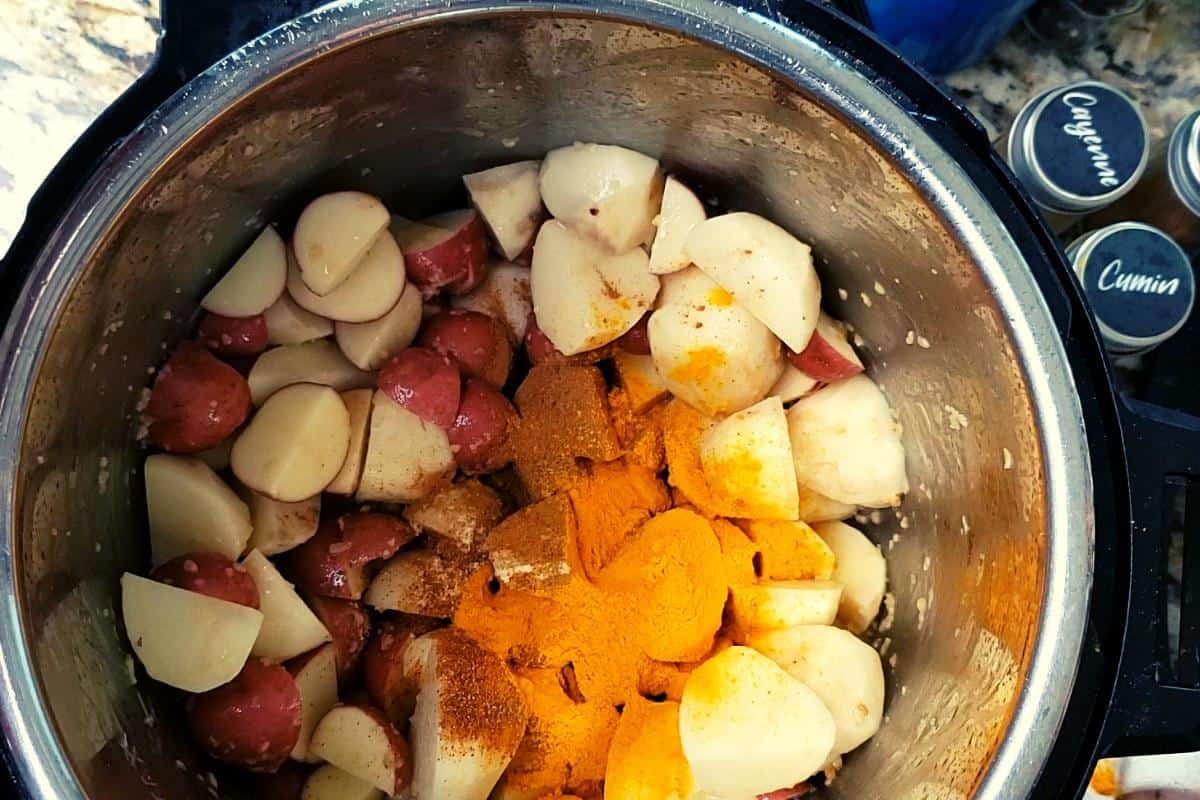
Start by preparing your potatoes and butternut squash, then put them into the Instant Pot with the crushed garlic.
Add the cayenne, cumin, turmeric, lightly crushed cardamom pods, curry powder, cinnamon, salt and black pepper, then pour in enough vegetable stock to cover the potatoes. The original recipe gives 800ml of stock, but what matters for this method is following the tested quantity and the minimum-liquid requirements for your particular pressure cooker.
Put the lid on, make sure the valve is in the sealed position and pressure cook for eight minutes.
When the cooking time has finished, carefully release the pressure according to the instructions for your appliance. Switch to Sauté and add the courgette, letting it cook for around two to four minutes before adding the frozen peas and carrots.
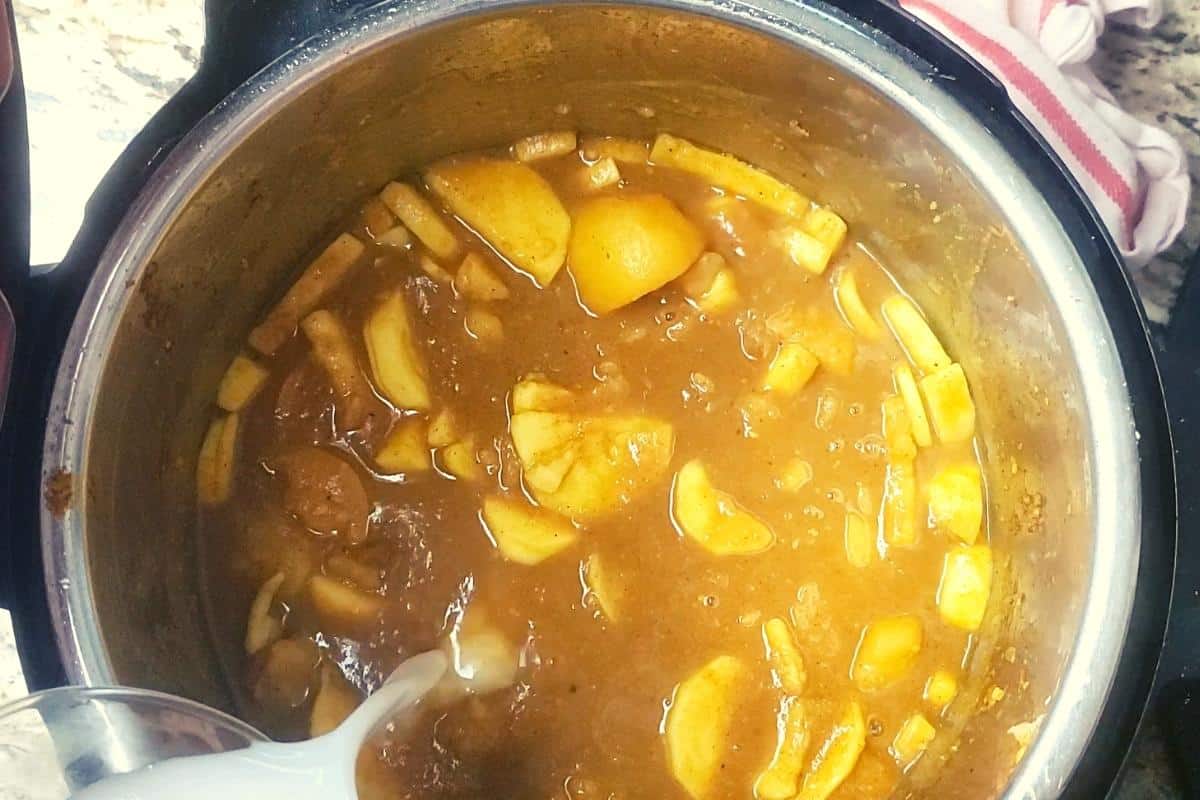
The coconut milk goes in gradually rather than being tipped in all at once. Stir a little through, see how the consistency looks and then add more if it needs it. I also mash some of the potatoes slightly, which helps thicken the sauce naturally.
You’re aiming for a curry sauce that coats the back of a spoon rather than something really watery. If you’ve accidentally added too much liquid, a little cornflour slurry can help bring it back.
Serve it with rice and scatter some fresh coriander over the top if you have some.
Why don’t all the vegetables go in at once?
This is probably the most useful thing to understand about this recipe because different vegetables behave very differently in a pressure cooker.
Potatoes and butternut squash can cope with the initial pressure-cooking stage, whereas courgette doesn’t need anything like as long. Putting everything under pressure together might sound wonderfully convenient, but there’s not much point saving two minutes of effort if your courgette has disappeared by the time you open the lid.
That’s why the softer vegetables go in afterwards on Sauté. It gives you much more control over the finished texture and means the peas and carrots only need heating through rather than pressure cooking.
It’s a useful principle to remember if you start adapting other recipes for your Instant Pot too.
Do I need to peel the courgette?
No, you don’t have to. I peeled it when I made the version in the photographs, but that’s personal preference rather than something essential to the recipe.
Leaving the skin on saves a job and gives the finished curry a little more colour, so I’d happily do that if I was making it now.
Whichever you choose, cut the pieces reasonably evenly so they cook at roughly the same speed during the final Sauté stage.
Why add the coconut milk at the end?
Adding the coconut milk gradually at the end gives you control over the consistency.
There’s already quite a lot of liquid involved in pressure cooking the potatoes and squash, so tipping another 120ml straight into the finished curry could leave you with far more sauce than you wanted.
I add a little, stir it through and then decide whether it actually needs the rest. Slightly mashing some of the cooked potato also helps thicken everything without needing to add lots of cornflour.
If you do go too far with the coconut milk, don’t panic. A small amount of cornflour mixed smoothly with cold water can be stirred in while the Instant Pot is on Sauté to thicken the sauce.
Can I make this in a Ninja Foodi?
You should be able to make this in another electric pressure cooker that has equivalent pressure-cooking and sauté functions, although the controls and terminology can vary between appliances.
I actually hesitated for ages before buying my Ninja Foodi because I wasn’t convinced I’d use another kitchen gadget enough to justify it. Once I had it, though, I found far more uses for it than I expected.
My pressure cooker guide explains a bit more about the different types if you’re still trying to work out what all these machines actually do.
I’d always follow the safety instructions and minimum-liquid requirements for the particular pressure cooker you own rather than assuming every appliance works identically to mine.
What can I serve with Instant Pot vegetable curry?
Rice is probably what I’d choose, and because the curry only takes a short time under pressure you can get the rice cooking while you’re preparing everything else.
If rice has an irritating habit of turning into either wallpaper paste or tiny bullets, my guide to cooking rice might help. I’ve also got lots of rice recipes if you want something more interesting alongside it.
This curry already contains plenty of potatoes and squash, though, so you may find you don’t need a huge portion of rice. I’d rather have a smaller amount than automatically pile half a plate with it just because curry supposedly has to come with rice.
You could also add air fryer onion bhajis if you’re making more of a curry night of it.
Can I change the vegetables?
There’s definitely some flexibility, but pressure-cooker recipes need a little more thought than ordinary hob recipes when it comes to swapping vegetables.
If you replace butternut squash with something that cooks much faster, for example, eight minutes under pressure might be far too long. Equally, adding a hard vegetable during the short Sauté stage at the end might leave it almost raw.
I’d think about when a replacement vegetable needs adding rather than simply swapping one ingredient for another in the same step.
If you’d rather have a curry where it’s easier to throw in whatever vegetables need using, my hob-cooked vegetable curry is probably the better recipe to start with.

Is this vegetable curry vegan?
The ingredients in the recipe itself are suitable for a vegan curry provided the particular vegetable stock, curry powder and other packaged ingredients you’re using are vegan too.
There’s no yoghurt or other dairy in the sauce because the creaminess comes from coconut milk.
That makes this a handy recipe when I’m cooking for a mixture of vegetarians and vegans because I don’t need to start making separate versions.
You’ll find plenty more ideas in my vegetarian and vegan recipes collection.

Can I make it ahead and freeze it?
You can make the curry ahead, although potatoes and some vegetables can change texture slightly after freezing and reheating. Whether that bothers you is very much personal preference; I’m generally more interested in having an easy dinner waiting in the freezer than whether a piece of potato is quite as perfect as it was on day one!
Cool leftovers promptly after cooking and store them covered in the fridge or freeze them in suitable portions. When reheating, make sure the curry is thoroughly heated throughout.
It may thicken considerably once it’s been chilled because of the potatoes, so I’d wait until you’re reheating it before deciding whether it needs a splash of extra liquid.
More easy vegetarian curries
If you don’t have an Instant Pot, my easy vegetable curry gives you a proper mixed vegetable curry made entirely on the hob.
My cauliflower and chickpea curry is another vegan option and is considerably simpler, while the one-pot chickpea curry has lentils, broccoli and spinach and makes a really substantial dinner.
For something completely different, there’s always my mushy pea curry. It still sounds odd and it still tastes much better than the name suggests!
You’ll find all of these together in my vegetarian curry recipes, or you can browse the main curry recipes collection if you’re cooking for a mixture of vegetarians and meat eaters.
Instant pot vegetable curry
A tasty Instant Pot vegetable curry that can be made quickly and perfect for all the family.
- Total Time: 32 minutes
- Yield: 6 Portions 1x
Ingredients
8 small red potatoes; peeled and sliced into quarters (white potatoes will work as an alternative)
15 baby red potatoes; sliced into quarters (white potatoes will work as an alternative)
1 courgette; peeled and quartered
1 butternut squash; peeled and quartered
1 tablespoon crushed garlic
1/2 teaspoon cayenne pepper
1 teaspoon cumin
1 teaspoon turmeric
3 cardamom pods lightly crushed
1 teaspoon medium curry powder
1 teaspoon cinnamon
1 teaspoon salt
2 teaspoon cracked black pepper
800ml vegetable stock
75g frozen peas and carrots mix
120ml light coconut milk (4.5 syns on Slimming World)
Top with coriander leaves
Instructions
Add in small and baby red potatoes along with the butternut squash. Add in crushed garlic.
Stir in cayenne, cumin, turmeric, cardamom, curry, cinnamon, salt, and pepper. Fill with stock just until potatoes are covered. Place lid on the instant pot. Set the valve to the sealed position. Press pressure cook or manual button and set to 8 minutes.
Once the instant pot stops counting quick-release pressure. Set to saute mode and then add in courgette.
Saute for about 2 to 4 minutes. Add in frozen peas and carrots. Slowly stir in coconut milk. Add a little at a time to not make the curry soupy. Then mash the potatoes a little. The curry should coat the back of a spoon. You may not need all the coconut milk.
Serve with rice and topped with freshly chopped coriander.
Tips: If your curry is too watery add a little cornflour slurry. The idea is to add the coconut milk for flavour and slowly if it starts to look a little too much then stop. You want to keep a thick consistency.
- Prep Time: 20 Minutes
- Cook Time: 12 Minutes
- Category: Main meal
- Method: Instant Pot
- Cuisine: Indian
- Diet: Low Calorie




I tried this tonight and it was so tasty. Fantastically quick and easy to cook, will make it again.