Easy Vegetarian Curry Recipes for Delicious Meat-Free Dinners
I’ve been vegetarian since I was 10, so vegetarian curry isn’t something I make because I’m trying to have the occasional meat-free Monday. It is something I’ve been eating for most of my life!
Curry is actually one of my favourite types of meal when I’m cooking for myself because there are so many options. You don’t have to take a chicken curry, remove the chicken and hope nobody notices. Chickpeas, cauliflower, potatoes, mushrooms, lentils, peppers and all sorts of other vegetables work brilliantly with curry spices, and then there are meat substitutes such as Quorn when you fancy something a little different.
I also cook meat for Stuart and Ben, which means I quite often end up making two versions of the same curry. Some recipes make that much easier than others. If I’m making jalfrezi, for example, I can make chicken for them and Quorn for myself without effectively cooking two completely unrelated dinners.
I’ve gathered my favourite vegetarian curry recipes from Just Average Jen here, including curries designed to be vegetarian from the start and some of my meat-free versions of family favourites.
If you’re looking for every kind of curry rather than specifically vegetarian ones, have a look at my main curry recipes collection too.
Easy chickpea curry
Chickpeas and curry are such an easy combination, particularly if you like having ingredients in the cupboard that can become dinner without much planning.
My one-pot chickpea curry is one of those useful recipes where you aren’t left staring at a mountain of pans afterwards. It uses chickpeas with peppers, courgette, tomatoes and spices and makes a lovely warming dinner.
I think chickpeas work particularly well in curry because they don’t disappear into the sauce. They keep some texture and make it feel like a proper substantial meal rather than vegetables floating around in curry sauce.
It’s also handy when you haven’t remembered to defrost anything!

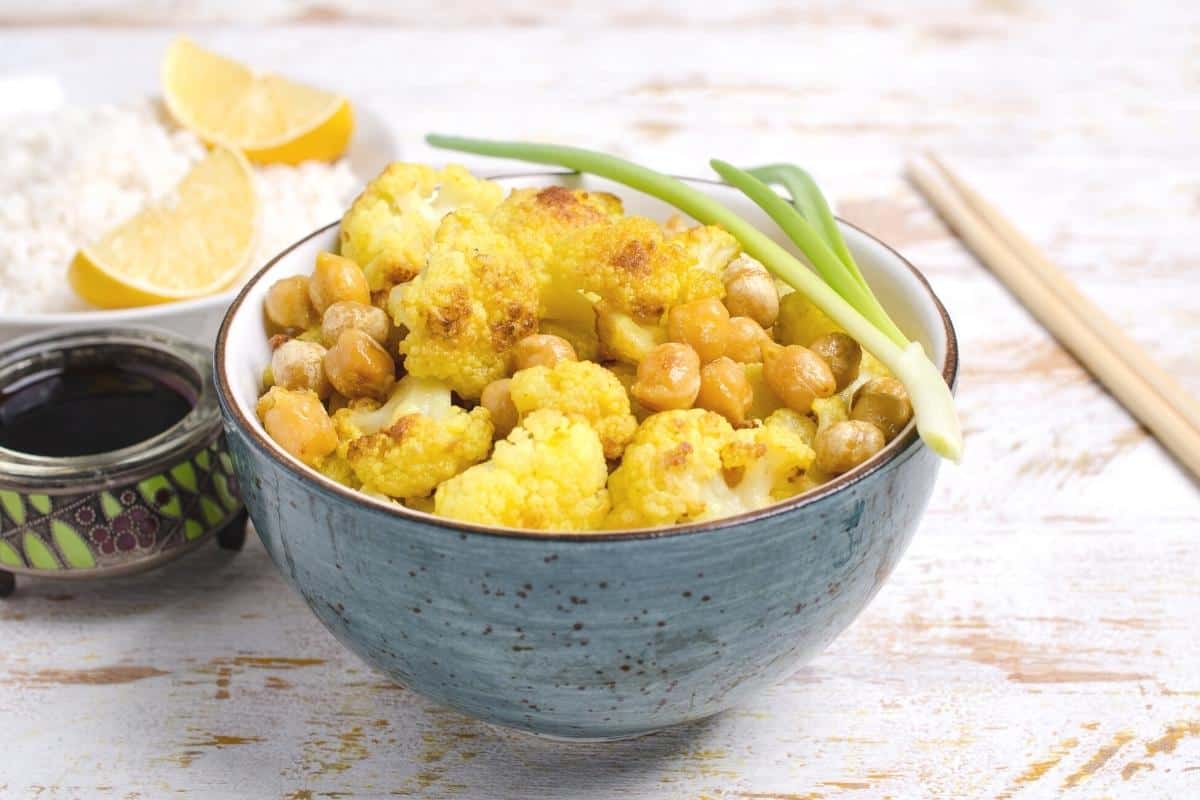
Cauliflower and chickpea curry
If you like chickpea curry but want something with plenty of vegetables too, try my cauliflower and chickpea curry.
Cauliflower is one of those vegetables that can be incredibly boring when it’s boiled to within an inch of its life, but I really like it in curries because it absorbs so much flavour.
Pairing it with chickpeas gives the curry a mixture of textures and makes it more substantial.
This is also a good one to try if you have half a cauliflower sitting in the fridge after using the rest for another meal. I hate buying vegetables with good intentions and then finding them looking increasingly sad at the back of the fridge five days later!
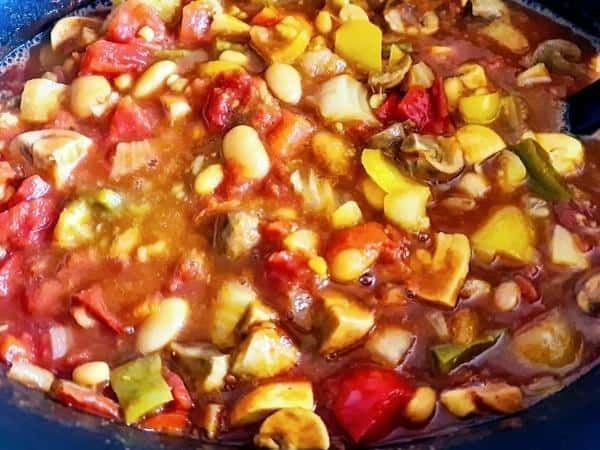
Homestyle vegetable curry
Sometimes I don’t want a meat substitute at all. I just want loads of vegetables in a tasty sauce, which is where my homestyle vegetable curry comes in.
This one has sweet potato, cauliflower, carrots, green beans and spring greens, along with ginger, garlic, chilli, cumin, coriander, cardamom and curry leaves.
It’s much more vegetable-heavy than some of the other curries here, so it’s a good choice when you’ve done a big shop and actually want to use everything you bought before it goes off.
I also like vegetable curries for using things up. You obviously can’t randomly substitute every ingredient and expect exactly the same result, but curry is quite forgiving when it comes to adding an extra handful of vegetables that need using.

Instant Pot vegetable curry
If you have an Instant Pot or another pressure cooker, my Instant Pot vegetable curry is worth trying.
It uses potatoes, butternut squash, courgette, peas and carrots with coconut milk and spices. The pressure-cooking part itself only takes eight minutes, although obviously you need to allow time for preparing everything and bringing the cooker up to pressure too.
I’m always slightly suspicious of recipes that announce they take eight minutes when they’ve conveniently forgotten the chopping, heating and everything else!
Still, pressure cookers are useful when you want the flavours of something that tastes like it has been bubbling away for ages without actually spending hours cooking it.

Easy Indian curry with lemon and ginger rice
My vegetarian curry with lemon and ginger rice is a little different because the rice is as much a part of the recipe as the curry.
The curry uses a vegetarian chicken substitute with mushrooms, lime, curry powder and tomatoes, while the rice is flavoured with lemon, turmeric and ginger.
It’s ready in around 25 minutes, which makes it a good option when you fancy curry but haven’t planned dinner hours in advance.
The lemon and ginger rice is also worth trying with other curries if you’re getting a little bored of serving plain rice every time.
Quorn jalfrezi
Jalfrezi is one of my personal favourites, and I regularly make a Quorn version for myself while cooking chicken jalfrezi for Stuart and Ben.
My Quorn jalfrezi uses the same peppers, tomatoes, ginger, garlic and spices as the chicken version, but I use Quorn instead.
This is exactly the sort of vegetarian adaptation I find useful because I’m not preparing two completely different dinners. I can do most of the chopping and preparation once and then separate things where necessary.
I prefer Quorn fillets cut into chunky strips for this, but Quorn pieces are another option.
Just remember that vegetarian meat substitutes don’t necessarily need the same cooking time as raw chicken, so follow the instructions for the product you’re using rather than automatically cooking both versions for exactly the same length of time.

Quorn and mushroom curry
My Quorn and mushroom curry is another easy fakeaway-style option.
If you’ve seen my chicken and mushroom curry, this is essentially the vegetarian direction I take with that sort of meal. Mushrooms work really well here because they add plenty of texture alongside the Quorn rather than leaving the meat substitute to do all the work.
I often think that’s where vegetarian meals go wrong. Replacing a huge chicken breast with six tiny pieces of Quorn and calling it dinner isn’t particularly exciting! Adding plenty of vegetables makes the whole meal better.

Quorn tikka masala
Tikka masala is another curry that’s really easy to make vegetarian.
My Quorn tikka masala gives you the creamy, mildly spiced sort of curry that’s particularly useful if you don’t enjoy lots of chilli heat.
It’s also a good option when you’re feeding vegetarians and meat eaters together because you can make a Quorn version alongside chicken tikka masala without everyone feeling as though they’re eating completely different meals.
If you’re new to vegetarian food and worried that every meal is going to involve lentils, this sort of recipe is a nice reminder that going meat-free doesn’t mean completely changing the types of meals you enjoy.

Vegetarian Malaysian curry
For something a little different from my Indian-inspired curries, try my Malaysian red pepper and Quorn curry.
The original version is one of Stuart’s favourite meals and I’ve made it with Quorn for myself many times. The Quorn doesn’t need as long to cook as the chicken, so I add it later rather than treating the two as identical ingredients.
This is another reason I wanted a proper vegetarian curry collection rather than simply putting “replace the chicken with Quorn” underneath every meat recipe. Sometimes it really is an easy substitution, but you still need to think about how the replacement ingredient cooks.

Mushy pea curry
Yes, mushy peas.
If you’ve never encountered mushy pea curry before, I appreciate that it sounds slightly bonkers!
It’s one of those recipes that has been around in weight-loss circles for years, and it’s certainly not pretending to be a traditional Indian curry. What it is is inexpensive, easy to make and surprisingly tasty.
I’ve refreshed my recipe because people still search for it and make it, and I think there’s room for slightly quirky old favourites alongside more traditional curry ideas.
If you have tins of mushy peas in the cupboard and fancy finding out what on earth I’m talking about, give it a go.
Aloo gobi
Not every vegetarian curry needs Quorn, chickpeas or another obvious protein substitute.
Aloo gobi combines potatoes and cauliflower with spices and can work either as part of a larger curry meal or as a dish in its own right.
I particularly like it as a side when I’m making several Indian-inspired dishes because it gives you something different from rice and bread without requiring another complicated recipe.
If you’re having friends or family over and making a bit of a curry feast, this is one I’d consider adding to the table.

What can I serve with vegetarian curry?
Rice is the obvious answer, but it certainly isn’t the only one.
Plain basmati rice is brilliant when the curry itself has lots going on, while flavoured rice can make a simpler curry more interesting. Have a look through my rice recipes if you want something beyond plain boiled rice.
I also love air fryer onion bhajis when we’re having more of a fakeaway-style dinner. They’re especially useful if you already have the hob covered in pans and don’t particularly want another frying pan involved.
Naan, chapatis, poppadoms, chutneys and yoghurt-based dips can all work depending on the curry you’ve chosen.
And there is absolutely nothing wrong with serving curry on a jacket potato. It might not be traditional, but leftover chickpea or vegetable curry on a baked potato makes a very good lunch!

How do I add protein to a vegetarian curry?
This is something people often worry about when they first start eating vegetarian meals.
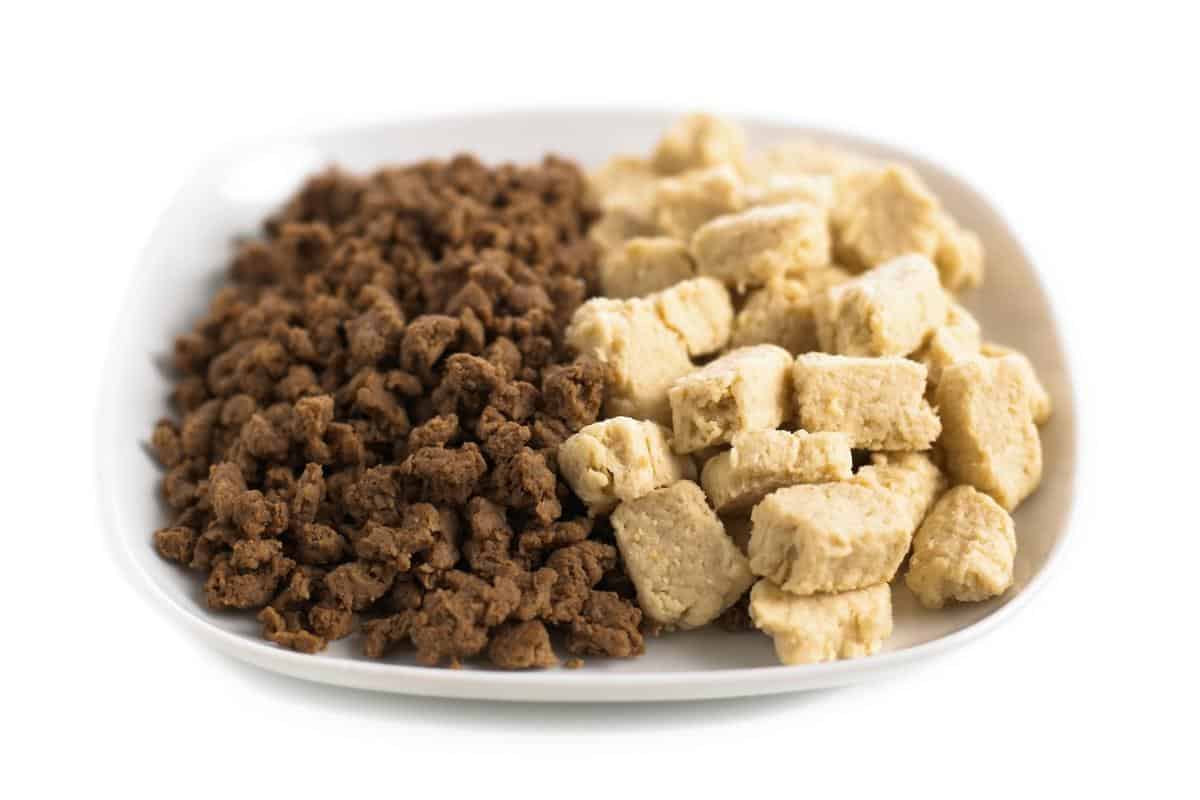
Chickpeas, lentils, beans, tofu and various meat substitutes can all contribute protein, but you don’t need to force every single one of them into the same curry.
Quorn is something I use regularly because I enjoy it and it works well in meals I might otherwise make with chicken for the rest of the family. Have a look at my Quorn recipes if you want more ideas beyond curry.
Chickpeas and lentils are useful because they’re inexpensive, keep in the cupboard and work naturally in lots of curries without feeling like they’re pretending to be meat.
If you’re vegetarian more generally rather than simply looking for tonight’s dinner, my vegetarian and vegan recipes collection has lots of other meal ideas too.
Can I make vegetarian curry in the slow cooker?
Absolutely, although I wouldn’t simply take any curry recipe, put it in the slow cooker for eight hours and hope for the best!
Vegetables cook differently, and some can become extremely soft if they’re left in there all day. Other ingredients are better added towards the end.
I’ve put together a collection of my vegetarian slow cooker recipes, which includes curry ideas as well as chilli, beans and pulled jackfruit.
My how to adapt recipes for a slow cooker guide is also useful if you want to understand how liquid quantities, cooking times and different ingredients need adjusting.
I’d love to add more vegetarian curries specifically designed and tested for the slow cooker too. A proper lentil curry or dhal is high on my list because it would fill a gap in my current recipes rather than creating another version of something I already have.
Can vegetarian curry be vegan too?
Some of these recipes already are vegan or can be made vegan fairly easily, but vegetarian and vegan aren’t interchangeable terms.
Quorn products, yoghurt, cream and other ingredients can sometimes contain milk or egg, and recipes and product formulations can change.
If you need a curry to be vegan, check every ingredient you’re using rather than assuming something is vegan simply because there isn’t any meat in the recipe.
For curries containing dairy, plant-based alternatives may work, but whether I’d recommend a straight swap depends on the particular recipe.
What vegetables work well in curry?
One of the reasons I love vegetarian curry is that the answer is basically: quite a lot of them!
Cauliflower, potatoes, sweet potatoes, butternut squash, mushrooms, peppers, carrots, green beans, peas, spinach and courgettes can all work well, although that doesn’t mean they all need to go into the same pan.
Think about texture as well as flavour.
If everything you add becomes very soft, the finished curry can end up feeling a bit like spicy baby food. I like having a mixture of textures, which is why combinations such as chickpeas and cauliflower or Quorn and peppers work particularly well for me.
It’s also worth adding vegetables at different stages when necessary rather than assuming everything takes the same length of time to cook.

Making vegetarian curry when the rest of the family eats meat
This has been normal life for me for years.
I’ve been vegetarian since I was 10, but Stuart and Ben eat meat, and I don’t want to cook three separate courses every night just because we don’t all eat exactly the same things.
Curries such as jalfrezi are particularly handy because I can prepare the vegetables and sauce together and then cook chicken and Quorn appropriately without doubling the amount of work.
Other times I’ll make a completely vegetarian curry for everyone. You really don’t need meat in every evening meal, and a good chickpea or vegetable curry doesn’t feel as though anything is missing.
If you’re cooking for a mixed household, my biggest tip is to choose meals that naturally work both ways rather than constantly trying to recreate a meat dish with an identical vegetarian substitute.
It makes life much easier.
Which vegetarian curry should I try first?
If you want something simple and inexpensive, I’d start with my one-pot chickpea curry.
For loads of vegetables, try the homestyle vegetable curry, while the Instant Pot vegetable curry is useful if you have a pressure cooker.
If you’re already a Quorn fan, I’d go for Quorn jalfrezi or Quorn and mushroom curry.
And if you’re in the mood for something completely different, there’s always mushy pea curry. I can’t promise you’ll be able to explain it convincingly to anyone before they’ve tried it, though!
Whichever you choose, there are plenty more ideas in my main curry recipes collection, and I’ll keep adding new vegetarian curries here as I make and test them.