How to adapt recipes for the slow cooker
Once you’ve used a slow cooker for a while, you inevitably start looking at recipes that aren’t written for one and wondering whether you could just make them in there anyway.
I’ve done exactly the same thing. You find a casserole, curry or stew you fancy making, but the instructions tell you to stand over a saucepan or put it in the oven for two hours when you’d much rather get everything sorted earlier and leave it cooking.
The answer is that lots of recipes can be adapted for the slow cooker, but it isn’t always as simple as putting exactly the same ingredients into the pot and cooking them for longer.
The biggest differences are usually the amount of liquid you need, when you add certain ingredients and how long everything takes to cook. You also need to think about what makes that particular recipe work in the first place. Something designed to be crisp, roasted or quickly fried isn’t suddenly going to have the same texture after eight hours in a slow cooker.
I’ve made a lot of slow cooker recipes over the years, as well as adapting recipes I originally cooked in the oven or on the hob. I’ve also learnt that slow cookers themselves can be surprisingly different.
The timings that work perfectly in mine might need adjusting slightly in yours, so think of this guide as a starting point rather than a magic conversion formula.

Can you convert any recipe to a slow cooker?
Not every recipe is going to work well in a slow cooker, and sometimes there really isn’t much point.
Stews, casseroles, curries, chilli, soups and recipes involving meat that benefits from long, slow cooking are usually the obvious ones to consider.
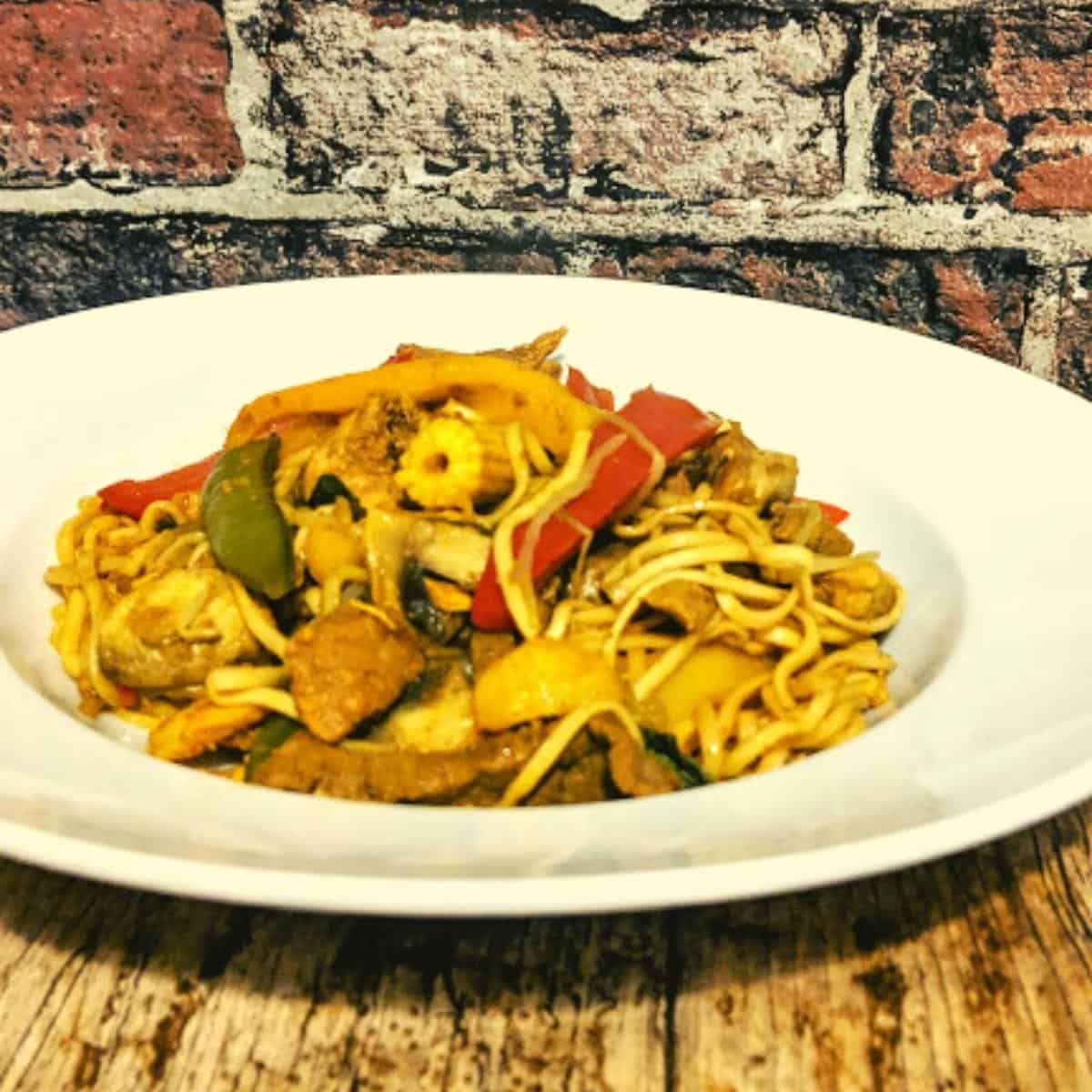
Recipes that depend on crispness or browning are much harder to convert directly. Roast potatoes aren’t going to come out like roast potatoes if they’ve spent hours surrounded by steam, and a stir-fry isn’t really a stir-fry anymore if you’ve slow-cooked it all afternoon.
I also wouldn’t automatically convert something simply because you can. If a pasta sauce takes 15 minutes in a saucepan, cooking it for six hours doesn’t necessarily make life any easier!
Before changing anything, look at the original recipe and ask yourself what you like about it. If it’s the tender meat, rich sauce or combination of flavours, there’s a good chance you can achieve something similar in the slow cooker. If it’s the crispy topping or freshly fried vegetables, you’ll probably need to keep part of the original cooking method.
How do I convert cooking times for a slow cooker?
This is probably the question everyone wants a simple answer to, but unfortunately there isn’t a perfect formula.
As a very rough starting point, you could use the following:
| Original cooking time | Approximate slow cooker starting point |
|---|---|
| 15–30 minutes | 1–2 hours on HIGH or 4–6 hours on LOW |
| 30–60 minutes | 2–3 hours on HIGH or 5–7 hours on LOW |
| 1–2 hours | 3–4 hours on HIGH or 6–8 hours on LOW |
Please don’t treat those times as guarantees. The ingredients, size of the pieces, amount you’re cooking, size of your slow cooker and even the particular appliance can all make a difference.
I’d much rather check something a little earlier the first time I adapt it than assume that because a chart says eight hours, eight hours must be right.
This is particularly important with meat. You need to make sure it’s cooked safely rather than relying purely on the clock, and the Food Standards Agency has useful guidance about cooking meat safely if you’re unsure.
Do I need less liquid when adapting a recipe for a slow cooker?
Usually, yes, and this is probably the mistake I’ve made most often when adapting recipes.
I’ve followed the original recipe, added all the stock it asked for and come back several hours later to discover I’ve made something closer to soup than casserole.
Cooking on the hob or in the oven allows quite a lot of moisture to evaporate. A slow cooker has a lid on throughout cooking, so much more of that moisture stays in the dish. Meat and vegetables can also release liquid as they cook.
For that reason, you’ll often need less stock, water or other added liquid than the original recipe suggests.
I wouldn’t automatically halve every liquid measurement, though. It depends entirely on what you’re making.
If you’re adapting a soup, you’ll obviously still need plenty of liquid. If you’re making a casserole containing chopped tomatoes, passata, mushrooms, onions and other vegetables that release water, you may need surprisingly little extra stock.
Look at where the liquid in the original recipe actually comes from rather than simply reducing everything by the same percentage.
Also remember that ingredients don’t usually need to be completely submerged in liquid simply because they’re in a slow cooker. Adding extra stock just to cover everything is an easy way to end up with a watery dinner.
What can I do if my slow cooker meal is too watery?
Firstly, don’t panic. I’ve made plenty of slow cooker meals that have looked far too watery when I’ve first lifted the lid.
If everything is cooked but the sauce is thinner than you’d like, removing the lid towards the end can help some moisture evaporate.
Depending on the recipe, you can also thicken the sauce using cornflour. Mix the cornflour with a little cold water first to make a smooth slurry before stirring it into the hot sauce. Don’t just tip dry cornflour into the slow cooker unless you fancy spending the next ten minutes chasing little white lumps around your dinner.
With some stews and curries, another option is to mash a few of the potatoes, beans or vegetables into the sauce. I’ve done this when I’ve wanted something thicker without adding another ingredient.
Which meats work best in a slow cooker?
One of the things I like about slow cooking is that you don’t necessarily need the most expensive cut of meat.
Cuts designed for stewing and braising often benefit from longer cooking because the connective tissue has time to soften. That’s why stewing beef works so well in recipes such as my slow cooker beef and root vegetable stew.
The important thing is choosing meat that suits the recipe rather than assuming the most expensive option will automatically give the best result.
Very lean meat can be less forgiving if it’s cooked for too long, whereas tougher cuts often suit slow cooking particularly well.
Do I need to brown meat before putting it in the slow cooker?
Not always.
You’ll often read that you absolutely must brown meat before slow cooking it. Browning can certainly add colour and flavour, and for some recipes I think it’s worth the extra few minutes.
I don’t do it for everything, though.
For example, I don’t bother browning the mince when I make my slow cooker chilli con carne, and I don’t brown the beef for my beef and root vegetable stew either.
If the original recipe relies heavily on the flavour created by browning the meat, I’d be more inclined to keep that step. If it’s simply there because that’s how the recipe has always been made, you can experiment and see whether you notice enough difference to make the extra washing-up worthwhile.
What about chicken recipes?
Chicken works well in the slow cooker, but you need to think about the cut you’re using.
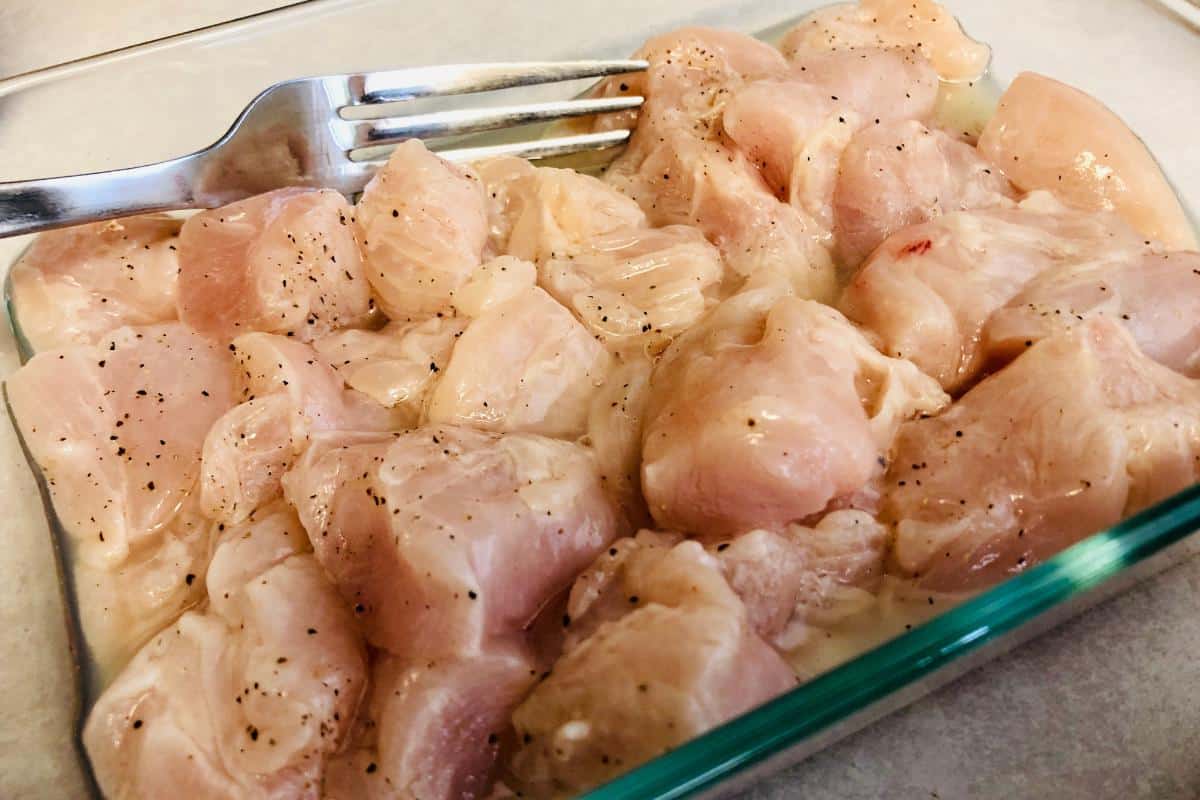
Chicken thighs generally cope well with longer cooking and are what I use in recipes such as my slow cooker Spanish chicken. Chicken breast is leaner and can become dry if it’s cooked for longer than necessary.
I wouldn’t use a blanket rule saying that all chicken should be cooked for a particular number of hours or that chicken always needs HIGH rather than LOW. Follow the recipe you’re adapting, consider the size and cut of the chicken and make sure it is thoroughly cooked.
If you’re converting a recipe you’ve never made in the slow cooker before, check it earlier than you think you need to. You can always cook it for longer, but unfortunately there’s no button on a slow cooker that makes an overcooked chicken breast juicy again.
How should I adapt vegetables for the slow cooker?
Vegetables can be surprisingly deceptive in a slow cooker.
You might expect everything to turn to mush after hours of cooking, but firm root vegetables such as carrots, parsnips and potatoes can actually take quite a long time to become properly tender.
Cutting vegetables into reasonably even pieces helps them cook at a similar rate. I certainly wouldn’t say you need to fry every root vegetable before putting it in the slow cooker because I regularly don’t.
Softer vegetables may not need as long. If you’re adapting a recipe containing something delicate that would normally only cook for a few minutes, consider whether it really needs to go in at the beginning.
This is another reason converting a recipe is more about understanding the ingredients than following a conversion chart.
Which ingredients should I add near the end?
One of the easiest mistakes when converting a recipe is assuming everything needs to go into the slow cooker at the same time. It doesn’t. Some ingredients simply don’t need hours of cooking.
Pasta
Pasta can become very soft if it’s left in a slow cooker for too long.
In my slow cooker Italian meatball soup, for example, the soup cooks first and the pasta is added towards the end. Depending on the recipe, you may prefer to cook pasta separately and add it when serving.
Rice
Rice is another ingredient I wouldn’t casually add to a converted recipe at the beginning.
Different types of rice absorb different amounts of liquid and need different cooking times. Unless the recipe has specifically been developed to cook the rice in the slow cooker, I’d usually cook it separately.
There are exceptions, of course. My cream soda rice pudding has a slow cooker method because the rice absorbing the liquid is the whole point of the recipe.
Peas and spinach
Frozen peas and spinach don’t generally need hours of cooking. Adding them later helps them keep more of their colour and texture. Again, my Italian meatball soup is a good example because the spinach goes in right at the end rather than cooking all day.
Fresh herbs
If you want the fresher flavour of herbs such as parsley or coriander, consider adding at least some of them near the end or when serving.
Dried herbs and spices are different and are often added at the beginning so their flavours have time to develop.
Can I use cream, yoghurt or other dairy in the slow cooker?
Yes, but this is another area where I wouldn’t assume that every ingredient can simply go in at the beginning.
Some dairy products can separate or change texture during long cooking, particularly with acidic ingredients such as tomatoes.
Depending on the recipe, you may get better results adding cream or yoghurt later in the cooking process.
If you’re adapting a creamy curry, for example, look at when the dairy is added in the original recipe and think about what job it’s doing. My slow cooker chicken tikka masala is a useful example of how I use yoghurt alongside the other ingredients without simply applying a generic rule to every curry.
Can I put frozen ingredients straight into the slow cooker?
Be careful with this one, particularly with frozen meat.
I defrost meat properly before putting it into my slow cooker rather than trying to cook a large frozen piece from cold. A slow cooker heats gradually, so food safety matters.
Frozen vegetables are different and can often be used successfully, although adding a large quantity can temporarily lower the temperature of the dish.
If you’re unsure about safely defrosting or cooking a particular ingredient, check current Food Standards Agency advice rather than relying on an old slow cooker recipe online.
Can I cook beans and pulses in a slow cooker?
Beans and pulses can be brilliant in slow cooker recipes, but you need to know what you’re starting with.
Tinned beans are convenient because they’ve already been cooked. I usually drain them and use them according to the particular recipe.
Dried beans are different, and red kidney beans need particular care. I would never simply throw dried red kidney beans straight into a slow cooker and assume that several hours of cooking makes them safe.
If you want to use dried beans, check the preparation and cooking instructions for that particular variety first.
For an adapted recipe where you’re unsure, using tinned beans is often the simplest option.
How do I adapt a casserole for the slow cooker?
Casseroles are probably among the easiest recipes to convert because they’re already designed around longer, gentler cooking.
Start by looking at the liquid. You probably won’t need as much stock as an oven casserole because you’re going to lose less through evaporation.
Then consider the ingredients individually. Meat and root vegetables can usually withstand longer cooking, while softer vegetables or dairy ingredients might be better added later.
My Moroccan chicken casserole is a useful example because I’ve made it both in the oven and in the slow cooker. The basic flavours and ingredients remain the same, but the cooking method and timing change.
How do I adapt a curry for the slow cooker?
Curries are another good candidate, but don’t automatically pour the entire original sauce into the slow cooker.
Onions, tomatoes, meat and vegetables can all release moisture as they cook, so consider how much additional stock or water you actually need.
Spices can also taste slightly different after several hours of cooking. I usually prefer to start with the quantities I know work rather than assuming that slow cooking automatically means I need twice as much spice.
If the recipe contains yoghurt, cream, coconut milk or other creamy ingredients, consider whether they need the full cooking time or would be better added later.
Have a look at my slow cooker chicken tikka masala and slow cooker keema curry for examples of curries I’ve actually made this way.
How do I adapt chilli for the slow cooker?
Chilli is one of my favourite things to make in the slow cooker because it doesn’t need much attention once it’s cooking.
Again, be cautious with liquid. Tinned tomatoes, passata, peppers and onions all contribute moisture, so you may need much less additional stock than you’d expect.
I don’t brown the mince for my slow cooker chilli con carne, although you can if you prefer. I also have a turkey chilli that can be made quickly on the hob or adapted for the slow cooker, which shows nicely how the same sort of meal can work with two different cooking methods.
Common mistakes when converting recipes for the slow cooker
The biggest mistake is probably assuming there is one formula that works for absolutely everything. There isn’t.
Adding too much liquid is another common one, as is putting every ingredient in at the beginning simply because you’re using a slow cooker.
I’d also avoid changing too many things at once. If you’re adapting one of your favourite recipes, don’t simultaneously change the meat, halve the tomatoes, add three new spices and alter the vegetables. If it doesn’t work, you’ll have no idea which change caused the problem.
Start with the original recipe, decide what genuinely needs changing for slow cooking and keep notes.
That last bit sounds ridiculously organised, but even a quick note on your phone saying “too much stock – try 200ml next time” is useful. Otherwise, six months later you’ll make it again and confidently repeat exactly the same mistake. Ask me how I know!
Recipes I’ve adapted for different cooking methods
I think the easiest way to get confident adapting recipes is to look at ones that already work using more than one method.
My Moroccan chicken casserole can be cooked in the oven or slow cooker, while my turkey chilli has both a quick hob method and a slow cooker option.
My cream soda rice pudding is another slightly unusual example because you can make it fairly quickly on the hob or leave it cooking in the slow cooker.
Once you’ve made a few recipes like these, you start to get a feel for what changes and, perhaps more importantly, what doesn’t.
You can also browse all my healthy slow cooker recipes to see the timings and methods I use for different meats, vegetables, curries, casseroles, chillies and even desserts.
Frequently asked questions
Do I need to preheat my slow cooker?
Follow the instructions for your particular slow cooker. Appliances vary, and if the manufacturer recommends preheating for certain recipes, that’s the advice I’d follow.
Can I convert an oven recipe to a slow cooker?
Often, yes, particularly if it’s a casserole, stew, curry or another dish that already benefits from longer cooking.
You’ll usually need to reconsider the amount of liquid and the cooking time, and some ingredients may need adding later.
Can I convert a hob recipe to a slow cooker?
Again, it depends on the recipe.
A chilli or slowly simmered sauce is generally much easier to adapt than something such as a stir-fry, where quick cooking and texture are important parts of the finished dish.
Should food be covered with liquid in a slow cooker?
Not necessarily. Slow cookers lose far less moisture than an uncovered saucepan, and meat and vegetables release more liquid as they cook.
Follow the recipe rather than adding stock simply because some of the ingredients are sitting above the liquid.
Should I cook on LOW or HIGH?
It depends on the recipe and the ingredients.
I use both settings across my recipes, but I don’t automatically assume that every LOW cooking time can simply be halved to create a HIGH cooking time. If you’re adapting something yourself, use conversion times as a starting point and check the food as it cooks.
Why is my slow cooker meal watery?
Usually because there has been less evaporation than you’d get from cooking the same recipe in a saucepan or oven.
You may have added too much stock or water, or your meat and vegetables may simply have released more moisture than expected. Reduce the added liquid next time and use one of the thickening methods above if necessary.
More slow cooker help and recipes
If you’re ready to stop converting recipes and just want something that’s already been tested in the slow cooker, have a browse through my healthy slow cooker recipes. I’ve got everything from chilli and curries to casseroles, pulled meats and puddings.
You might also like my autumn slow cooker recipes if you’re looking for cosy dinners for colder weather, or my Bonfire Night slow cooker recipes if you’re feeding everyone around fireworks night.
I’m also gradually adding more slow cooker advice alongside the recipes, because after years of using mine I’ve discovered that most of the useful lessons aren’t complicated at all. They’re things like knowing when not to add another mug of stock and accepting that sometimes browning the meat really isn’t worth washing another frying pan!