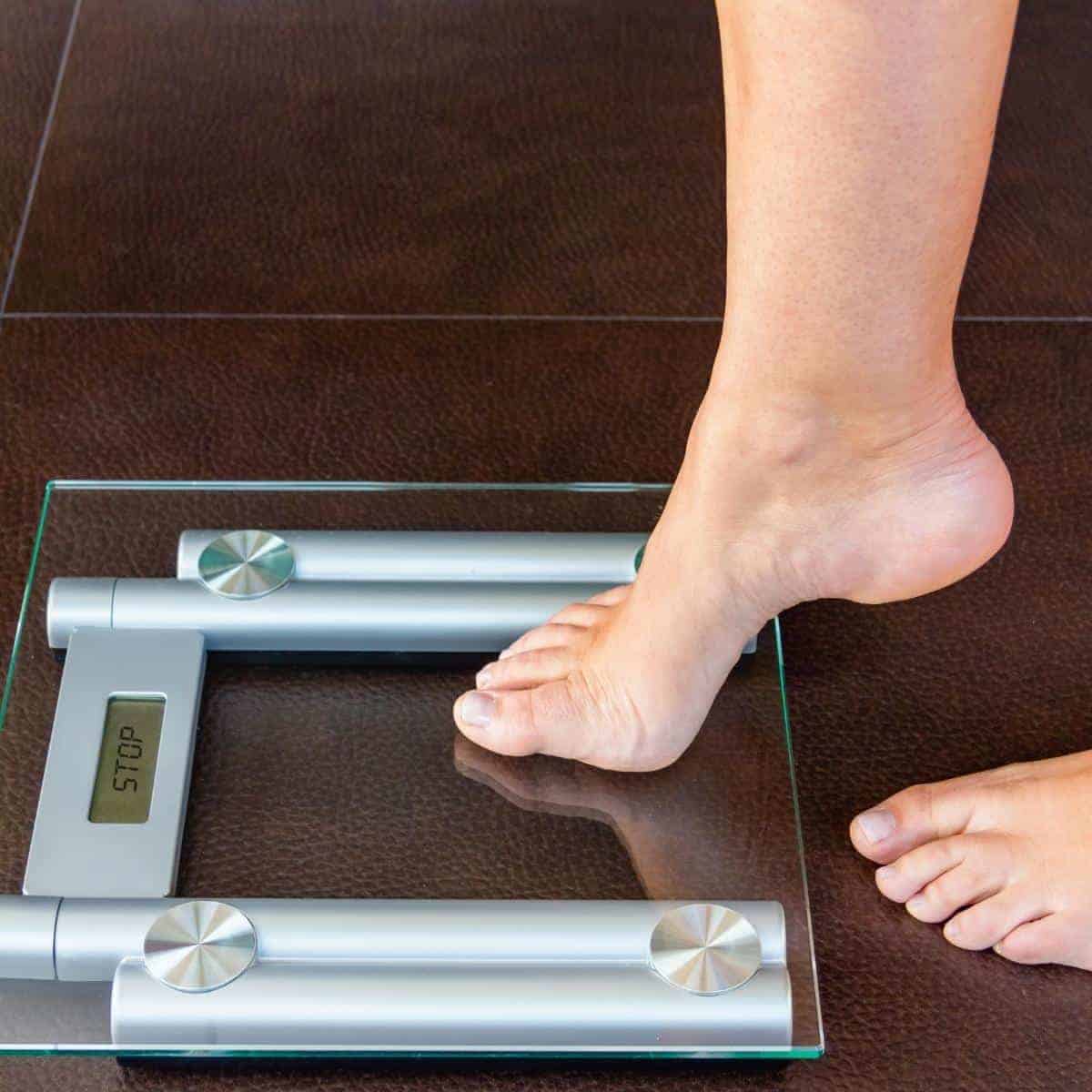
How much weight can a calorie deficit really help you lose?
You have done the maths. You have tracked every meal. You have politely said “no thank you” to the office biscuits and “yes please” to the salad. You are absolutely certain you are in a calorie deficit, yet when you step on the scales, the number stares back at you, unchanged.
It is arguably the most frustrating part of trying to get healthy. You feel like you are doing everything right, but your body just isn’t getting the memo. You might feel like throwing your tracking app out the window.
Before you give up, you need to know that weight loss is rarely a straight line. While the basic science says “eat less, move more,” the reality inside your body is a bit more complicated.
In this post, I am going to look at how much weight you can realistically expect to lose, why the old rules don’t always work, and what is actually happening when the scales get stuck.

What is a calorie deficit?
Let’s start with the basics. A calorie is simply a unit of energy. Your body needs a certain amount of energy just to keep the lights on, to keep your heart beating, your lungs breathing, and your brain thinking. This is called your maintenance level.
If you eat the same amount of energy as you burn, your weight stays the same. If you eat more, your body stores the extra energy as fat. If you eat less, your body has to tap into those fat stores to get the energy it needs.
This gap between what your body needs and what you eat is called a calorie deficit.
According to the NHS, the average man needs about 2,500kcal a day to maintain his weight, and the average woman needs about 2,000kcal. However, these are just averages. Your personal number depends on your height, weight, age, and how much you move around during the day.
The “Official” Rule: How much should you lose?
For years, we have been told a very specific rule about weight loss. You might have heard that “3,500 calories equals one pound of fat.”
The theory went like this: If you create a deficit of 500 calories a day, that adds up to 3,500 calories over a week. Therefore, you should lose exactly 1lb (approx 0.45kg) of fat per week.
Based on this logic, the NHS suggests that when trying to lose weight, the average person should aim to reduce their daily intake by about 600kcal. This would mean:
- Men aiming for roughly 1,900kcal per day.
- Women aiming for roughly 1,400kcal per day.
If you follow this guidance, the British Heart Foundation (BHF) states that a safe and healthy rate of weight loss is usually between 0.5kg and 1kg (1lb to 2lb) per week.
So, if you are cutting 600 calories a day, you should be losing a steady pound or two every single week, forever, right?
Well, not exactly.
Calorie Deficit to Weight Loss Calculator
Calorie Deficit to Weight Loss Calculator
This calculator provides an estimate of potential weight loss based on your daily calorie deficit. It also highlights whether your deficit falls within a generally considered safe range.
Please note: This calculator provides an estimate only. Weight loss is influenced by many factors including hormones, water retention, muscle mass, adherence, and overall health.
Why the maths doesn’t always add up
While the “3,500 calorie rule” is a helpful starting point, it is actually a bit flawed. It assumes your body is a simple machine, like a car that burns fuel at a constant rate. But your body is much smarter (and more annoying) than that.
Research published in The Lancet (supported by the National Institutes of Health) shows that this old rule ignores how your body changes over time. It assumes that if you keep eating the same amount, you will keep losing weight at the same speed.
Here is the reality: Dynamic Weight Loss.
As you lose weight, you become smaller. A smaller body requires less energy to function than a larger body. Think of it like heating a house. A massive mansion needs a lot of gas to keep it warm. A small two-bedroom cottage needs much less.
As you shrink, your “maintenance” calorie intake drops. The deficit you created at the start of your diet gets smaller and smaller, even if you are eating the exact same amount of food.
Eventually, your new lower body weight matches the amount of food you are eating. You haven’t stopped dieting, but you are no longer in a deficit because your body needs less fuel.
The Plateau: Why weight loss slows down
This settling point is often called a plateau. It can be incredibly disheartening, but it is a normal biological response.
Senior Dietitians at the British Heart Foundation explain that you often lose a lot of weight in the first few weeks. This is partly because your body is using up stored carbohydrates (glycogen) for fuel, which releases a lot of water.
After this initial “whoosh,” weight loss tends to stabilise. The study in The Lancet suggests that for every permanent change in your diet (e.g., cutting 100 calories), it takes about one year to reach half of the total weight loss that change will cause, and about three years to reach the full effect.
This means weight loss naturally slows down over time. It doesn’t mean you are failing; it means your body is adapting.
5 Practical reasons you aren’t seeing results
Okay, so we know the science says weight loss slows down. But what if you have been in a calorie deficit for two weeks and haven’t lost anything? Or what if the scale has gone up?
Before you panic, check these five common culprits.
1. You might be eating more than you think
This is the tough love part. It is incredibly easy to underestimate how much we eat. In fact, studies show most people, even dietitians, underestimate our food intake.
Are you guesstimating your portion sizes? A “tablespoon” of peanut butter can easily turn into two or three tablespoons if you use a heaped spoon. A “splash” of olive oil in the pan could add 120 calories that you forgot to track.
If you aren’t weighing your food, you might not be in a deficit at all. For a deep dive into how to do this properly, check out this guide on calorie counting for weight loss. It explains exactly how to track without driving yourself mad.
2. The “Weekend” Effect
This is a classic trap. You are an angel from Monday to Friday. You stick to your 1,400 calories perfectly. You create a calorie deficit of 2,500 calories for the work week. Amazing!
Then Saturday arrives. You have a lie-in, a big brunch, a few drinks in the evening, and a takeaway. Sunday involves a roast dinner and some chocolate.
It is very easy to eat an extra 3,000 calories over a weekend without feeling like you have binged. That weekend surplus can completely wipe out the deficit you built during the week. If you want to enjoy treats at the weekend, you might need to adjust your calories during the week to bank them.
3. Water Retention is masking your fat loss
This is a major reason why people quit. You have lost fat, but the scale doesn’t show it because you are holding onto water.
Your body is about 60% water, and this level changes constantly.
- Salt: Had a salty meal last night? Your body will hold water to balance it out.
- Carbs: For every gram of carbohydrate you store for energy, your body stores 3-4 grams of water.
- Hormones: For women, the menstrual cycle is a huge factor. In the week leading up to your period, you can easily hold 1-2kg of water weight.
If you want to understand this better, read this article on water weight loss vs fat weight loss. It explains why the scale sometimes lies when you are in a calorie deficit.
4. You are building muscle
Are you hitting the gym? If you have started lifting weights or doing high-intensity exercise, you might be experiencing “newbie gains.”
This is where you build muscle and lose fat at the same time. Muscle is denser than fat. A pound of muscle takes up much less space than a pound of fat. If you lose 1lb of fat and gain 1lb of muscle, the scale stays exactly the same. But you will look leaner and your clothes will fit better.
5. Stress and Sleep
We often focus so much on food that we ignore sleep and stress. When you are stressed or sleep-deprived, your body produces cortisol. High cortisol can lead to water retention and increased hunger.
If you are sleeping five hours a night and are stressed at work, your body is fighting against you. You might be in a calorie deficit, but water retention from stress could be hiding your progress.
So, what is the verdict?
If you maintain a consistent calorie deficit (around 500-600 kcal below your maintenance), you can expect to lose roughly 0.5kg to 1kg (1-2lbs) per week in the early stages.
However, you must accept that:
- It won’t be linear: Some weeks you will lose 2lbs, some weeks nothing, some weeks you might gain 1lb of water.
- It will slow down: As you get lighter, you need to eat slightly less or move slightly more to keep the calorie deficit going.
- The scale isn’t the only tool: Use a tape measure or how your clothes fit to track real progress.
If the scale gets stuck, don’t drop your calories to dangerously low levels. The NHS advises that very low-calorie diets (under 800 calories) should be undertaken only under medical supervision. Instead, look at your activity levels. Can you add a 20-minute walk to your day? Often, moving a little more is more sustainable than eating less.
Frequently Asked Questions
Can eating too little stop weight loss?
You might have heard of “starvation mode.” The idea is that if you eat too little, your body stops burning fat. This is mostly a myth. Your body cannot run on nothing. However, if you eat too little, you will become tired and lethargic. You will subconsciously move less, fidget less, and walk less, which lowers your calorie burn. Plus, crash diets usually lead to bingeing later on. It is better to have a moderate, sustainable calorie deficit.
Why do I weigh more the day after a workout?
This is normal! When you exercise, especially weight training, you create tiny micro-tears in your muscles. Your body rushes fluid to the area to help repair them. This inflammation is a necessary part of getting stronger, but it shows up as water weight on the scale. It usually goes away after a day or two.
How long does it take to see results?
Generally, if you are consistent, you should start seeing changes on the scale within 1 to 2 weeks. However, due to water retention, it can sometimes take 3 to 4 weeks for fat loss to become visible. If nothing has changed after 4 weeks of accurately tracking your calorie deficit, you likely need to adjust your calorie intake or activity levels.
Should I eat back my exercise calories?
Fitness trackers are great, but they often overestimate how many calories you burn, sometimes by up to 20-90%. If your watch says you burned 500 calories and you eat an extra 500 calories, you might wipe out your calorie deficit. It is usually safer to treat exercise calories as a “bonus” buffer rather than an extra food allowance.
Conclusion
Weight loss is not a maths test. It is a biological process involving hormones, water, energy, and psychology.
A calorie deficit is the only way to lose fat, but it doesn’t guarantee the scale will drop every single morning. If you are stuck, take a breath. Check your tracking, monitor your stress levels, and be patient.
If you have been doing everything right and seeing no changes for a month, it might be worth speaking to your GP to rule out conditions like an underactive thyroid. But for most of us, consistency with a regular calorie deficit is key.