
Weight Watchers vs Calorie Counting: Which One Actually Works for You? New
Let’s be honest: trying to lose weight can sometimes feel like you need a degree in advanced mathematics. Between calculating macros, weighing out pasta, and trying to figure out if an avocado is a “good fat” or just “fat,” it is easy to get overwhelmed.
If you are looking to shed a few stone (or just fit comfortably into your favourite jeans again), you have narrowed your options down to two of the key players of the diet world: Weight Watchers (WW) and good old-fashioned Calorie Counting.
Both methods have lots of fans. Both claim to be the best way to slim down. But they work in very different ways. Is it better to track every single calorie, or is a simplified points system the key to success?
In this guide, I will break down the differences, the costs, and the science to help you decide which path is right for you.
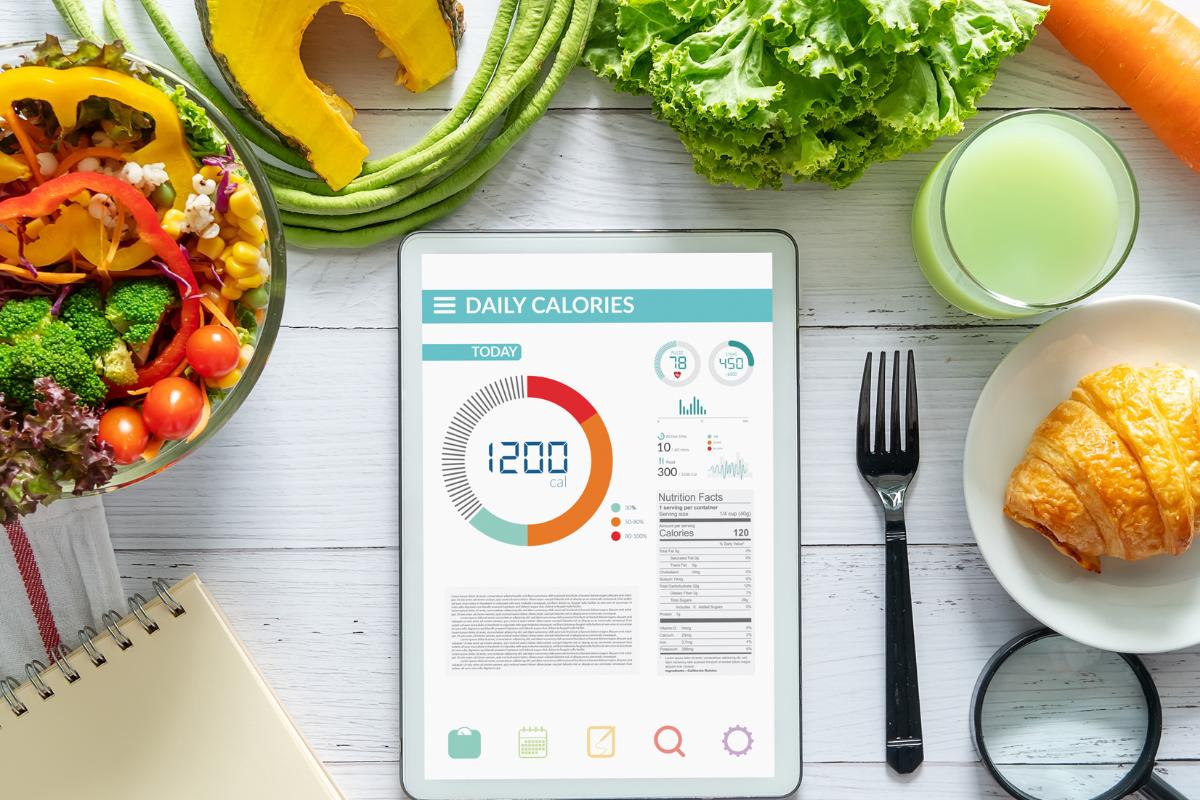
What is Calorie Counting?
At its heart, calorie counting is simple maths. It is based on the scientific fact that to lose weight, you need to be in a “calorie deficit.” This means you need to burn more energy than you consume.
The NHS suggests that to lose weight at a safe and sustainable rate, the average man should aim for 1,900 kcal a day, and the average woman should aim for 1,400 kcal a day.
When you count calories, you log everything you eat and drink. You look at the back of the packet, find the number, and add it to your daily total. If you eat an apple, you log the calories. If you eat a biscuit, you log the calories. Nothing is off-limits as long as it fits your daily budget.
For a deeper look at how to get started with this method, check out this guide on Calorie Counting For Weight Loss.
The “Maths” Approach
The logic here is undeniable. A calorie is a unit of energy. If you consume fewer units than your body uses to keep your heart beating and your legs moving, your body has to find that energy from somewhere else—usually your fat stores.
However, calorie counting treats all calories as equal. In the eyes of a calculator, 100 calories of broccoli is exactly the same as 100 calories of Haribo sweets. Your body, however, might disagree with that assessment.
What is Weight Watchers (WW)?
Weight Watchers (now officially known just as WW) has been around for decades. It takes the science of calories and wraps it up in a system that is designed to be easier to follow and focuses more on health than just energy.
Instead of counting calories, every food and drink is assigned a Points value.
How the Points System Works
You get a daily budget of Points based on your age, weight, height, and gender. You use the WW app to track your food, just like you would with calories. But the calculation is a bit smarter.
- Sugar and Saturated Fat drive points UP.
- Protein and Fibre bring points DOWN.
This means that a sugary doughnut will cost you a lot of points, while a grilled chicken breast will cost very few. The system is designed to gently nudge you towards healthier choices without banning any specific foods.
The Magic of “ZeroPoint” Foods
One of the biggest differences is the concept of ZeroPoint foods. There are over 200 foods that you do not have to track or measure at all. These usually include things like:
- Fruit and vegetables
- Eggs
- Chicken and turkey breast
- Fish
- Beans and legumes
The idea is that nobody ever became overweight by eating too many carrots. By making these foods “free,” WW encourages you to fill up on nutritious stuff so you aren’t starving.
The Key Differences at a Glance
It can be hard to spot the difference when both involve tracking food on an app. Here is a breakdown:
| Feature | Calorie Counting | Weight Watchers (WW) |
|---|---|---|
| What you track | Energy (Calories) | Points |
| Nutritional Focus | None (Quantity over Quality) | High (Quality over Quantity) |
| Free Foods | None (Everything counts) | Yes (200+ ZeroPoint foods) |
| Cost | Free (MyFitnessPal, Nutracheck free version) | Monthly subscription (£10-£20+) |
| Flexibility | 100% Flexible | Flexible, but “junk” food is expensive in Points |
| Support | Self-led (Solo) | Online Coaches |
Comparison 1: Ease of Use
Which one is less likely to make you want to throw your phone across the room?
Calorie Counting requires precision. To do it properly, you really need to weigh everything. Guessing that your portion of pasta is 75g when it is actually 125g can be the difference between losing weight and staying the same. You also need to track the milk in your tea and the oil in your frying pan. For some people, this level of detail is satisfying. For others, it is exhausting.
Weight Watchers simplifies this. Because you have those ZeroPoint foods, you don’t have to weigh or track every single component of a meal. If you make a stir-fry with chicken and veg, you might only need to track the oil and the sauce. The Points are simplified numbers (e.g., “4 points” is easier to remember than “137 calories”).
Winner: Weight Watchers takes the win for simplicity, simply because you don’t have to track every mouthful of spinach.
Comparison 2: Food Quality and Nutrition
You can technically lose weight on a calorie-counting diet, eating nothing but crisps and chocolate, provided you stay under your limit. But you would likely feel terrible, your skin would suffer, and you would be hungry all the time.
Calorie counting requires you to be the nutritionist. You have to decide to eat the apple instead of the biscuit.
WW does the thinking for you. Because sugary, fatty foods have such high Point values, the system naturally discourages you from eating them too often. A tiny chocolate bar might take up 20% of your daily budget, whereas a massive salad with tuna takes up hardly any. You quickly learn that to stay full, you need to eat “proper” food.
Winner: Weight Watchers. It actively pushes you towards a balanced diet rather than just a smaller portion.
Comparison 3: The Cost
This is a big factor for many of us, especially with the price of the weekly shop going up.
Calorie Counting is essentially free. You can use a pen and paper if you want, or download a free app like MyFitnessPal or Cronometer. There are premium versions, but you don’t need them to succeed.
Weight Watchers is a business. You have to pay a monthly subscription fee to use their app. The price varies depending on the plan you choose (usually between £10 and £20 a month), though they often have offers.
For some, paying money is actually a motivator; you want to get your money’s worth! But if you are on a tight budget, a monthly fee might be a dealbreaker.
Winner: Calorie Counting. You can’t beat free.
Comparison 4: Sustainability and Mental Health
This is perhaps the most important category. Which diet can you stick to without losing your mind?
Calorie Counting can sometimes lead to obsession. It is easy to get fixated on the numbers. Some people find themselves stressed out if they go 10 calories over their limit. As noted in this article on Calorie Counting Pros and Cons, it can focus heavily on quantity rather than quality, potentially leading to a poor relationship with food.
Weight Watchers emphasises community and support. They offer workshops online where you can talk to people in the same boat. This “we’re in this together” vibe is massive for motivation.
However, some people find the Points system restrictive. If you run out of Points but are still hungry, you might feel like you have “failed” the day, even if you just need a sandwich. Plus, carrying over Points is limited, whereas calories work on a weekly average just as well as a daily one.
For a personal take on this, read about my experience in 5 Ways Weight Watchers Is Better Than Slimming World, which highlights how the Points system helps with portion control and flexibility.
Winner: It’s a tie. WW wins on support, but Calorie Counting wins on total flexibility.
What Does Science Say?
Science supports both methods, but for different reasons.
A study published in the Journal of the American Medical Association found that participants in commercial weight loss programmes like Weight Watchers generally lost more weight than those who tried to lose weight on their own (standard care). Why? Likely because of the structure and the support network.
However, the mechanism of weight loss in WW is still a calorie deficit. The Points system is just a different “currency” for calories.
The NHS explicitly recommends a calorie deficit of about 600kcal to lose weight. They also acknowledge that commercial groups can be effective because they provide the behavioural support that a simple calculator app cannot.
Can You Do Both?
Technically, yes, but it is not recommended. Trying to hit a specific calorie target and a specific Points target at the same time is a recipe for a headache. It is double the tracking and double the stress.
Pick one system and give it your full attention for at least 3 months. Consistency matters far more than which specific tool you use.
Summary: Which One Is Right For You?
Still on the fence? Let’s break it down by personality type.
Choose Calorie Counting if:
- You love data, numbers, and precision.
- You want to eat whatever you want, as long as it fits the maths.
- You are on a budget and don’t want to pay a monthly fee.
- You are happy to plan your own meals and don’t need a support group.
- You want to understand exactly what is in your food (macros, sugar, etc.).
Choose Weight Watchers if:
- You hate maths and want a simplified system.
- You want to be nudged towards healthier food choices automatically.
- You value community support and accountability (the “weigh-in” effect).
- You want the freedom to eat “ZeroPoint” foods without tracking.
- You are willing to pay a monthly fee for a polished app and coaching features.
Conclusion
There is no magic wand for weight loss. Whether you count calories or count Points, the result comes from consistently eating slightly less than you burn over a long period.
Weight Watchers offers a fantastic “safety net” of support and nutritional guidance, making it great for people who have struggled with diets in the past or need that community feel. Calorie counting offers ultimate freedom and costs nothing, making it perfect for the organised, independent dieter.
The best diet is the one you can stick to on a Friday night after a long week at work. Whether that involves scanning a barcode for Points or logging calories into an app, the choice is yours.
Frequently Asked Questions (FAQ)
Is Weight Watchers just counting calories in disguise?
Sort of, but with a twist. While Points are calculated using calories, they also factor in sugar, saturated fat, and protein. Two foods with the same calories can have very different Point values. WW penalises added sugar and saturated fat, making them “expensive” in Points, whereas calorie counting treats all calories equally.
Can I lose weight just by counting calories?
Absolutely. If you consistently consume fewer calories than you burn, you will lose weight. However, you need to be careful to eat nutritious food so you don’t end up tired or nutrient-deficient.
Is fruit free on Weight Watchers?
Yes! Most fresh fruits and vegetables are “ZeroPoint” foods on Weight Watchers. This means you can eat them without having to track or weigh them. On a calorie-counting diet, you must track the calories in fruit (a banana is roughly 100 calories).
How much does Weight Watchers cost in the UK?
Prices change based on offers, but typically the “Core” plan starts from around £10 per month if you sign up for a longer period. There are often deals where you can get the first few months for a reduced price or get a free cookbook.
Which is better for long-term results?
Studies suggest that commercial programmes like WW often have better long-term adherence because they teach behavioural changes and portion control, rather than just maths. However, many people successfully maintain weight loss through calorie counting, eventually learning what a “normal” portion looks like.