

Easy Soup Maker Recipes: Healthy Homemade Soups & Tips
I love homemade soup, especially once the weather gets colder, but I’m also quite happy to admit that I don’t always want another saucepan bubbling away on the hob. That’s where I find a soup maker really useful. I can prepare the vegetables, add everything to the machine and leave it to get on with cooking while I do something else.
I’ve used my soup maker for all sorts over the years, including soup, smooth curry sauces and even gravy. For me, though, soup is still where it earns its cupboard space. It makes it incredibly easy to turn a few fairly ordinary vegetables into lunch, particularly when I’ve got things in the fridge that need using.
You don’t necessarily need recipes written specifically for a particular brand of soup maker either. Many homemade soup recipes can be adapted, although you do need to follow the instructions for your particular machine because capacities, programmes and the ingredients they can handle vary.
If you’re wondering whether buying one is worthwhile in the first place, I’ve also shared my experience and the benefits of using a soup maker.

Easy soup maker recipes to try
If you’ve just bought a soup maker, I’d start with relatively simple vegetable soups. They’re easy to experiment with and you can soon work out how thick you like your soup and which flavours work for you.
Here are some of my favourites.
Tomato soup
My easy tomato soup is a particularly simple one and uses tinned ingredients, so you don’t even need a fridge full of fresh vegetables to make it.
It’s a useful recipe to have in the cupboard for those days when you’ve somehow reached lunchtime without actually planning anything for lunch. You can keep it smooth and simple or play around with herbs and seasoning depending on what you have.

Red lentil soup
Red lentil soup is one I like when I want something a bit more substantial than a straightforward vegetable soup.
Lentils make soup thicker and add protein and fibre, so they’re handy to keep in the cupboard for soups as well as curries and other meals.
Check your soup maker instructions before adding dried pulses because machines differ in what they can accommodate and how ingredients should be prepared.

Pea and coconut soup
For something a bit different, try my pea and coconut soup.
Peas are brilliant for quick soups because frozen peas are inexpensive and easy to keep on hand. Coconut gives this one a creamier flavour without turning it into another variation of carrot or tomato soup.
Again, check whether your particular soup maker permits frozen ingredients or whether they need to be defrosted first.

Butternut squash soup
Butternut squash soup is lovely when you want a thick, smooth soup, particularly during autumn and winter.
Squash has a natural sweetness, so I like balancing it with plenty of seasoning rather than letting the finished soup become too sweet.

Broccoli and Stilton soup
If you’ve got cheese that needs using, broccoli and Stilton soup is a completely different option from the vegetable-based soups above.
Dairy ingredients sometimes need to be added at a particular stage rather than at the beginning of a soup-maker programme, so follow your machine’s instructions as well as the individual recipe.

Mushroom soup
My easy mushroom soup is another smooth soup that works well for lunch, particularly if you serve it with some bread or something else alongside it.
Mushrooms contain a lot of water themselves, so this is also a good reminder not to assume that every soup needs exactly the same amount of stock.

Curried parsnip soup
If you’ve got parsnips to use, try my curried parsnip soup. The parsnips give it a slightly sweet flavour while the curry powder adds some warmth.
I’ve included soup-maker guidance with that recipe too, including why you shouldn’t automatically pour the full amount of stock into your machine.

Carrot, ginger and orange soup
For something a little different, carrot, ginger and orange soup combines the sweetness of carrots and orange with ginger.
Carrots are one of my favourite budget vegetables for soup because they’re cheap, easy to find and work with so many other flavours.

Vegetable soup maker recipes
Vegetables are probably the easiest place to start if you’re new to using a soup maker.
Carrots, parsnips, butternut squash, tomatoes, peppers, mushrooms, broccoli and celery can all make lovely soups, either on their own or combined with other ingredients.
Don’t feel that you need to follow the same combinations every time either. Soup can be a useful way of using vegetables you already have, particularly if you’ve got half a bag of carrots or a couple of peppers that aren’t going to last much longer.
Just don’t interpret “using things up” as throwing anything vaguely vegetable-shaped into the machine! Vegetables that have softened slightly may still be perfectly usable, but anything mouldy, spoiled or unsafe to eat needs to go in the bin rather than the soup maker.
For lots more vegetable combinations, have a look through my healthy soup recipes.
Healthy soup maker recipes
One of the things I like about making soup myself is being able to decide exactly what goes into it.
That doesn’t mean homemade soup is automatically “healthy”, because that depends on the ingredients and what healthy means for you. What it does mean is that you can choose the vegetables, stock, seasonings and other ingredients yourself.
If I’m making soup for lunch, I also want it to actually fill me up. A bowl of blended vegetables can be lovely, but sometimes I want something more substantial.
Depending on the recipe and what your machine allows, potatoes, lentils, beans, pasta, rice or other grains can make a soup more filling. You can also simply serve your soup with some bread, a sandwich or something else alongside it.
Slimming World soup maker recipes
I used to make lots of homemade soup when I was following Slimming World and losing weight because it was an easy way for me to prepare lunches in advance and include plenty of vegetables.
If you’re following Slimming World now, check the ingredients you use against the current plan because products and the plan itself can change. I don’t want to give you a Syn or SWIP value today that might be completely wrong by the time you read it.
I’ve got a separate collection of Slimming World soup recipes where you’ll find plenty more ideas.
Can you use normal soup recipes in a soup maker?
Often, yes, but don’t assume that you can copy a saucepan recipe ingredient-for-ingredient and put everything into the machine.
The biggest consideration is capacity. Soup makers have minimum and maximum fill levels and you need to stay within them. A recipe that makes a huge saucepan of soup may simply be too large for your machine.
You may also need to adjust the amount of liquid. Soup made in a saucepan loses some liquid as it cooks, whereas a soup maker is a much more enclosed environment.
The ingredients themselves matter too. Your manufacturer’s instructions should tell you about ingredients that need pre-cooking or need to be added at a particular stage.
I tend to use an existing soup recipe as the starting point and then adapt it to my machine rather than assuming everything can go straight in unchanged.
How much liquid should I put in a soup maker?
There isn’t one amount that works for every soup maker or every recipe.
Look for the minimum and maximum levels marked on your machine and check its instructions. Never fill above the maximum line simply because a recipe tells you to add a certain amount of stock.
Remember that vegetables release liquid while cooking too. Tomatoes, mushrooms and courgettes, for example, behave very differently from potatoes or lentils.
If you’re adapting one of my soup recipes, I’d rather you check the capacity of your machine than blindly follow a liquid measurement intended for a saucepan.
Can you put frozen vegetables in a soup maker?
This depends on the soup maker.
Some appliances and programmes may be suitable for certain frozen ingredients while others may require ingredients to be defrosted first. Follow the instructions for your particular machine rather than assuming that all soup makers work in the same way.
Frozen vegetables are really useful for soup, though, so if your machine allows them they’re worth keeping in the freezer. Peas, spinach and mixed vegetables can be particularly handy when there isn’t much fresh food left in the fridge.
Can you put raw meat in a soup maker?
Again, this depends on the machine.
Don’t assume that a soup maker will safely cook raw meat simply because it heats soup. Some manufacturers may require meat to be cooked before it’s added, while appliances specifically designed to cook meat may have different instructions.
Follow the manufacturer’s guidance for your machine and the recipe you’re making.
Leftover cooked chicken or other cooked meat can be useful in soup, but leftovers still need to be stored and reheated safely. The Food Standards Agency has guidance on storing and reheating leftovers safely.
Can you put pasta or rice in a soup maker?
Possibly, but this is another one where the answer depends on the appliance and programme.
Pasta and rice absorb liquid as they cook, so adding too much can turn a lovely soup into something considerably more solid than you intended! Some soup makers may also require these ingredients to be added at a particular point in the cooking cycle.
If your machine doesn’t recommend cooking them directly in the soup, you can always cook them separately and stir them into the finished soup.
How do you thicken soup in a soup maker?
If your soup is consistently thinner than you like, the first thing I’d look at is the amount of liquid you’re using.
Potato can naturally thicken blended vegetable soups, while lentils and beans can make some soups more substantial. Sometimes simply increasing the proportion of vegetables to stock is enough.
Be careful with conventional thickening methods such as flour or cornflour because soup-maker manufacturers may have specific instructions about using them.
It’s much easier to thin a thick finished soup with a little hot stock or water than deal with a machine that’s been overfilled, so don’t be tempted to keep adding liquid before the cooking cycle has even started.
Do soup maker recipes work in any brand?
Most of the recipes on Just Average Jen aren’t intended exclusively for one brand of soup maker.
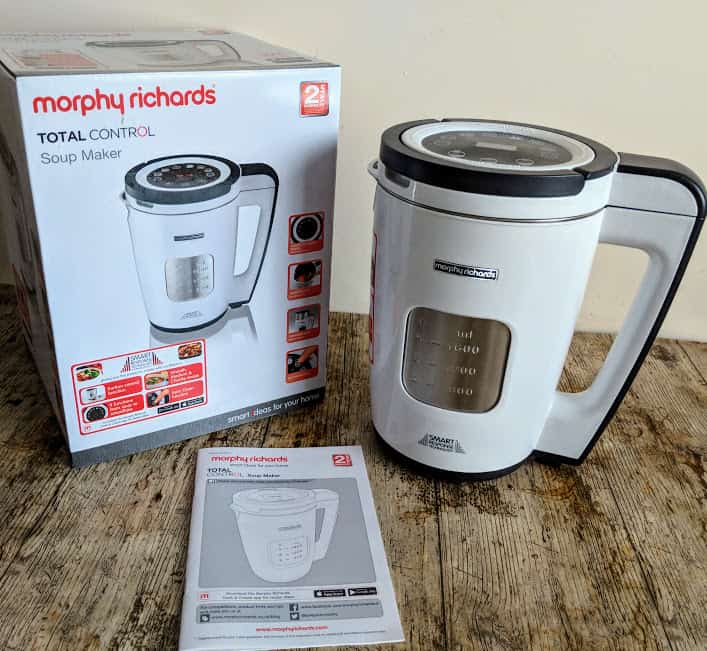
I have used a Morphy Richards soup maker myself, but people searching for recipes use all sorts of machines, including Tefal, Salter, Ninja, Tower and other brands.
The basic flavours of a tomato or butternut squash soup don’t suddenly change because there’s a different logo on the machine. What can change is the capacity, programme length, whether ingredients are sautéed first and which ingredients the manufacturer allows you to use.
Use my recipes for the ingredients and flavour combinations, then follow the operating instructions for your own machine.
If you have a Morphy Richards model, you might also be interested in my Morphy Richards soup maker review.
What else can you make in a soup maker?
It depends entirely on your model, but some soup makers can do more than make smooth and chunky soups.
I’ve used mine for smooth curry sauce and gravy, while some machines have additional blending or drinks programmes.
Before trying something completely different, check the manufacturer’s instructions. I wouldn’t risk damaging an appliance just because somebody on the internet discovered they could make something unusual in theirs!
More homemade soup ideas
A soup maker is useful, but you certainly don’t need one to enjoy homemade soup. A saucepan and a stick blender will do the job perfectly well for lots of recipes.
For more ideas, have a look through my healthy soup recipes, where you’ll find vegetable soups, lentil soups, filling soups and plenty of recipes that can be made on the hob or adapted for other cooking methods.
And if you’re still deciding whether another kitchen gadget deserves space on your worktop, read my guide to the benefits of a soup maker before you buy one.
🎄 Still got Christmas shopping to do?
I’ve put all my Christmas gift guides, festive recipes and other Christmas bits together in one place to make life a little easier!