Healthy Indian Snacks: 8 Easy Ideas to Try at Home
Indian food is one of my favourite options when I want something with plenty of flavour, and it definitely doesn’t have to mean sitting down to an enormous curry and rice every time. There are loads of smaller dishes and Indian snacks that use the same spices and ingredients, whether you want something to eat between meals, a light lunch or a few bits to put on the table alongside a curry.
I’ve pulled together some of my favourites here, including a couple of recipes already on Just Average Jen and some very simple ideas you can adapt depending on what you have in the kitchen.
I’m using “healthy” fairly loosely, too. I don’t think a snack suddenly becomes good or bad because it contains a particular number of calories or grams of fat. For me, these are simply ideas based around things such as vegetables, fruit, pulses, paneer and spices that can fit into an everyday balanced diet.
1. Air fryer onion bhajis
I have to start with these because they’re one of those things I always want when we’re having curry. Onion bhajis are traditionally fried, but I’ve found they work really well in the air fryer.
My air fryer onion bhajis use red and brown onion with gram flour, garlic, cumin, coriander, turmeric and chilli. I start them in silicone cupcake cases so they hold their shape, then take them out halfway through cooking so the edges can crisp up.
They take about 30 minutes altogether and I’d happily eat them as a snack with yoghurt and mint, although they’re even better as part of a curry night.
2. Simple spiced potatoes
Potatoes and spices are a combination that can be as simple or elaborate as you want to make it.
For an incredibly easy version, boil some small potatoes until tender, drain them well and toss them with cumin, chilli, coriander and a little salt. A squeeze of lemon or lime and some fresh coriander at the end makes them considerably more interesting without turning the whole thing into a complicated recipe.
You can eat them warm, but they’re also good at room temperature, which makes this a useful idea if you’re preparing several dishes at once.
If you’d prefer something more substantial, have a look at my easy aloo gobi, which combines potato and cauliflower with plenty of warming spices.
3. Spiced soya chunks
Soya chunks are one of those ingredients that don’t look particularly exciting in the packet, but they’re very good at taking on other flavours.
Cook them according to the packet instructions first, then squeeze out as much excess water as you reasonably can. From there you can add whatever spices you fancy. Garam masala, cumin, turmeric, garlic and chilli are an easy combination, particularly with a squeeze of lemon at the end.
You could pan-fry them in a little oil or try them in the air fryer until the outside starts to become slightly crisp.
They’re particularly useful if you’re vegetarian or vegan and want something savoury that isn’t another plate of raw vegetables. I’ve been vegetarian since I was ten, so I’m always interested in finding another use for ingredients like this rather than assuming every meat-free snack has to involve hummus!
4. Potato chaat
This is where I’d move beyond simply sprinkling chilli powder onto boiled potatoes.
Chaat covers a huge variety of South Asian street foods and snacks, so there isn’t one single “potato chaat” recipe. What I like about the idea is the combination of different flavours and textures — spicy, tangy, cooling, crunchy and sometimes sweet all together.
For an easy version at home, start with cooked potato and add things such as yoghurt, chopped onion, coriander and tamarind chutney. A sprinkle of chaat masala gives it that distinctive tangy flavour too.
If you’ve never bought chaat masala before, look in the world-food aisle or an Asian supermarket. It isn’t the same thing as garam masala, so I wouldn’t substitute one for the other and expect the same result.
5. Fruit chaat
I know adding spices to fruit sounds a little strange if you’ve only ever eaten fruit salad with yoghurt or perhaps a drizzle of honey, but fruit chaat is well worth trying.
Use whatever fruit you actually like rather than buying five different fruits purely for this. Apple, banana, mango, orange, pear, grapes and pomegranate can all work.
Chop everything into bite-sized pieces, add a squeeze of lemon or lime and then sprinkle over a little chaat masala. That salty, tangy, slightly spicy flavour against sweet fruit is completely different from an ordinary fruit salad.
I’d add the seasoning gradually the first time you make it. You can always put more on; removing chaat masala from forty pieces of chopped fruit would be considerably more challenging!
6. Spiced paneer
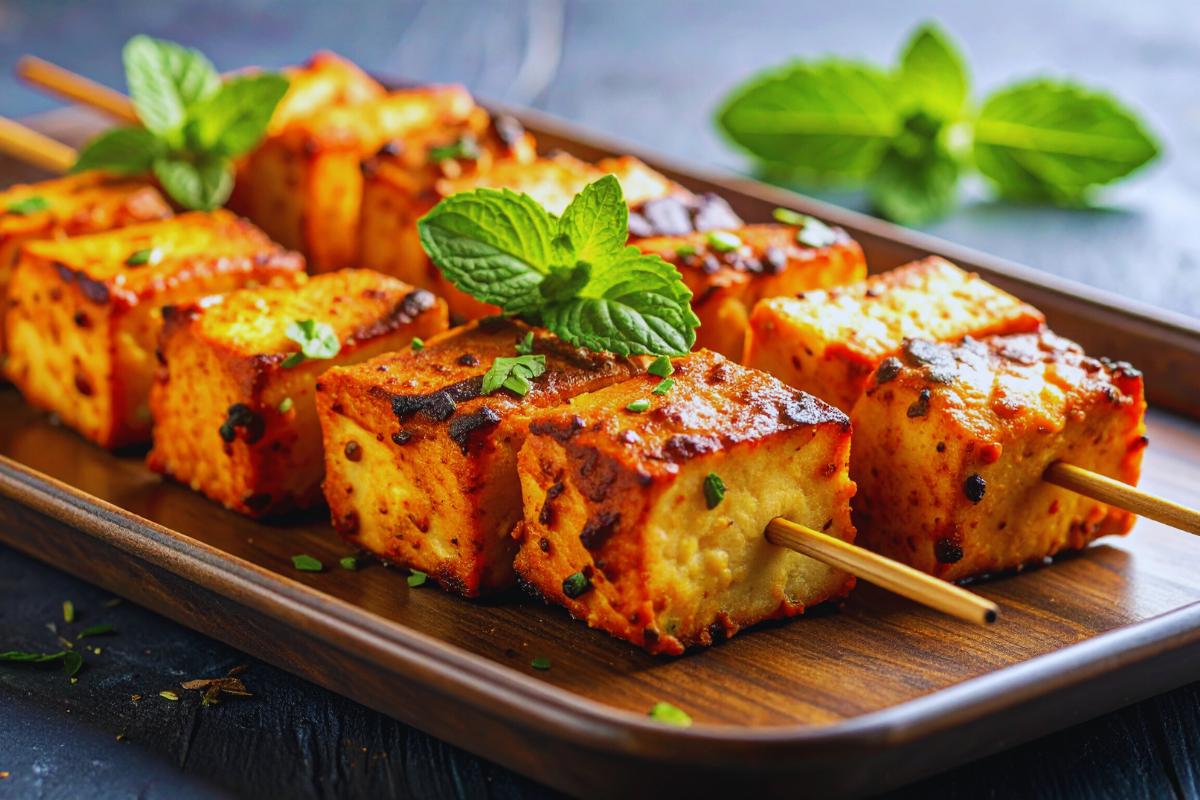
Paneer is a firm cheese that holds its shape when it’s cooked, which makes it brilliant for grilling, frying or threading onto skewers.
For a really simple snack, cut paneer into cubes, add spices and cook it until it’s golden around the edges. You can make it much more interesting by marinating it first in yoghurt, ginger, garlic, garam masala and a little chilli.
If you’ve got peppers and onions that need using, chop those into chunks and put them onto skewers with the paneer. It turns a few cubes of cheese into something that feels much more like a proper dish.
You could cook the skewers under the grill or in the air fryer depending on what you’re already using for the rest of the meal.
7. Spiced roasted cauliflower
Cauliflower is another vegetable that becomes infinitely more interesting once spices and some properly browned edges are involved.
I’ve got a lovely spiced cauliflower roti recipe which combines roasted cauliflower with garam masala lentils, homemade rotis and quick-pickled red onions. The whole thing makes a substantial meal, but there’s no reason you can’t steal the cauliflower part of the idea.
Roast small cauliflower florets with garam masala, turmeric and a little oil until they’re tender and beginning to brown around the edges. Serve them with a yoghurt dip and they’re a very easy warm snack or side dish.
If you’d rather turn the cauliflower into dinner, my cauliflower and chickpea curry is another easy meat-free option.
8. Cucumber and mint yoghurt
Sometimes the best thing next to spicy food is something incredibly simple and cooling.
Mix plain yoghurt with finely chopped or grated cucumber, fresh mint and a little seasoning. You can add cumin, coriander or a squeeze of lemon if you fancy it, but it doesn’t need dozens of ingredients.
Eat it as a dip with vegetables or bhajis, spoon it alongside spiced potatoes and paneer, or put a bowl on the table with a selection of other Indian-inspired snacks.
If you’re making this for someone vegan, use an unsweetened plant-based yoghurt rather than simply leaving the yoghurt out.
Making a few Indian snacks for a curry night
You don’t have to choose only one of these. In fact, I think they’re much more fun when you make two or three different things and put everything in the middle of the table.
You could make air fryer onion bhajis, some spiced potatoes and a yoghurt dip, then add whichever curry you’ve chosen for dinner. If you’re feeding vegetarians, my vegetarian curry recipes collection gives you plenty of options, while my main curry recipes page includes chicken, meat, slow cooker and fakeaway-style curries too.
I much prefer this approach to making enormous portions of one dish. Everyone can help themselves to the bits they like, and leftovers don’t feel quite as repetitive the following day either.
Which spices are useful for Indian-inspired snacks?
If you’re starting with a fairly empty spice cupboard, you don’t need to rush out and buy twenty different jars.
Cumin, coriander, turmeric and chilli will get you a long way, while garam masala is useful when you want a ready-made blend of warming spices. Fresh ginger and garlic are worth having too if you’re going to make curries regularly.
I’ve written a whole guide to making a curry which explains more about how I combine spices rather than simply tipping curry powder into everything. My garam masala guide is also useful if you have a jar in the cupboard and aren’t entirely sure what it is.
Are Indian snacks always spicy?
Definitely not. Spiced and spicy aren’t the same thing.
Cumin, coriander and turmeric all add flavour without necessarily making something hot, while ingredients such as yoghurt can cool things down. Chilli is easy enough to reduce or leave out when you’re cooking at home.
That’s particularly useful when you’re feeding several people. I’d rather put chilli sauce or fresh chilli on the table for the person who wants their mouth on fire than make the entire meal unbearably hot for everyone else!
Can you make these snacks in advance?
Some work better than others.
Fruit chaat is nicest made fairly close to serving because chopped fruit will soften and release juice as it sits. Yoghurt dip, on the other hand, is easy to prepare earlier and keep refrigerated.
Cooked potato dishes, paneer and bhajis can also be prepared ahead to some extent, although anything you’re making specifically for a crisp outside will generally be nicer freshly cooked or reheated in the air fryer rather than left sitting around.
If you do prepare food in advance, cool cooked food promptly, refrigerate it and follow normal food-safety guidance for storing and reheating leftovers.
More ideas for an Indian-inspired meal
If you’ve landed here because you’re planning a whole curry night rather than looking for something to nibble on at 3pm, I’ve got plenty more ideas.
Start with my curry recipes collection for the main dish, then add air fryer onion bhajis, easy aloo gobi or some homemade rice. My vegetarian curry recipes are particularly useful if you’re trying to put together a completely meat-free spread.
You certainly don’t need to make six different dishes every time. Pick a curry, add one or two little extras and call it dinner. I’m all for variety, but I’m equally in favour of not creating an entire washing-up mountain on a Tuesday night!