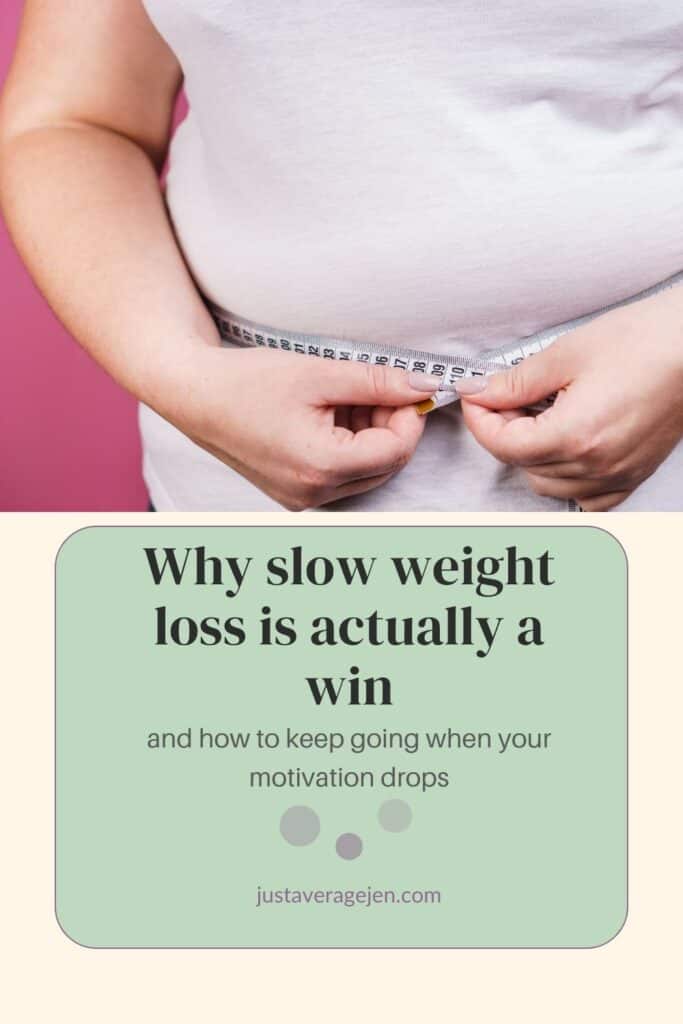
Why slow weight loss is actually a win (and how to keep going)
You step on the bathroom scale. You hold your breath. You look down, expecting to see a lower number. You have been eating salad. You have skipped dessert. You even went for a walk yesterday. But the number has not moved. Or maybe it has only gone down by a tiny fraction.
It is frustrating. You might feel like throwing the scale out the window. You might feel like giving up and ordering a pizza. Please do not do that. Slow weight loss is ok, maintaining is ok too. Try not to worry.
This feeling is normal. Almost everyone who tries to lose weight feels this way at some point. The reality of weight loss is rarely a straight line down. It is messy. It stops and starts. Sometimes it goes up for no reason.
When progress feels slow, it is easy to lose your spark. You might think you are doing something wrong. You might think your body is broken.
But slow progress is still progress. In fact, losing weight slowly might actually be better for you in the long run. It gives your body time to adjust. It helps you build habits that stick.
This guide will help you understand slow weight loss. It will give you practical tools to keep your head in the game. We will look at what the experts say and how you can stay on track, even when the scale is being stubborn.

Defining what “slow weight loss” actually means
First, we need to look at our expectations. We see reality TV shows where people lose ten pounds in a week. We see influencers claiming they dropped two dress sizes in a month. This makes us think fast weight loss is normal.
It is not normal. Everyone loses more weight in their first week or so, but usually it then settles down.
According to the Centres for Disease Control and Prevention (CDC), a safe and healthy rate of weight loss is about 1 to 2 pounds per week. That is roughly 0.5 to 1 kilogram.
Does that sound like slow weight loss to you?
Let us do the maths. If you lose 1 pound a week, that is 52 pounds in a year. That is a massive change.
Losing weight faster than this can actually be risky. Rapid weight loss often means you are losing water and muscle, not just fat. You need muscle to keep your metabolism strong. If you lose muscle, your body burns fewer calories at rest. This makes it harder to keep the weight off later.
Very fast weight loss can also cause health issues like gallstones. It can make you feel tired and sick.
So if you are losing half a pound or a pound a week, you are not failing. You are right on target. You are doing it the safe way. You are doing it the way that lasts.
The science of the plateau
You might be doing everything right. You are tracking your food. You are moving your body. But the scale stops moving entirely. This is called a plateau.
It is incredibly annoying, but it is biological.
The Mayo Clinic explains that a weight-loss plateau eventually happens to everyone. When you lose weight, you lose some muscle along with fat. Muscle helps keep your metabolism running fast. As you lose weight, your metabolism slows down slightly.
Your body is also smart. It wants to keep you alive. When you give it less food, it becomes more efficient. It learns to do the same amount of work with less energy. This is a survival mechanism. It kept our ancestors alive during famines. Now, it just frustrates us when we want to fit into smaller jeans.
Sometimes, a stall or slow weight loss is just water retention. If you eat a salty meal, your body holds onto water. If you had a hard workout, your muscles might retain water to help them repair. This can mask fat loss on the scale.
Understanding this helps you stay calm. A stall does not mean you are lazy. It does not mean the plan is not working. It just means your body is adjusting to its new normal.
Finding a motivation that lasts
Motivation is like the weather. It changes. Some days it is sunny, and you feel like you can run a marathon. Other days it is raining, and you do not want to get off the sofa.
You cannot rely on motivation alone. You need a deeper reason to keep going.
At first, many people focus on how they look. They want to be thinner for a holiday or a wedding. There is nothing wrong with that. But appearance goals often fade. Once the holiday is over, the motivation goes away.
You need to find your “Why.”
This is the deep, personal reason you want to be healthy. It usually connects to your values or your loved ones.
Ask yourself these questions:
- Do I want to have more energy to play with my children or grandchildren?
- Do I want to avoid the health problems my parents had?
- Do I want to feel strong enough to carry my own groceries?
- Do I want to wake up without aches and pains?
The CDC suggests writing these reasons down. Put them where you can see them every day. Stick a note on your fridge or your bathroom mirror.
When you want to quit or worry about slow weight loss, look at your list. Remind yourself that this is not just about a number on a scale. It is about your life. It is about being capable and present for the people you love.
The magic of writing it down
One of the most powerful tools for weight loss is a simple piece of paper and a pen. Or a note on your phone.
We often think we know how much we are eating. But human beings are very bad at guessing. We forget the handful of crisps we had while cooking. We forget the extra splash of cream in our coffee. We underestimate portion sizes. This can lead to slow weight loss or no weight loss at all.
Research backs this up. A systematic review published in the Journal of the American Dietetic Association looked at different studies on weight loss. The researchers, led by Lora E. Burke, found a consistent link between self-monitoring and weight loss.
Put simply: people who tracked what they ate lost more weight.
Tracking does a few things:
- It keeps you honest. You cannot pretend you did not eat that biscuit if you have to write it down.
- It reveals patterns. You might notice you always overeat when you are tired. Or you might see that you are drinking more calories than you realised.
- It gives you control. When you know the numbers, you can make changes.
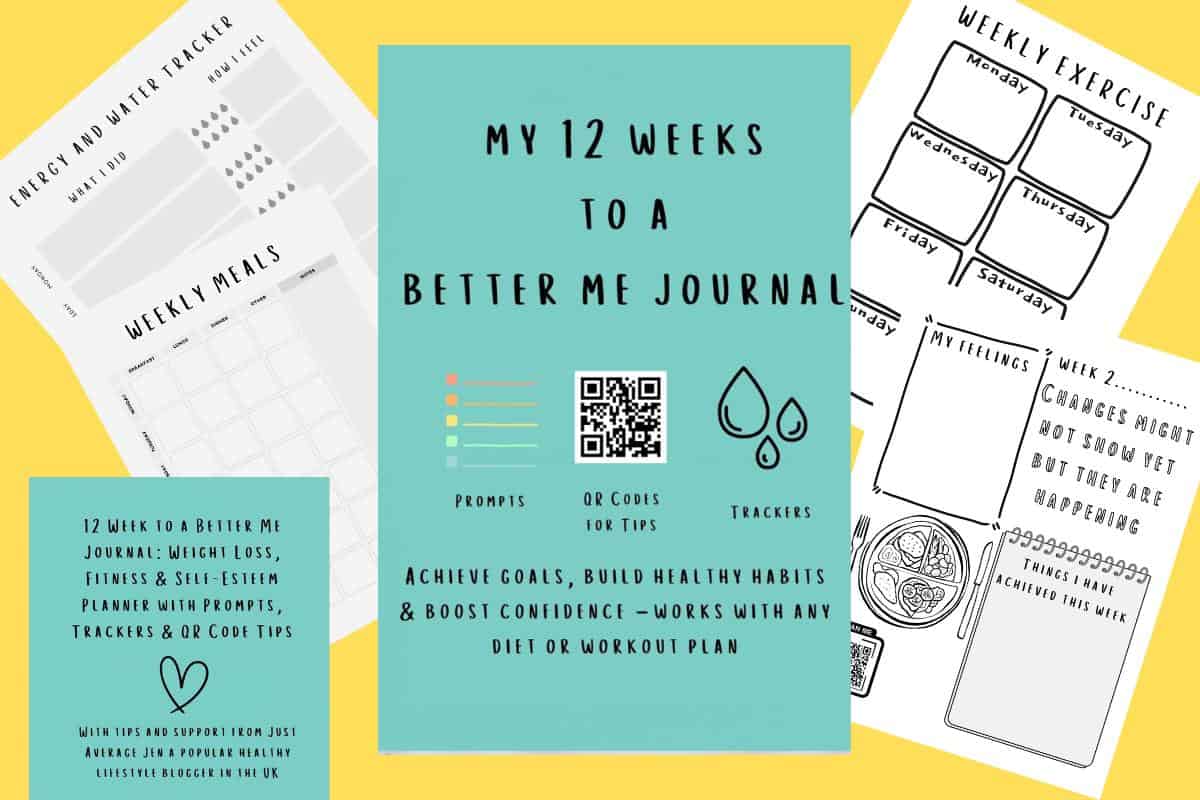
You do not have to track forever. But if your weight loss has slowed down, try tracking for a few weeks. Write down everything you eat and drink. Be accurate. Measure your portions.
You might be surprised by what you find. That “healthy” snack might have more energy than a meal. That coffee shop drink might be a sugar bomb.
Knowledge is power. When you see the data, you can fix the leaks in your plan. Then you can start working on the slow weight loss and see if it can increase.
Check out my journal, it might help. Read more about it in my blog post about the advantages of the journal and why I designed it.
Measuring success without a scale
The scale is a tool and not the only way of measuring or determining a slow weight loss. It is not a judge of your character. And it is not the only way to measure success.
When the scale is stuck, look for Non-Scale Victories (NSVs). These are signs that your body is changing and your health is improving, even if your weight stays the same.
Here are some Non-Scale Victories to look for:
- Clothes fit: Are your trousers a little looser at the waist? Does your shirt button up more easily? Muscle takes up less space than fat. You can shrink in size without losing weight.
- Energy levels: Do you feel less tired in the afternoon? Can you walk up stairs without getting winded? This means your heart and lungs are getting stronger.
- Sleep quality: Are you sleeping better? Good nutrition and exercise often lead to deeper, more restful sleep.
- Mood: Do you feel happier or more stable? Exercise releases chemicals in your brain that boost your mood.
- Health markers: Has your blood pressure gone down? Are your cholesterol levels better? These are huge wins for your longevity.
Celebrates these wins. They prove that your hard work is paying off.
The National Institute of Diabetes and Digestive and Kidney Diseases notes that even a modest weight loss of 5% of your total body weight can produce big health benefits. If you weigh 200 pounds, that is just 10 pounds. Even if you stop there, you have already lowered your risk for type 2 diabetes and heart disease. Slow weight loss can still change your life.
Moving your body the right way
Food is the most important part of weight loss. But movement is the biggest tip for keeping it off.
Exercise helps you burn extra energy. It also builds muscle, which keeps your metabolism humming.
But you do not need to run marathons. You do not need to spend hours in the gym.
The Physical Activity Guidelines for Americans recommend that adults get at least 150 minutes (2 hours and 30 minutes) to 300 minutes (5 hours) a week of moderate-intensity activity.
What is moderate-intensity? It means your heart is beating faster, but you can still talk. Brisk walking is a perfect example.
You can break this down. A 30-minute walk, five days a week, hits the goal.
If you want to lose more weight, speed up slow weight loss or keep it off, you might need to aim for the higher end of that range (300 minutes).
Try to include some muscle-strengthening activities two days a week. This could be lifting weights, using resistance bands, or doing bodyweight exercises like push-ups or squats.
Remember, every bit of movement counts. Take the stairs instead of the lift. Park your car further away from the shop entrance. Garden. Dance in your kitchen.
If you hit a plateau or slow weight loss, check your movement. Have you stopped walking as much? Has your workout become too easy? Your body gets efficient at exercise, too. You might need to walk a little faster or lift a slightly heavier weight to get the movement needle moving again.
Sleep and stress matter too
We often focus only on calories in and calories out. But your body is complex and your hormones play a huge role in your weight. They can influence a slow weight loss or even stop your losses altogether.
Two big factors are often overlooked: sleep and stress.
When you are stressed, your body produces a hormone called cortisol. High levels of cortisol can make your body hold onto fat, especially around your belly. Stress also drives emotional eating. When we are anxious, we often crave sugary, fatty comfort foods.
Sleep is just as important. When you do not sleep enough, your hunger hormones go wild. A hormone called ghrelin (which makes you hungry) goes up. A hormone called leptin (which tells you you are full) goes down.
This means when you are tired, you are physically hungrier. You are also less likely to have the willpower to say no to unhealthy food. You are definitely less likely to want to exercise, leading to slow weight loss.
The CDC recommends getting enough sleep as a core part of a healthy lifestyle.
If you have slow weight loss, look at your lifestyle.
- Are you getting 7 to 8 hours of sleep?
- Do you have a bedtime routine?
- Are you finding ways to manage stress, like deep breathing, reading, or talking to a friend?
Fixing your sleep might be the key to unlocking your weight loss again and speeding up that slow weight loss.
Slow weight loss – Frequently asked questions
Is it true that I am in “starvation mode”?
True “starvation mode” is rare and happens only in severe cases of malnutrition. However, your metabolism does slow down when you lose weight. This is called metabolic adaptation. It is your body trying to save energy. It does not mean you can never lose weight again. It just means you might need to adjust your calories or activity slightly.
How often should I weigh myself?
There is no single right answer. Some research suggests that daily weighing helps people stay on track because they can react quickly to changes. Others find daily weighing stressful. If the scale ruins your mood, weigh yourself once a week. Or stop weighing yourself entirely and use clothes or measurements to track progress.
Can I lose weight just by exercising?
It is very hard to lose weight through exercise alone. It is much easier to eat 500 fewer calories than it is to burn 500 calories in the gym. The most effective method is a combination of healthy eating and regular physical activity.
Why did I gain weight after working out?
This is very common. When you start a new exercise routine, your muscle fibres tear slightly. As they repair, they hold onto water. This is a sign your muscles are getting stronger. It is temporary water weight, not fat gain.
Your next steps for success
Slowing down does not mean stopping. It means you are in the messy middle of the journey. This is where the real change happens. This is where you prove to yourself that you are committed.
Here is your plan for the week ahead:
- Re-calculate: Check your calorie needs. As you lose weight, you need slightly less energy.
- Track honest data: Spend one week writing down absolutely everything you eat.
- Move consistently: Aim for that 30-minute daily walk.
- Prioritise sleep: Go to bed 30 minutes earlier.
- Be kind to yourself: Remind yourself that 1 pound a week is a victory.
You are building a body that needs to last you a lifetime. There is no rush. Keep showing up for yourself. The results will follow. Slow weight loss doesn’t mean no weight loss. You can do this.
Pin this for later