Easy Instant Pot Recipes and Pressure Cooker Tips
I bought an Instant Pot because, like most kitchen gadgets, it sounded like something that could make life easier. The problem with appliances like this is that it is very easy to use them enthusiastically for a few weeks and then find them sitting in a cupboard while you go back to cooking everything the way you always have!
If you have an Instant Pot or another electric pressure cooker and you’re not quite sure what to do with it, this guide is for you. I’ve put together my Instant Pot recipes along with some of the things that are useful to know when you’re getting started.
You don’t need to completely change the way you cook or suddenly make everything in a pressure cooker. I think they’re most useful when you find the meals and ingredients that genuinely work well in them and use them for those.

What is an Instant Pot?
An Instant Pot is an electric multicooker. Pressure cooking is one of its best-known functions, although depending on the model you have, yours may also have settings for things such as sautéing, steaming and slow cooking.
The pressure-cooking function works by trapping steam inside the sealed pot. This raises the pressure and allows food to cook differently from food simmering away in an ordinary saucepan.
One of the things that confused me initially was that a recipe saying something like “pressure cook for 10 minutes” doesn’t necessarily mean dinner will be ready in 10 minutes.
The Instant Pot first needs time to come up to pressure. At the end, the recipe may also require either a natural pressure release or a quick release. All of those stages contribute to the real cooking time, which is worth remembering when you’re planning dinner!
Instant Pot recipes on Just Average Jen
This is where you’ll find my Instant Pot and electric pressure cooker recipes. I’ll keep this section focused on recipes I’ve actually made rather than padding it out with lots of meals that could theoretically be cooked in one.
Instant Pot Brown Sugar Garlic Chicken
My Instant Pot brown sugar garlic chicken is an easy place to start if you eat chicken. It uses chicken breasts with garlic, light brown sugar, smoked paprika and chicken stock to make a sweet and savoury chicken dinner.
The chicken is browned first using the sauté function before being pressure cooked, so it’s also a good recipe for getting used to using more than one Instant Pot function in the same meal.
Serve it with rice, potatoes or vegetables depending on what you fancy.

Instant Pot Vegetable Curry
My Instant Pot vegetable curry is another useful recipe if you want to get more use out of your pressure cooker, and it gives you a meat-free option too.
As I’ve been vegetarian since I was about ten, I definitely don’t want my Instant Pot section to become somewhere that assumes pressure cookers are only useful for cooking huge pieces of meat!

Instant Pot Lemon Spaghetti
My Instant Pot lemon spaghetti is one to try if you automatically associate pressure cookers with casseroles and stews. Pasta can be made in an Instant Pot too, and this recipe combines spaghetti with a creamy lemon sauce.
The lemon makes it quite different from a traditional tomato-based pasta dinner, so it’s a nice option when you’re bored of making the same pasta dishes every week.

Instant Pot Pork Lo Mein
If you fancy noodles rather than pasta, have a look at my Instant Pot pork lo mein.
Lo mein is the sort of meal you might normally associate with cooking quickly in a wok, so it shows another side to what you can make with an electric pressure cooker. If noodles are a regular feature in your house, it’s another recipe to add to your list rather than using the Instant Pot purely for curries and soups.

Instant Pot Loaded Baked Potato Soup
My Instant Pot loaded baked potato soup is proper comfort food, with a creamy potato soup topped with cheese, bacon and spring onions.
This is the sort of recipe I think an Instant Pot makes a lot of sense for. Soup is already an easy meal to make, but being able to cook everything in one appliance makes it even more convenient, particularly when you don’t fancy having several pans on the go.
If you’re a big soup fan, have a look at my healthy soup recipes too for plenty more ideas using different cooking methods.

Instant Pot Broccoli and Cheese Soup
Another soup option is my Instant Pot broccoli and cheese soup, which combines broccoli with a creamy, cheesy soup base.
Broccoli and cheese is one of those combinations that works particularly well when you want something warming and filling without making another chicken-based meal. Serve it as it is for a lighter meal or add some bread alongside it when you want something more substantial.

Instant Pot Lasagne Soup
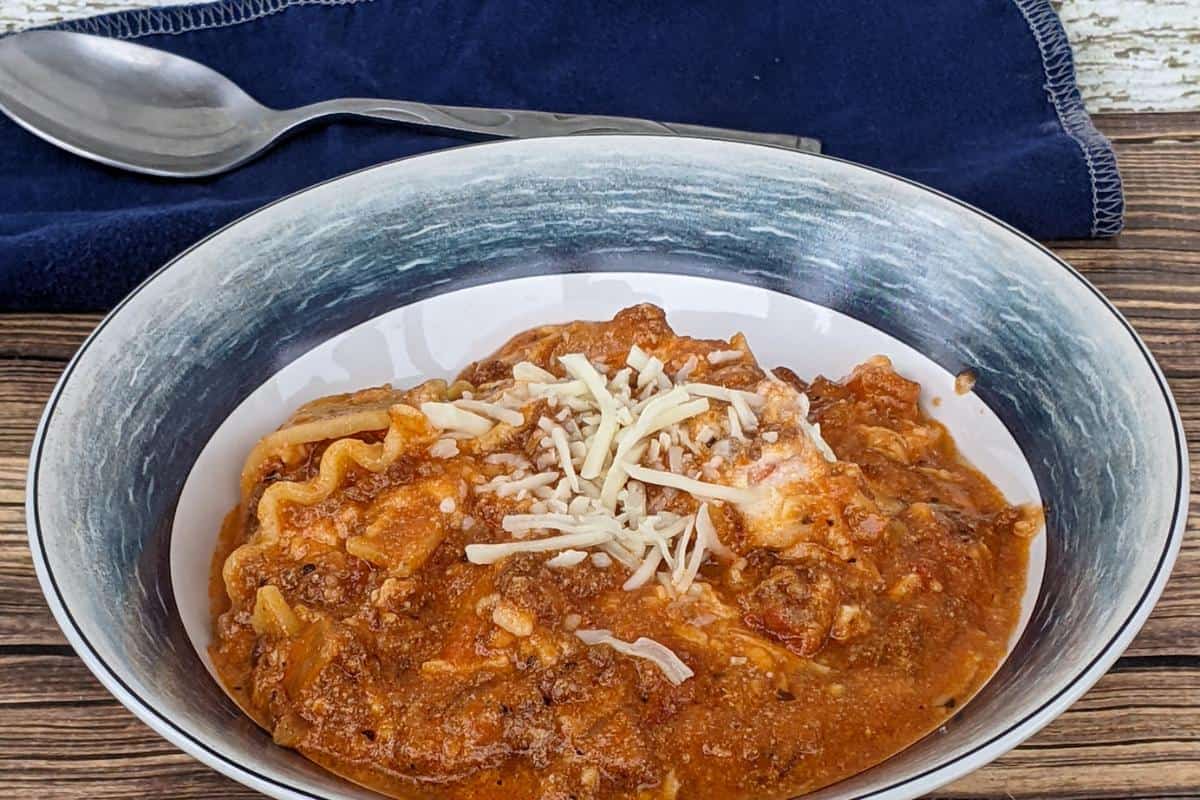
If you love lasagne but can’t always be bothered with all the layering, my Instant Pot lasagne soup is a completely different way to enjoy similar flavours.
Rather than trying to recreate a traditional lasagne inside the pressure cooker, this is a soup inspired by those familiar flavours. It’s the sort of dinner that works particularly well when it’s cold outside and you want something warming without spending ages putting dinner together.
Instant Pot Turkey Chilli Pasta
My Instant Pot turkey chilli pasta combines pasta and turkey mince in one meal, with tomato and chilli flavours and cheese to finish it off.
It’s a useful family dinner when you want something more substantial than soup but still want the convenience of using the Instant Pot. Turkey mince also gives you another option if you find yourself buying chicken for practically every meal and fancy a change.

Instant Pot Rice Pudding
Your Instant Pot doesn’t have to be reserved for dinner. My Instant Pot rice pudding is an easy dessert to try if you like traditional creamy rice pudding but want to make it in the pressure cooker.
Rice pudding is one of those wonderfully simple puddings where you don’t need it to look fancy. A sprinkle of cinnamon on top is plenty for me, although you can obviously add whatever you usually enjoy with rice pudding.

Quick Instant Pot meals using tinned foods
It is also worth remembering that you don’t always need a fridge full of fresh ingredients to get some use out of your Instant Pot.
My guide to quick Instant Pot meals using canned foods has seven ideas for using the tins you probably already have in the cupboard. Tinned beans, tomatoes, vegetables and other store-cupboard ingredients can be really handy when you need to make something without having planned dinner three days in advance.
I’m a big fan of having meals you can make from the cupboard because real life doesn’t always involve a beautifully organised weekly meal plan. Sometimes you look at the time, realise nobody has thought about dinner and need to work with whatever is actually in the house!
Instant Pot or slow cooker?
If you’re wondering whether you would get more use from an Instant Pot or a slow cooker, I’ve also written a slow cooker vs pressure cooker guide explaining some of the differences.
They overlap in the sorts of meals you might make, but the experience of using them is very different. A slow cooker is brilliant when you want to get dinner started earlier and leave it cooking for hours, while pressure cooking is useful when you haven’t had that level of organisation!
I use different appliances for different recipes rather than thinking one has to replace all the others. If slow cooking suits you better, my healthy slow cooker recipes have plenty more ideas.
What can you cook in an Instant Pot?
There are loads of foods that can be cooked in an electric pressure cooker, although that doesn’t necessarily mean an Instant Pot is the best way of cooking every single one of them.
They can be particularly handy for soups, stews, curries, beans, pulses and dishes that benefit from cooking in liquid. Some chicken dishes also work really well, and the sauté function means you can often brown ingredients in the same pot before pressure cooking them.
Rice can also be cooked in an Instant Pot, although if you already have a method that gives you perfect rice every time, you don’t have to change it simply because you’ve bought another appliance. My guide to cooking rice covers the different options.
The same applies to vegetables. Some cope brilliantly with pressure cooking while delicate vegetables can turn to mush remarkably quickly. There is nothing wrong with cooking part of a meal in your Instant Pot and doing the vegetables separately.
Getting started with an Instant Pot
The first few times you use an electric pressure cooker can feel a little strange, particularly if you’ve spent years cooking with saucepans where you can lift the lid whenever you fancy a look.
Start with the instructions for your particular appliance. Instant Pot has produced numerous models over the years and other electric pressure cookers can have different controls, programmes and safety features.
Get familiar with how the lid locks, how your model indicates that it has reached pressure and how pressure is released before you start experimenting.
Following a tested recipe is much easier when you’re beginning than trying to convert one of your usual recipes straight away. Once you’ve seen how much liquid remains after pressure cooking and how different ingredients behave, adapting meals becomes much less mysterious.
What does sauté mean on an Instant Pot?
The sauté function lets you cook directly in the inner pot without pressure.
This is useful for softening onions, browning meat or cooking garlic and spices before adding the remaining ingredients. It can save you from using a separate frying pan, which is always a bonus when you’re the person who has to wash everything afterwards!
It can also be useful at the end of cooking. If a sauce is thinner than you’d like after pressure cooking, removing the cooked meat or vegetables and simmering the sauce using sauté can sometimes help reduce it.
Whether that’s suitable will depend on the particular recipe, so don’t automatically boil every sauce within an inch of its life.
Quick release vs natural pressure release
You’ll see both of these mentioned in pressure cooker recipes and they aren’t interchangeable instructions that you can simply ignore because you’re hungry.
A natural pressure release means leaving the pressure to fall naturally after cooking finishes. A quick release releases the pressure much more rapidly according to the instructions for your appliance.
Which one you need depends on what you’re cooking and the recipe you’re following.
Use the release method specified in the recipe and follow the manufacturer’s instructions for your particular pressure cooker. Be particularly careful of the hot steam released from the appliance.
Does an Instant Pot really save time?
Sometimes yes, but not always in quite the way people imagine.
Pressure cooking itself can be considerably quicker for foods that would otherwise need a long cooking time. However, you have to include the time needed for the Instant Pot to reach pressure and release it afterwards.
If something takes five minutes in a frying pan, getting an Instant Pot involved probably isn’t going to transform your life!
Where I think it becomes useful is with recipes where you can put everything into one pot and leave it to cook without hovering over it. Saving effort can sometimes be just as useful as saving actual minutes.
How much liquid does an Instant Pot need?
Pressure cookers need liquid to produce steam and come up to pressure, but the amount required isn’t something I’d give one universal answer for.
It depends on the appliance and the recipe. This is one of the reasons I wouldn’t recommend taking a conventional casserole recipe, pouring it into an Instant Pot and hoping for the best.
Pressure cooking also doesn’t allow liquid to evaporate in the same way as an uncovered pan. If you add far too much, you can end up with a much thinner dish than you expected.
Use the quantity in a tested recipe and make sure it also meets the minimum requirements in the instructions for your particular machine.
Don’t overfill your pressure cooker
There should be a maximum fill line marked on your Instant Pot or inner pot, and it is there for a reason.
Some foods also expand or foam during cooking, which can affect how full the cooker can safely be. Rather than relying on a general rule from a recipe website, check the manual for your model and stay within the manufacturer’s limits.
This is especially important if you’re doubling a recipe. Just because the ingredients fit into the pot doesn’t automatically mean you should pressure cook that quantity.
Can you double an Instant Pot recipe?
Sometimes, but this is another area where I’d be cautious.
Doubling the ingredients doesn’t necessarily mean doubling the pressure-cooking time, and you still need to remain within the safe capacity of your particular pressure cooker.
There also needs to be enough appropriate cooking liquid for the appliance to reach pressure.
For recipes I’ve tested at a particular quantity, that’s the quantity I’d recommend using unless I’ve specifically included instructions for making a larger batch.
Can you cook frozen food in an Instant Pot?
You will sometimes see people saying that you can cook practically anything from frozen in a pressure cooker. I wouldn’t use that as a blanket rule.
Some foods and manufacturer-approved recipes are specifically designed to be pressure cooked from frozen, but that doesn’t mean you can take any recipe using fresh ingredients, throw in a solid frozen version and add an arbitrary few minutes.
The size and thickness of the food matters, as does whether individual pieces are separate or frozen together.
For my recipes, follow the instructions I’ve given for that particular dish. If the recipe calls for defrosted chicken, use defrosted chicken rather than guessing at a new pressure-cooking time. My guide to defrosting chicken safely may be useful if you’ve forgotten to take it out of the freezer.
Why does my Instant Pot say Burn?
The dreaded Burn warning is one of those things that can make a new Instant Pot owner wonder why they bothered!
It generally means the appliance has detected excessive heat at the bottom of the pot. Food caught on the base after sautéing, very thick ingredients sitting on the bottom or problems with the amount of suitable liquid can all contribute.
If you’ve browned ingredients using the sauté function, make sure you deglaze the pot properly when the recipe tells you to. That means adding the liquid and scraping up anything stuck to the bottom before you start pressure cooking.
If you repeatedly get a Burn warning with a particular recipe, don’t keep restarting the appliance and hoping for the best. Check the recipe and the troubleshooting advice for your model.
Why is my Instant Pot taking ages to come to pressure?
The cooking countdown doesn’t usually begin the moment you press the button. The appliance has to reach pressure first.
How long that takes can vary depending on the quantity and temperature of the ingredients and the amount of liquid in the pot.
A large quantity of cold ingredients is naturally going to behave differently from a small amount of already-warm liquid.
If it seems to be taking unusually long or isn’t reaching pressure at all, check that the lid and sealing components are correctly fitted and follow the troubleshooting instructions supplied with your model.
Can I use slow cooker recipes in an Instant Pot?
Not automatically.
Although many Instant Pot models include a slow-cooking function, that doesn’t mean a pressure cooker and slow cooker work in the same way or that recipes can simply be swapped between the two cooking methods.
If slow cooking is what you actually want to do, have a look through my healthy slow cooker recipes. I’ve got lots of recipes there that have been made specifically for slow cooking rather than trying to turn everything into an Instant Pot recipe.
Instant Pot food safety
An Instant Pot doesn’t change the basic rules of food safety. Chicken and other meats still need to be thoroughly cooked, leftovers need to be cooled and stored correctly, and raw meat should be kept away from ready-to-eat food.
Don’t rely purely on the outside appearance of a large piece of meat to decide whether it’s cooked. Follow the recipe, the appliance instructions and current food-safety guidance.
It’s also important to treat the Instant Pot itself as a pressure cooker rather than an ordinary saucepan. Never try to force the lid open while the appliance is pressurised and keep your hands and face away from escaping steam when releasing pressure.
Cleaning your Instant Pot
Give the removable inner pot a proper wash after using it and pay attention to the parts of your particular model that the manufacturer recommends cleaning.
The lid and sealing components can pick up food smells, particularly after strongly flavoured curries and garlic-heavy recipes. Check your manual before putting any parts into a dishwasher because what can be removed and how it should be cleaned varies between models.
I would also check the sealing ring and other removable components regularly rather than discovering something isn’t fitted properly when dinner is already in the pot.
Is an Instant Pot worth buying?
I think this depends far more on how you cook than on how many functions are printed on the box.
If you regularly make curries, stews, soups, beans, pulses and other meals suited to pressure cooking, you might use one constantly. If most of your meals take ten minutes in a frying pan, an Instant Pot isn’t magically going to make dinner easier.
Storage matters too. An Instant Pot is not tiny, so think about where it will live. A kitchen gadget that has to be excavated from behind three casserole dishes every time you want it isn’t nearly as convenient as one you can actually get to.
If you already own one, however, it is worth experimenting with a few different recipes before deciding it was another questionable kitchen purchase!
More easy recipes and cooking guides
If you’re looking for more easy family meals rather than specifically pressure cooker recipes, my healthy chicken recipes are a good place to start, with curries, pasta dishes, tray bakes and lots of other ideas.
I’ve also got plenty of healthy slow cooker recipes if you prefer putting dinner on earlier in the day, plus my air fryer recipes if that’s the kitchen gadget you find yourself using most.
You don’t need to cook everything with the newest appliance or use every setting it has. For me, the best cooking method is usually the one that makes a particular meal easier and actually works in real life.